.svg)

The minimum ATAR for psychology in Australia ranges from about 70 to 98, depending on the university and the specific degree. As a guide: Curtin University accepts a guaranteed ATAR of 70 for its Bachelor of Psychology, the University of Sydney quotes a typical ATAR of 85 for a Bachelor of Psychology, and the UNSW Bachelor of Psychology (Honours) sits at the top of the range with selection ranks around 96–98. To work as a registered psychologist, you also need an APAC-accredited four-year degree (a three-year Bachelor plus an Honours year, or a four-year Bachelor of Psychology Honours), followed by two further years of accredited postgraduate study or supervised practice — six years in total before AHPRA registration.
What ATAR do you need for psychology in Australia?
For most Australian universities, an ATAR between 70 and 90 will get you into a Bachelor of Psychology or Bachelor of Psychological Science. The most competitive programs — UNSW Bachelor of Psychology (Honours), the University of Sydney Dalyell stream, and the Australian National University — sit higher, with selection ranks of 95 and above. Where you land depends on three things: the university, the specific degree (the four-year Bachelor of Psychology Honours sits higher than a three-year Bachelor of Arts/Science majoring in psychology), and your selection rank after adjustment factors are added on top of your raw ATAR.
- Lower band (ATAR 70–80): Curtin (guaranteed ATAR 70), Western Sydney, RMIT, Federation University, regional campuses of bigger universities.
- Mid band (ATAR 80–90): Macquarie University, University of Technology Sydney (UTS), Monash, the University of Queensland (Bachelor of Psychological Science Honours often around 93), and most Group of Eight psychology majors when accessed via a Bachelor of Arts or Science.
- Top band (ATAR 90–98+): UNSW Bachelor of Psychology (Honours), University of Sydney (Bachelor of Psychology with the Dalyell scholar stream), University of Melbourne via the postgraduate route after a Bachelor of Arts or Bachelor of Science with a psychology major.
The selection rank — your ATAR plus adjustment factors — is the number that actually determines an offer. Most universities will quote a lowest selection rank, not a raw ATAR cutoff.
What is the lowest ATAR you can get into psychology with?
The lowest ATAR for an APAC-accredited psychology degree in Australia is around 70 — Curtin University publishes a guaranteed ATAR of 70 for its four-year Bachelor of Psychology, and Western Sydney University, Federation University and several regional campuses sit in the 65–75 range once adjustment factors are applied. If your ATAR comes in below the published cutoff, you still have several real pathways: enrol in a Bachelor of Arts or Bachelor of Science with a psychology major (often lower entry), complete your first year and transfer into the Bachelor of Psychology with internal credit, or use a tertiary preparation / bridging program, mature-age entry, or a TAFE diploma articulation. The destination — registration as a psychologist — is the same regardless of which door you came in through.
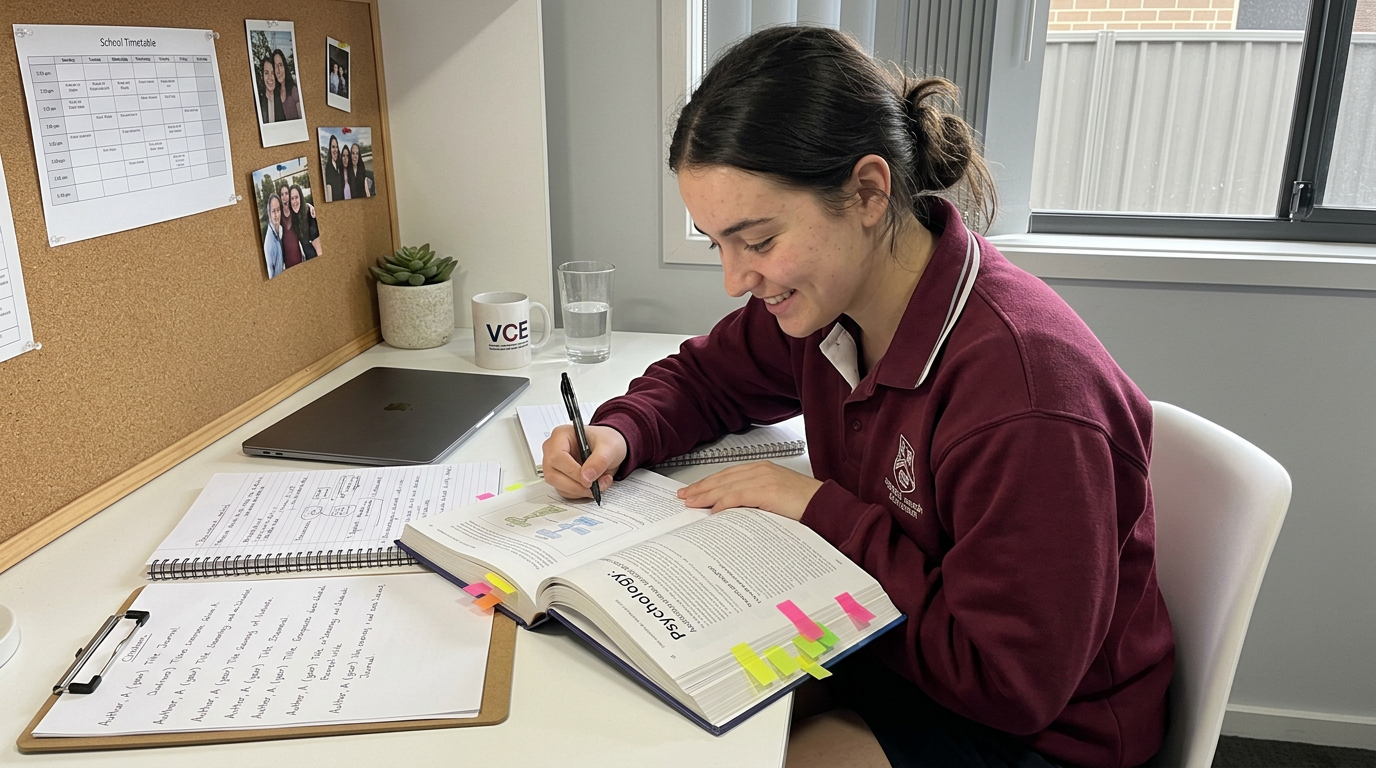
Should I do a Bachelor of Psychology or a Bachelor of Arts (Psychology)?
If you are sure you want to register as a psychologist, the cleanest path is the four-year Bachelor of Psychology (Honours) — it bundles the three-year sequence and the Honours year into a single degree, and it is APAC-accredited end-to-end. If you are not sure, a three-year Bachelor of Arts or Bachelor of Science with a psychology major is the safer bet: it keeps your options open, lets you sample other disciplines, and you can still add a fourth-year Honours in psychology afterwards (or convert via a Graduate Diploma in Psychology). The functional difference for graduate practice is zero — both routes end with the same APAC-accredited four years of study before postgraduate work.
- Bachelor of Psychology (Honours): 4-year accredited program, integrated Honours year, slightly higher ATAR cutoffs (often 80–98 depending on the university), best for students who are decided.
- Bachelor of Arts / Science (psychology major) + Honours: 3-year base degree plus a competitive Honours year, often lower entry ATAR, more flexibility, common at the University of Melbourne, ANU, and Monash.
- Bachelor of Psychological Science (Honours): Used at the University of Queensland (UQ) and a handful of other universities; functionally equivalent to a Bachelor of Psychology Honours for AHPRA purposes.
How do I become a registered psychologist after a psychology degree?
Becoming a fully registered psychologist in Australia takes six years minimum after Year 12: four years of APAC-accredited undergraduate study (a Bachelor of Psychology Honours, or a Bachelor + Honours), then two further years of either an APAC-accredited Master's program (Master of Clinical Psychology, Master of Educational and Developmental Psychology, etc.) or the 5+1 internship pathway, where the fifth year is a Master of Professional Psychology and the sixth is a year of supervised practice. Final registration is granted by the Psychology Board of Australia through AHPRA. To call yourself a clinical psychologist or educational psychologist, you need to complete one of the area-of-practice endorsement Masters; "psychologist" alone (general registration) is the common destination.
What HSC, VCE, QCE or WACE subjects help with psychology?
No senior subject is a strict prerequisite for an Australian psychology degree, but the right subject mix makes first-year university genuinely easier. English is required across the board (HSC English Standard or Advanced, VCE English / English Language, QCE English, WACE English ATAR). A senior maths subject — even General or Standard Maths — is strongly recommended because psychology is statistically heavy: research methods, t-tests, ANOVA and regression appear from first year. A senior science like Biology, Chemistry or Psychology itself (where offered) is helpful, as psychology is a behavioural and biological science. Macquarie University and several others award up to five subject adjustment bonus points for high results in maths and science subjects, which can be the difference between an offer and a near-miss.
- English (required everywhere): Advanced English / English Language is the strongest signal; Standard / Mainstream English is fine for most degrees.
- Maths (strongly recommended): General/Standard Maths is the floor; Mathematical Methods (VCE) or Mathematics Advanced (HSC) help with statistics and unlock subject adjustments.
- Biology or Chemistry: Useful background for the biological-bases-of-behaviour units in first year.
- Psychology (where offered as a senior subject): WACE Psychology ATAR, VCE Psychology, QCE Psychology — not required for entry, but gives you a head start on terminology.
Is APAC accreditation important for choosing a psychology degree?
Yes — APAC accreditation is the single most important thing to check when you compare psychology degrees. APAC (the Australian Psychology Accreditation Council) is the body that decides whether a degree counts toward AHPRA registration. If a degree is not APAC-accredited at every level you complete (undergraduate, Honours, and postgraduate), AHPRA will not register you as a psychologist regardless of how good the marks are. Every Australian Bachelor of Psychology, Bachelor of Psychological Science and Bachelor of Arts/Science psychology major from a public university is APAC-accredited at the undergraduate level. The accreditation question gets sharper at the Honours and Master's levels — always confirm the specific program is currently APAC-accredited (re-accreditation cycles run every few years, and a new program may not yet be accredited).
What ATAR do top Australian universities require for psychology?
Here are the typical lowest selection ranks for the most-asked-about Australian psychology programs as of the most recent admission round. Selection rank is your ATAR plus any adjustment factors — most universities publish this rather than a raw ATAR cutoff. Numbers move slightly year-on-year with demand; check the live UAC, VTAC or QTAC course pages before you apply.
UNSW: Bachelor of Psychology (Honours)
The University of New South Wales is the highest-ATAR psychology program in Australia. The Bachelor of Psychology (Honours) sits at a lowest selection rank around 96–98; the standalone Bachelor of Psychological Science is closer to 90. Both are four-year APAC-accredited programs delivered at the Kensington campus.
University of Sydney: Bachelor of Psychology
The University of Sydney quotes an expected ATAR of 85.00 or higher for the Bachelor of Psychology via UAC; the Dalyell Scholars stream sits at 98+. USyd also offers a Bachelor of Psychological Science for students who want the discipline without committing to the registration pathway.
University of Queensland: Bachelor of Psychological Science (Honours)
UQ's four-year Bachelor of Psychological Science (Honours) typically requires an ATAR around 93. It is the standard APAC-accredited psychology pathway in Queensland and feeds directly into UQ's postgraduate clinical and counselling programs.
University of Melbourne: postgraduate pathway
The University of Melbourne does not offer a stand-alone Bachelor of Psychology — instead, students complete a Bachelor of Arts or Bachelor of Science with a psychology major, then apply to the fourth-year Honours and the Master of Clinical Psychology or Educational & Developmental Psychology. Entry to the Bachelor of Arts is in the ATAR 88–95 range; entry to Honours and Masters is by Weighted Average Mark (typically WAM ≥75).
Monash University: Bachelor of Psychology (Honours)
Monash's four-year Bachelor of Psychology (Honours) typically sits at a lowest selection rank around 90. The Bachelor of Behavioural Neuroscience, Bachelor of Psychological Science, and Arts/Science psychology majors are also available at lower ATARs.
Macquarie University and UTS: Bachelor of Psychology
Macquarie University publishes an ATAR of 85.00 for its Bachelor of Psychology and offers up to 5 subject adjustment points for high marks in maths or sciences. UTS (University of Technology Sydney) sits in the ATAR 80–88 range for its Bachelor of Psychology.
UWA, ANU and Curtin
The University of Western Australia (UWA) quotes a Bachelor of Psychology entry ATAR around 80. ANU sits at the higher end (ATAR ~90) for the Bachelor of Psychology Honours. Curtin University runs the lowest published cutoff among the well-known Western Australian options — a guaranteed ATAR of 70 for the four-year Bachelor of Psychology.
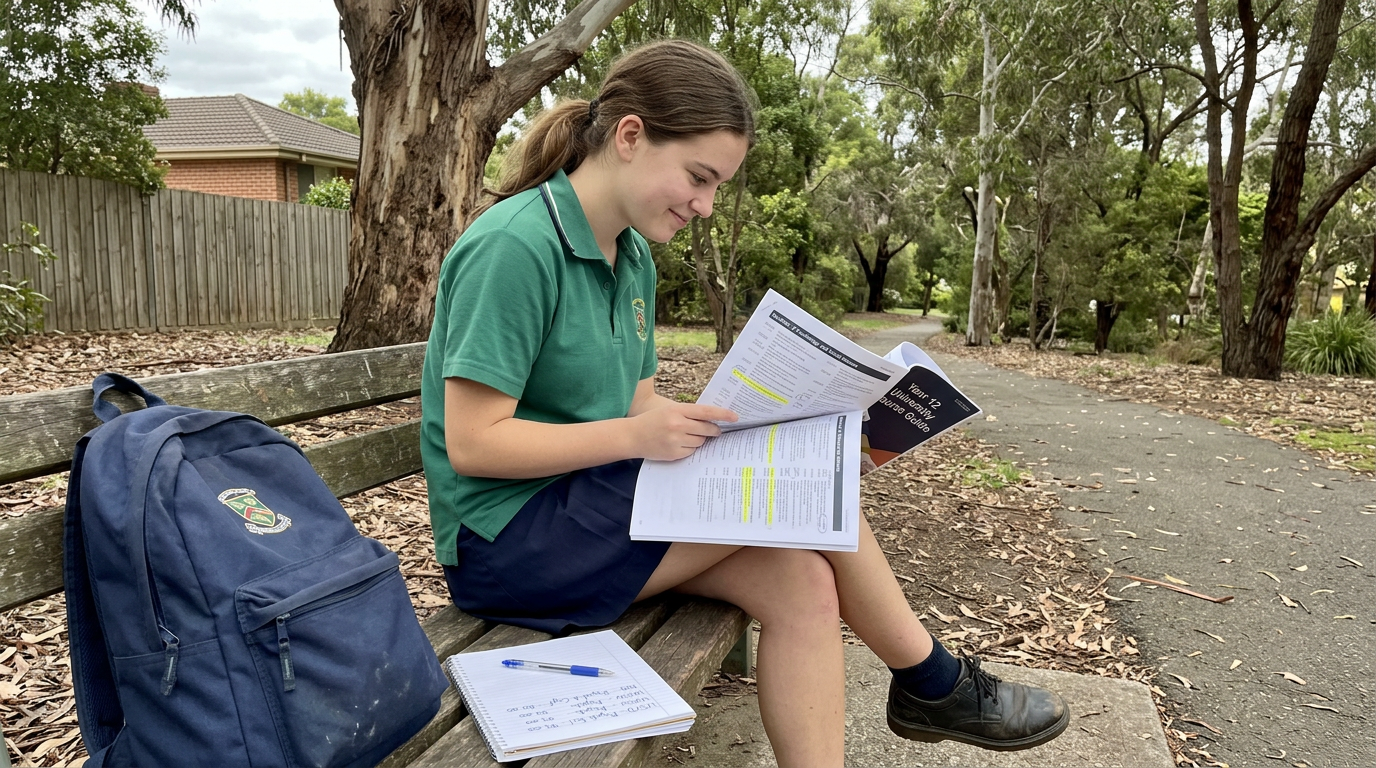
How do adjustment factors affect my ATAR for psychology?
Adjustment factors don't change your ATAR — they sit on top of it as bonus points to produce a higher selection rank, which is the number universities use to make offers. For psychology this often matters more than the raw ATAR. Three common categories: Educational Access Schemes (EAS) add up to 10 points if your senior schooling was disrupted by financial hardship, illness, refugee status or a similar circumstance. Subject adjustments add 1–5 points for strong results in specified senior subjects (commonly maths, sciences or English at HSC Band 5/6 or VCE study score 35+). Equity and location adjustments add points for students from regional, rural or remote areas, or from low-SES schools. A raw ATAR of 88 with five points of subject adjustments and three points of EAS becomes a selection rank of 96 — enough for a near-top-tier psychology program at most universities.
What if I miss the ATAR cutoff for psychology — what are my pathway options?
Missing the published cutoff for your first-choice psychology degree is recoverable in five practical ways: (1) Take a Bachelor of Arts, Bachelor of Science or Bachelor of Behavioural Studies with a psychology major at the same or another university — these typically have lower entry, and you can transfer into the Bachelor of Psychology after first year if your university marks are strong. (2) Apply to a regional or smaller-metropolitan campus with a lower published cutoff — Curtin, Western Sydney, Federation, Charles Sturt and the University of New England all run APAC-accredited psychology degrees in the 65–80 ATAR range. (3) Use a tertiary preparation or bridging program (UNE Pathways, Macquarie Foundation Year, UTS College) — usually one or two semesters of preparatory study followed by guaranteed entry. (4) Defer for a year and resit a subject as a non-school candidate, or pick up an additional subject to lift your selection rank. (5) Mature-age entry: after 12 months out of school you can apply on the basis of an Special Tertiary Admissions Test (STAT) score or substantial work/volunteer experience. The destination is identical — APAC-accredited four-year study leading to AHPRA registration.
- Internal transfer after first year — start in Arts/Science with a psychology major, transfer into Bachelor of Psychology with credit.
- Pathway / bridging program — UNE Pathways, Macquarie Foundation Year, UTS College, La Trobe College.
- Lower-ATAR campus or university — Curtin (guaranteed 70), Western Sydney, Federation, Charles Sturt, UNE.
- Resit / supplementary subjects — non-school candidate (NSC) or distance-education subject for a higher selection rank.
- Mature-age entry — STAT, work experience, prior tertiary study after 12+ months out of school.
Should we get tutoring to help with the ATAR for psychology?
Yes, with one caveat: tutor for the subjects that move your overall ATAR most, not for "psychology" as a topic. Your ATAR is calculated from your top scaled subject results (typically four in NSW and most states; five in Victoria), so the highest-leverage subjects to tutor are usually English (everyone counts an English) and a strong-scaling fourth subject like Mathematics Advanced, Mathematical Methods, Chemistry or Biology. Online tutoring with Tutero starts at A$65 per hour with the same rate across primary, lower-secondary and senior levels — no contracts and no senior premium for HSC or VCE coaching. The most useful structure for ATAR-pressure students is one weekly hour on the strong-scaler subject and one fortnightly check-in on study technique and exam preparation, starting in Term 4 of Year 11 and continuing into Year 12 trials.
So what ATAR do you really need for psychology?
Aim for an ATAR of 85 if you want a comfortable choice between most Australian Bachelor of Psychology programs. Aim for 90+ if your shortlist includes UNSW, the University of Sydney Dalyell stream, ANU, or the University of Queensland. Aim for 70–80 if you have a back-up plan via Curtin, Western Sydney, regional campuses, or a Bachelor of Arts/Science with a psychology major and an internal transfer plan. Whichever number you land on, the destination — APAC-accredited four-year study, then a two-year Master's or 5+1 internship, then AHPRA registration — is the same six-year pathway. The ATAR is the front door, not the whole house.
Need a hand lifting your selection rank for a psychology degree? Tutero pairs Year 11 and Year 12 students with vetted Australian tutors for one-to-one online maths, English and science coaching that targets the subjects that scale hardest in your ATAR calculation. Find an online tutor with Tutero — A$65 an hour, no contracts, the same rate at every year level.
The selection rank — your ATAR plus adjustment factors — is the number that actually determines an offer.
The selection rank — your ATAR plus adjustment factors — is the number that actually determines an offer.
The minimum ATAR for psychology in Australia ranges from about 70 to 98, depending on the university and the specific degree. As a guide: Curtin University accepts a guaranteed ATAR of 70 for its Bachelor of Psychology, the University of Sydney quotes a typical ATAR of 85 for a Bachelor of Psychology, and the UNSW Bachelor of Psychology (Honours) sits at the top of the range with selection ranks around 96–98. To work as a registered psychologist, you also need an APAC-accredited four-year degree (a three-year Bachelor plus an Honours year, or a four-year Bachelor of Psychology Honours), followed by two further years of accredited postgraduate study or supervised practice — six years in total before AHPRA registration.
What ATAR do you need for psychology in Australia?
For most Australian universities, an ATAR between 70 and 90 will get you into a Bachelor of Psychology or Bachelor of Psychological Science. The most competitive programs — UNSW Bachelor of Psychology (Honours), the University of Sydney Dalyell stream, and the Australian National University — sit higher, with selection ranks of 95 and above. Where you land depends on three things: the university, the specific degree (the four-year Bachelor of Psychology Honours sits higher than a three-year Bachelor of Arts/Science majoring in psychology), and your selection rank after adjustment factors are added on top of your raw ATAR.
- Lower band (ATAR 70–80): Curtin (guaranteed ATAR 70), Western Sydney, RMIT, Federation University, regional campuses of bigger universities.
- Mid band (ATAR 80–90): Macquarie University, University of Technology Sydney (UTS), Monash, the University of Queensland (Bachelor of Psychological Science Honours often around 93), and most Group of Eight psychology majors when accessed via a Bachelor of Arts or Science.
- Top band (ATAR 90–98+): UNSW Bachelor of Psychology (Honours), University of Sydney (Bachelor of Psychology with the Dalyell scholar stream), University of Melbourne via the postgraduate route after a Bachelor of Arts or Bachelor of Science with a psychology major.
The selection rank — your ATAR plus adjustment factors — is the number that actually determines an offer. Most universities will quote a lowest selection rank, not a raw ATAR cutoff.
What is the lowest ATAR you can get into psychology with?
The lowest ATAR for an APAC-accredited psychology degree in Australia is around 70 — Curtin University publishes a guaranteed ATAR of 70 for its four-year Bachelor of Psychology, and Western Sydney University, Federation University and several regional campuses sit in the 65–75 range once adjustment factors are applied. If your ATAR comes in below the published cutoff, you still have several real pathways: enrol in a Bachelor of Arts or Bachelor of Science with a psychology major (often lower entry), complete your first year and transfer into the Bachelor of Psychology with internal credit, or use a tertiary preparation / bridging program, mature-age entry, or a TAFE diploma articulation. The destination — registration as a psychologist — is the same regardless of which door you came in through.
Should I do a Bachelor of Psychology or a Bachelor of Arts (Psychology)?
If you are sure you want to register as a psychologist, the cleanest path is the four-year Bachelor of Psychology (Honours) — it bundles the three-year sequence and the Honours year into a single degree, and it is APAC-accredited end-to-end. If you are not sure, a three-year Bachelor of Arts or Bachelor of Science with a psychology major is the safer bet: it keeps your options open, lets you sample other disciplines, and you can still add a fourth-year Honours in psychology afterwards (or convert via a Graduate Diploma in Psychology). The functional difference for graduate practice is zero — both routes end with the same APAC-accredited four years of study before postgraduate work.
- Bachelor of Psychology (Honours): 4-year accredited program, integrated Honours year, slightly higher ATAR cutoffs (often 80–98 depending on the university), best for students who are decided.
- Bachelor of Arts / Science (psychology major) + Honours: 3-year base degree plus a competitive Honours year, often lower entry ATAR, more flexibility, common at the University of Melbourne, ANU, and Monash.
- Bachelor of Psychological Science (Honours): Used at the University of Queensland (UQ) and a handful of other universities; functionally equivalent to a Bachelor of Psychology Honours for AHPRA purposes.
How do I become a registered psychologist after a psychology degree?
Becoming a fully registered psychologist in Australia takes six years minimum after Year 12: four years of APAC-accredited undergraduate study (a Bachelor of Psychology Honours, or a Bachelor + Honours), then two further years of either an APAC-accredited Master's program (Master of Clinical Psychology, Master of Educational and Developmental Psychology, etc.) or the 5+1 internship pathway, where the fifth year is a Master of Professional Psychology and the sixth is a year of supervised practice. Final registration is granted by the Psychology Board of Australia through AHPRA. To call yourself a clinical psychologist or educational psychologist, you need to complete one of the area-of-practice endorsement Masters; "psychologist" alone (general registration) is the common destination.
What HSC, VCE, QCE or WACE subjects help with psychology?
No senior subject is a strict prerequisite for an Australian psychology degree, but the right subject mix makes first-year university genuinely easier. English is required across the board (HSC English Standard or Advanced, VCE English / English Language, QCE English, WACE English ATAR). A senior maths subject — even General or Standard Maths — is strongly recommended because psychology is statistically heavy: research methods, t-tests, ANOVA and regression appear from first year. A senior science like Biology, Chemistry or Psychology itself (where offered) is helpful, as psychology is a behavioural and biological science. Macquarie University and several others award up to five subject adjustment bonus points for high results in maths and science subjects, which can be the difference between an offer and a near-miss.
- English (required everywhere): Advanced English / English Language is the strongest signal; Standard / Mainstream English is fine for most degrees.
- Maths (strongly recommended): General/Standard Maths is the floor; Mathematical Methods (VCE) or Mathematics Advanced (HSC) help with statistics and unlock subject adjustments.
- Biology or Chemistry: Useful background for the biological-bases-of-behaviour units in first year.
- Psychology (where offered as a senior subject): WACE Psychology ATAR, VCE Psychology, QCE Psychology — not required for entry, but gives you a head start on terminology.
Is APAC accreditation important for choosing a psychology degree?
Yes — APAC accreditation is the single most important thing to check when you compare psychology degrees. APAC (the Australian Psychology Accreditation Council) is the body that decides whether a degree counts toward AHPRA registration. If a degree is not APAC-accredited at every level you complete (undergraduate, Honours, and postgraduate), AHPRA will not register you as a psychologist regardless of how good the marks are. Every Australian Bachelor of Psychology, Bachelor of Psychological Science and Bachelor of Arts/Science psychology major from a public university is APAC-accredited at the undergraduate level. The accreditation question gets sharper at the Honours and Master's levels — always confirm the specific program is currently APAC-accredited (re-accreditation cycles run every few years, and a new program may not yet be accredited).
What ATAR do top Australian universities require for psychology?
Here are the typical lowest selection ranks for the most-asked-about Australian psychology programs as of the most recent admission round. Selection rank is your ATAR plus any adjustment factors — most universities publish this rather than a raw ATAR cutoff. Numbers move slightly year-on-year with demand; check the live UAC, VTAC or QTAC course pages before you apply.
UNSW: Bachelor of Psychology (Honours)
The University of New South Wales is the highest-ATAR psychology program in Australia. The Bachelor of Psychology (Honours) sits at a lowest selection rank around 96–98; the standalone Bachelor of Psychological Science is closer to 90. Both are four-year APAC-accredited programs delivered at the Kensington campus.
University of Sydney: Bachelor of Psychology
The University of Sydney quotes an expected ATAR of 85.00 or higher for the Bachelor of Psychology via UAC; the Dalyell Scholars stream sits at 98+. USyd also offers a Bachelor of Psychological Science for students who want the discipline without committing to the registration pathway.
University of Queensland: Bachelor of Psychological Science (Honours)
UQ's four-year Bachelor of Psychological Science (Honours) typically requires an ATAR around 93. It is the standard APAC-accredited psychology pathway in Queensland and feeds directly into UQ's postgraduate clinical and counselling programs.
University of Melbourne: postgraduate pathway
The University of Melbourne does not offer a stand-alone Bachelor of Psychology — instead, students complete a Bachelor of Arts or Bachelor of Science with a psychology major, then apply to the fourth-year Honours and the Master of Clinical Psychology or Educational & Developmental Psychology. Entry to the Bachelor of Arts is in the ATAR 88–95 range; entry to Honours and Masters is by Weighted Average Mark (typically WAM ≥75).
Monash University: Bachelor of Psychology (Honours)
Monash's four-year Bachelor of Psychology (Honours) typically sits at a lowest selection rank around 90. The Bachelor of Behavioural Neuroscience, Bachelor of Psychological Science, and Arts/Science psychology majors are also available at lower ATARs.
Macquarie University and UTS: Bachelor of Psychology
Macquarie University publishes an ATAR of 85.00 for its Bachelor of Psychology and offers up to 5 subject adjustment points for high marks in maths or sciences. UTS (University of Technology Sydney) sits in the ATAR 80–88 range for its Bachelor of Psychology.
UWA, ANU and Curtin
The University of Western Australia (UWA) quotes a Bachelor of Psychology entry ATAR around 80. ANU sits at the higher end (ATAR ~90) for the Bachelor of Psychology Honours. Curtin University runs the lowest published cutoff among the well-known Western Australian options — a guaranteed ATAR of 70 for the four-year Bachelor of Psychology.
How do adjustment factors affect my ATAR for psychology?
Adjustment factors don't change your ATAR — they sit on top of it as bonus points to produce a higher selection rank, which is the number universities use to make offers. For psychology this often matters more than the raw ATAR. Three common categories: Educational Access Schemes (EAS) add up to 10 points if your senior schooling was disrupted by financial hardship, illness, refugee status or a similar circumstance. Subject adjustments add 1–5 points for strong results in specified senior subjects (commonly maths, sciences or English at HSC Band 5/6 or VCE study score 35+). Equity and location adjustments add points for students from regional, rural or remote areas, or from low-SES schools. A raw ATAR of 88 with five points of subject adjustments and three points of EAS becomes a selection rank of 96 — enough for a near-top-tier psychology program at most universities.
What if I miss the ATAR cutoff for psychology — what are my pathway options?
Missing the published cutoff for your first-choice psychology degree is recoverable in five practical ways: (1) Take a Bachelor of Arts, Bachelor of Science or Bachelor of Behavioural Studies with a psychology major at the same or another university — these typically have lower entry, and you can transfer into the Bachelor of Psychology after first year if your university marks are strong. (2) Apply to a regional or smaller-metropolitan campus with a lower published cutoff — Curtin, Western Sydney, Federation, Charles Sturt and the University of New England all run APAC-accredited psychology degrees in the 65–80 ATAR range. (3) Use a tertiary preparation or bridging program (UNE Pathways, Macquarie Foundation Year, UTS College) — usually one or two semesters of preparatory study followed by guaranteed entry. (4) Defer for a year and resit a subject as a non-school candidate, or pick up an additional subject to lift your selection rank. (5) Mature-age entry: after 12 months out of school you can apply on the basis of an Special Tertiary Admissions Test (STAT) score or substantial work/volunteer experience. The destination is identical — APAC-accredited four-year study leading to AHPRA registration.
- Internal transfer after first year — start in Arts/Science with a psychology major, transfer into Bachelor of Psychology with credit.
- Pathway / bridging program — UNE Pathways, Macquarie Foundation Year, UTS College, La Trobe College.
- Lower-ATAR campus or university — Curtin (guaranteed 70), Western Sydney, Federation, Charles Sturt, UNE.
- Resit / supplementary subjects — non-school candidate (NSC) or distance-education subject for a higher selection rank.
- Mature-age entry — STAT, work experience, prior tertiary study after 12+ months out of school.
Should we get tutoring to help with the ATAR for psychology?
Yes, with one caveat: tutor for the subjects that move your overall ATAR most, not for "psychology" as a topic. Your ATAR is calculated from your top scaled subject results (typically four in NSW and most states; five in Victoria), so the highest-leverage subjects to tutor are usually English (everyone counts an English) and a strong-scaling fourth subject like Mathematics Advanced, Mathematical Methods, Chemistry or Biology. Online tutoring with Tutero starts at A$65 per hour with the same rate across primary, lower-secondary and senior levels — no contracts and no senior premium for HSC or VCE coaching. The most useful structure for ATAR-pressure students is one weekly hour on the strong-scaler subject and one fortnightly check-in on study technique and exam preparation, starting in Term 4 of Year 11 and continuing into Year 12 trials.
So what ATAR do you really need for psychology?
Aim for an ATAR of 85 if you want a comfortable choice between most Australian Bachelor of Psychology programs. Aim for 90+ if your shortlist includes UNSW, the University of Sydney Dalyell stream, ANU, or the University of Queensland. Aim for 70–80 if you have a back-up plan via Curtin, Western Sydney, regional campuses, or a Bachelor of Arts/Science with a psychology major and an internal transfer plan. Whichever number you land on, the destination — APAC-accredited four-year study, then a two-year Master's or 5+1 internship, then AHPRA registration — is the same six-year pathway. The ATAR is the front door, not the whole house.
Need a hand lifting your selection rank for a psychology degree? Tutero pairs Year 11 and Year 12 students with vetted Australian tutors for one-to-one online maths, English and science coaching that targets the subjects that scale hardest in your ATAR calculation. Find an online tutor with Tutero — A$65 an hour, no contracts, the same rate at every year level.
FAQ
.svg)
.svg)
Online maths tutoring at Tutero is catering to students of all year levels. We offer programs tailored to the unique learning curves of each age group.
We also have expert NAPLAN and ATAR subject tutors, ensuring students are well-equipped for these pivotal assessments.
We recommend at least two to three session per week for consistent progress. However, this can vary based on your child's needs and goals.
Our platform uses advanced security protocols to ensure the safety and privacy of all our online sessions.
Parents are welcome to observe sessions. We believe in a collaborative approach to education.
We provide regular progress reports and assessments to track your child’s academic development.
Yes, we prioritise the student-tutor relationship and can arrange a change if the need arises.
Yes, we offer a range of resources and materials, including interactive exercises and practice worksheets.
The selection rank — your ATAR plus adjustment factors — is the number that actually determines an offer.
The selection rank — your ATAR plus adjustment factors — is the number that actually determines an offer.

The selection rank — your ATAR plus adjustment factors — is the number that actually determines an offer.
Aim for ATAR 85 for a comfortable choice. Aim for 90+ for the top tier. The destination is the same six-year pathway either way.
The minimum ATAR for psychology in Australia ranges from about 70 to 98, depending on the university and the specific degree. As a guide: Curtin University accepts a guaranteed ATAR of 70 for its Bachelor of Psychology, the University of Sydney quotes a typical ATAR of 85 for a Bachelor of Psychology, and the UNSW Bachelor of Psychology (Honours) sits at the top of the range with selection ranks around 96–98. To work as a registered psychologist, you also need an APAC-accredited four-year degree (a three-year Bachelor plus an Honours year, or a four-year Bachelor of Psychology Honours), followed by two further years of accredited postgraduate study or supervised practice — six years in total before AHPRA registration.
What ATAR do you need for psychology in Australia?
For most Australian universities, an ATAR between 70 and 90 will get you into a Bachelor of Psychology or Bachelor of Psychological Science. The most competitive programs — UNSW Bachelor of Psychology (Honours), the University of Sydney Dalyell stream, and the Australian National University — sit higher, with selection ranks of 95 and above. Where you land depends on three things: the university, the specific degree (the four-year Bachelor of Psychology Honours sits higher than a three-year Bachelor of Arts/Science majoring in psychology), and your selection rank after adjustment factors are added on top of your raw ATAR.
- Lower band (ATAR 70–80): Curtin (guaranteed ATAR 70), Western Sydney, RMIT, Federation University, regional campuses of bigger universities.
- Mid band (ATAR 80–90): Macquarie University, University of Technology Sydney (UTS), Monash, the University of Queensland (Bachelor of Psychological Science Honours often around 93), and most Group of Eight psychology majors when accessed via a Bachelor of Arts or Science.
- Top band (ATAR 90–98+): UNSW Bachelor of Psychology (Honours), University of Sydney (Bachelor of Psychology with the Dalyell scholar stream), University of Melbourne via the postgraduate route after a Bachelor of Arts or Bachelor of Science with a psychology major.
The selection rank — your ATAR plus adjustment factors — is the number that actually determines an offer. Most universities will quote a lowest selection rank, not a raw ATAR cutoff.
What is the lowest ATAR you can get into psychology with?
The lowest ATAR for an APAC-accredited psychology degree in Australia is around 70 — Curtin University publishes a guaranteed ATAR of 70 for its four-year Bachelor of Psychology, and Western Sydney University, Federation University and several regional campuses sit in the 65–75 range once adjustment factors are applied. If your ATAR comes in below the published cutoff, you still have several real pathways: enrol in a Bachelor of Arts or Bachelor of Science with a psychology major (often lower entry), complete your first year and transfer into the Bachelor of Psychology with internal credit, or use a tertiary preparation / bridging program, mature-age entry, or a TAFE diploma articulation. The destination — registration as a psychologist — is the same regardless of which door you came in through.
Should I do a Bachelor of Psychology or a Bachelor of Arts (Psychology)?
If you are sure you want to register as a psychologist, the cleanest path is the four-year Bachelor of Psychology (Honours) — it bundles the three-year sequence and the Honours year into a single degree, and it is APAC-accredited end-to-end. If you are not sure, a three-year Bachelor of Arts or Bachelor of Science with a psychology major is the safer bet: it keeps your options open, lets you sample other disciplines, and you can still add a fourth-year Honours in psychology afterwards (or convert via a Graduate Diploma in Psychology). The functional difference for graduate practice is zero — both routes end with the same APAC-accredited four years of study before postgraduate work.
- Bachelor of Psychology (Honours): 4-year accredited program, integrated Honours year, slightly higher ATAR cutoffs (often 80–98 depending on the university), best for students who are decided.
- Bachelor of Arts / Science (psychology major) + Honours: 3-year base degree plus a competitive Honours year, often lower entry ATAR, more flexibility, common at the University of Melbourne, ANU, and Monash.
- Bachelor of Psychological Science (Honours): Used at the University of Queensland (UQ) and a handful of other universities; functionally equivalent to a Bachelor of Psychology Honours for AHPRA purposes.
How do I become a registered psychologist after a psychology degree?
Becoming a fully registered psychologist in Australia takes six years minimum after Year 12: four years of APAC-accredited undergraduate study (a Bachelor of Psychology Honours, or a Bachelor + Honours), then two further years of either an APAC-accredited Master's program (Master of Clinical Psychology, Master of Educational and Developmental Psychology, etc.) or the 5+1 internship pathway, where the fifth year is a Master of Professional Psychology and the sixth is a year of supervised practice. Final registration is granted by the Psychology Board of Australia through AHPRA. To call yourself a clinical psychologist or educational psychologist, you need to complete one of the area-of-practice endorsement Masters; "psychologist" alone (general registration) is the common destination.
What HSC, VCE, QCE or WACE subjects help with psychology?
No senior subject is a strict prerequisite for an Australian psychology degree, but the right subject mix makes first-year university genuinely easier. English is required across the board (HSC English Standard or Advanced, VCE English / English Language, QCE English, WACE English ATAR). A senior maths subject — even General or Standard Maths — is strongly recommended because psychology is statistically heavy: research methods, t-tests, ANOVA and regression appear from first year. A senior science like Biology, Chemistry or Psychology itself (where offered) is helpful, as psychology is a behavioural and biological science. Macquarie University and several others award up to five subject adjustment bonus points for high results in maths and science subjects, which can be the difference between an offer and a near-miss.
- English (required everywhere): Advanced English / English Language is the strongest signal; Standard / Mainstream English is fine for most degrees.
- Maths (strongly recommended): General/Standard Maths is the floor; Mathematical Methods (VCE) or Mathematics Advanced (HSC) help with statistics and unlock subject adjustments.
- Biology or Chemistry: Useful background for the biological-bases-of-behaviour units in first year.
- Psychology (where offered as a senior subject): WACE Psychology ATAR, VCE Psychology, QCE Psychology — not required for entry, but gives you a head start on terminology.
Is APAC accreditation important for choosing a psychology degree?
Yes — APAC accreditation is the single most important thing to check when you compare psychology degrees. APAC (the Australian Psychology Accreditation Council) is the body that decides whether a degree counts toward AHPRA registration. If a degree is not APAC-accredited at every level you complete (undergraduate, Honours, and postgraduate), AHPRA will not register you as a psychologist regardless of how good the marks are. Every Australian Bachelor of Psychology, Bachelor of Psychological Science and Bachelor of Arts/Science psychology major from a public university is APAC-accredited at the undergraduate level. The accreditation question gets sharper at the Honours and Master's levels — always confirm the specific program is currently APAC-accredited (re-accreditation cycles run every few years, and a new program may not yet be accredited).
What ATAR do top Australian universities require for psychology?
Here are the typical lowest selection ranks for the most-asked-about Australian psychology programs as of the most recent admission round. Selection rank is your ATAR plus any adjustment factors — most universities publish this rather than a raw ATAR cutoff. Numbers move slightly year-on-year with demand; check the live UAC, VTAC or QTAC course pages before you apply.
UNSW: Bachelor of Psychology (Honours)
The University of New South Wales is the highest-ATAR psychology program in Australia. The Bachelor of Psychology (Honours) sits at a lowest selection rank around 96–98; the standalone Bachelor of Psychological Science is closer to 90. Both are four-year APAC-accredited programs delivered at the Kensington campus.
University of Sydney: Bachelor of Psychology
The University of Sydney quotes an expected ATAR of 85.00 or higher for the Bachelor of Psychology via UAC; the Dalyell Scholars stream sits at 98+. USyd also offers a Bachelor of Psychological Science for students who want the discipline without committing to the registration pathway.
University of Queensland: Bachelor of Psychological Science (Honours)
UQ's four-year Bachelor of Psychological Science (Honours) typically requires an ATAR around 93. It is the standard APAC-accredited psychology pathway in Queensland and feeds directly into UQ's postgraduate clinical and counselling programs.
University of Melbourne: postgraduate pathway
The University of Melbourne does not offer a stand-alone Bachelor of Psychology — instead, students complete a Bachelor of Arts or Bachelor of Science with a psychology major, then apply to the fourth-year Honours and the Master of Clinical Psychology or Educational & Developmental Psychology. Entry to the Bachelor of Arts is in the ATAR 88–95 range; entry to Honours and Masters is by Weighted Average Mark (typically WAM ≥75).
Monash University: Bachelor of Psychology (Honours)
Monash's four-year Bachelor of Psychology (Honours) typically sits at a lowest selection rank around 90. The Bachelor of Behavioural Neuroscience, Bachelor of Psychological Science, and Arts/Science psychology majors are also available at lower ATARs.
Macquarie University and UTS: Bachelor of Psychology
Macquarie University publishes an ATAR of 85.00 for its Bachelor of Psychology and offers up to 5 subject adjustment points for high marks in maths or sciences. UTS (University of Technology Sydney) sits in the ATAR 80–88 range for its Bachelor of Psychology.
UWA, ANU and Curtin
The University of Western Australia (UWA) quotes a Bachelor of Psychology entry ATAR around 80. ANU sits at the higher end (ATAR ~90) for the Bachelor of Psychology Honours. Curtin University runs the lowest published cutoff among the well-known Western Australian options — a guaranteed ATAR of 70 for the four-year Bachelor of Psychology.
How do adjustment factors affect my ATAR for psychology?
Adjustment factors don't change your ATAR — they sit on top of it as bonus points to produce a higher selection rank, which is the number universities use to make offers. For psychology this often matters more than the raw ATAR. Three common categories: Educational Access Schemes (EAS) add up to 10 points if your senior schooling was disrupted by financial hardship, illness, refugee status or a similar circumstance. Subject adjustments add 1–5 points for strong results in specified senior subjects (commonly maths, sciences or English at HSC Band 5/6 or VCE study score 35+). Equity and location adjustments add points for students from regional, rural or remote areas, or from low-SES schools. A raw ATAR of 88 with five points of subject adjustments and three points of EAS becomes a selection rank of 96 — enough for a near-top-tier psychology program at most universities.
What if I miss the ATAR cutoff for psychology — what are my pathway options?
Missing the published cutoff for your first-choice psychology degree is recoverable in five practical ways: (1) Take a Bachelor of Arts, Bachelor of Science or Bachelor of Behavioural Studies with a psychology major at the same or another university — these typically have lower entry, and you can transfer into the Bachelor of Psychology after first year if your university marks are strong. (2) Apply to a regional or smaller-metropolitan campus with a lower published cutoff — Curtin, Western Sydney, Federation, Charles Sturt and the University of New England all run APAC-accredited psychology degrees in the 65–80 ATAR range. (3) Use a tertiary preparation or bridging program (UNE Pathways, Macquarie Foundation Year, UTS College) — usually one or two semesters of preparatory study followed by guaranteed entry. (4) Defer for a year and resit a subject as a non-school candidate, or pick up an additional subject to lift your selection rank. (5) Mature-age entry: after 12 months out of school you can apply on the basis of an Special Tertiary Admissions Test (STAT) score or substantial work/volunteer experience. The destination is identical — APAC-accredited four-year study leading to AHPRA registration.
- Internal transfer after first year — start in Arts/Science with a psychology major, transfer into Bachelor of Psychology with credit.
- Pathway / bridging program — UNE Pathways, Macquarie Foundation Year, UTS College, La Trobe College.
- Lower-ATAR campus or university — Curtin (guaranteed 70), Western Sydney, Federation, Charles Sturt, UNE.
- Resit / supplementary subjects — non-school candidate (NSC) or distance-education subject for a higher selection rank.
- Mature-age entry — STAT, work experience, prior tertiary study after 12+ months out of school.
Should we get tutoring to help with the ATAR for psychology?
Yes, with one caveat: tutor for the subjects that move your overall ATAR most, not for "psychology" as a topic. Your ATAR is calculated from your top scaled subject results (typically four in NSW and most states; five in Victoria), so the highest-leverage subjects to tutor are usually English (everyone counts an English) and a strong-scaling fourth subject like Mathematics Advanced, Mathematical Methods, Chemistry or Biology. Online tutoring with Tutero starts at A$65 per hour with the same rate across primary, lower-secondary and senior levels — no contracts and no senior premium for HSC or VCE coaching. The most useful structure for ATAR-pressure students is one weekly hour on the strong-scaler subject and one fortnightly check-in on study technique and exam preparation, starting in Term 4 of Year 11 and continuing into Year 12 trials.
So what ATAR do you really need for psychology?
Aim for an ATAR of 85 if you want a comfortable choice between most Australian Bachelor of Psychology programs. Aim for 90+ if your shortlist includes UNSW, the University of Sydney Dalyell stream, ANU, or the University of Queensland. Aim for 70–80 if you have a back-up plan via Curtin, Western Sydney, regional campuses, or a Bachelor of Arts/Science with a psychology major and an internal transfer plan. Whichever number you land on, the destination — APAC-accredited four-year study, then a two-year Master's or 5+1 internship, then AHPRA registration — is the same six-year pathway. The ATAR is the front door, not the whole house.
Need a hand lifting your selection rank for a psychology degree? Tutero pairs Year 11 and Year 12 students with vetted Australian tutors for one-to-one online maths, English and science coaching that targets the subjects that scale hardest in your ATAR calculation. Find an online tutor with Tutero — A$65 an hour, no contracts, the same rate at every year level.
The selection rank — your ATAR plus adjustment factors — is the number that actually determines an offer.
Aim for ATAR 85 for a comfortable choice. Aim for 90+ for the top tier. The destination is the same six-year pathway either way.
Hoping to improve confidence & grades?

.png)