
.svg)

Quick answer: Most primary school children don't need a tutor — but a clear set of signs tells you when one would help. If your child is taking over 45 minutes on homework that should take 20, avoiding maths or reading at home, or coming home saying they're "dumb," those are early warnings. A qualified primary school tutor diagnoses exactly which foundational skill is missing and rebuilds it before the gap widens.
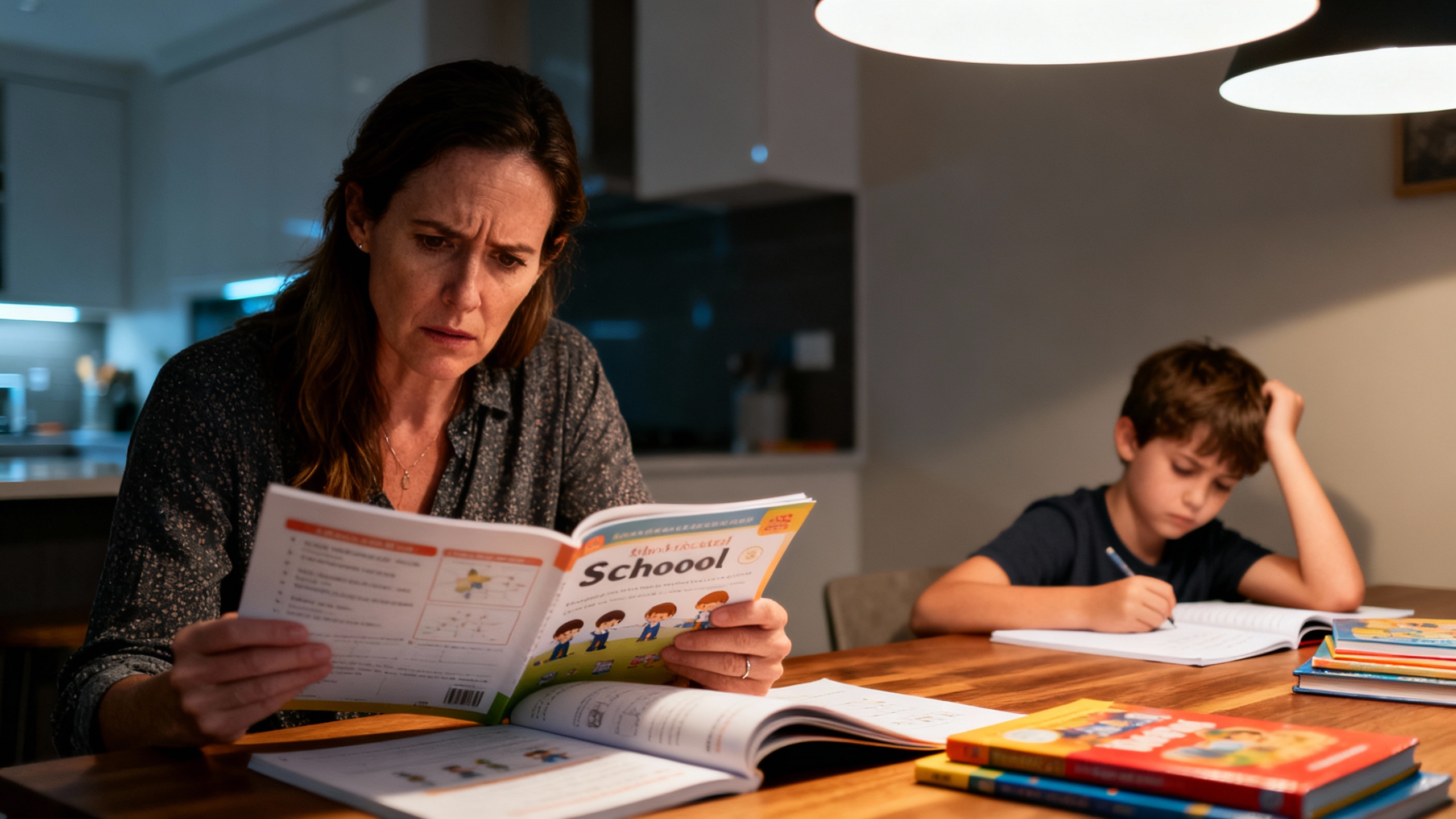
How do I know if my primary school child needs a tutor?
The clearest signs cluster into three groups: academic patterns, emotional and behavioural changes, and what teachers tell you (and what they politely don't). Most parents notice the emotional signs first, then connect them to the academic ones later — by which point the gap has been widening for a term or two. Looking at all three groups together gives you the most honest read.
Academic warning signs
In our experience supporting thousands of Australian primary school families at Tutero, the most reliable academic warning signs are concrete and measurable:
- Homework consistently takes more than 45 minutes in Years 2–4 when it should take 20. The child isn't being slow — they're reprocessing concepts they should already have, instead of applying them. This is a classic foundational-instability signal.
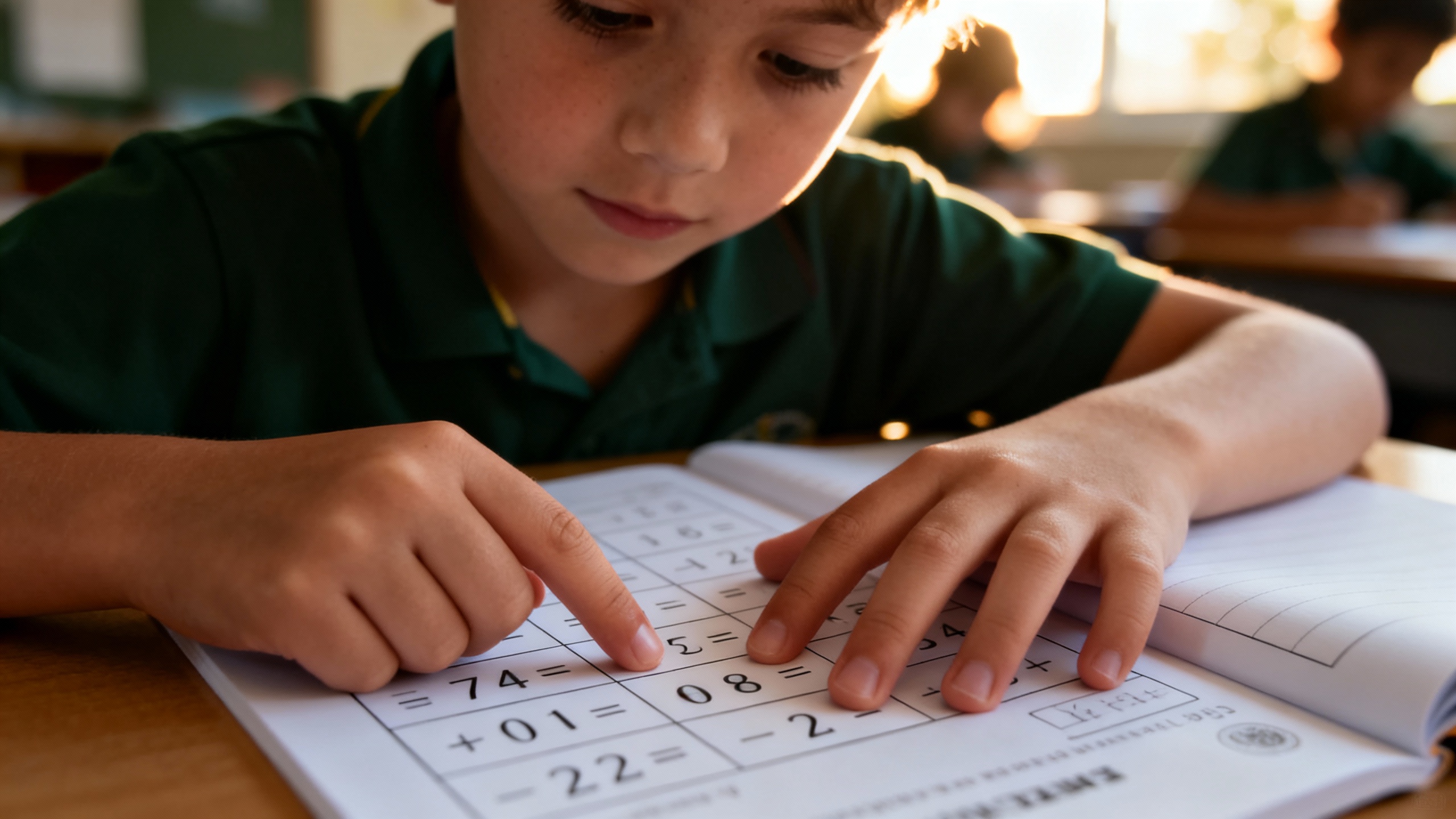
- Counting on fingers for basic maths facts in Year 3 and beyond. Times tables and single-digit addition should be retrieved from memory by mid-primary. If your child is still finger-counting, they're mentally exhausting themselves on basics when they should be focused on problem-solving — a clear sign they're struggling with maths at a foundational level.
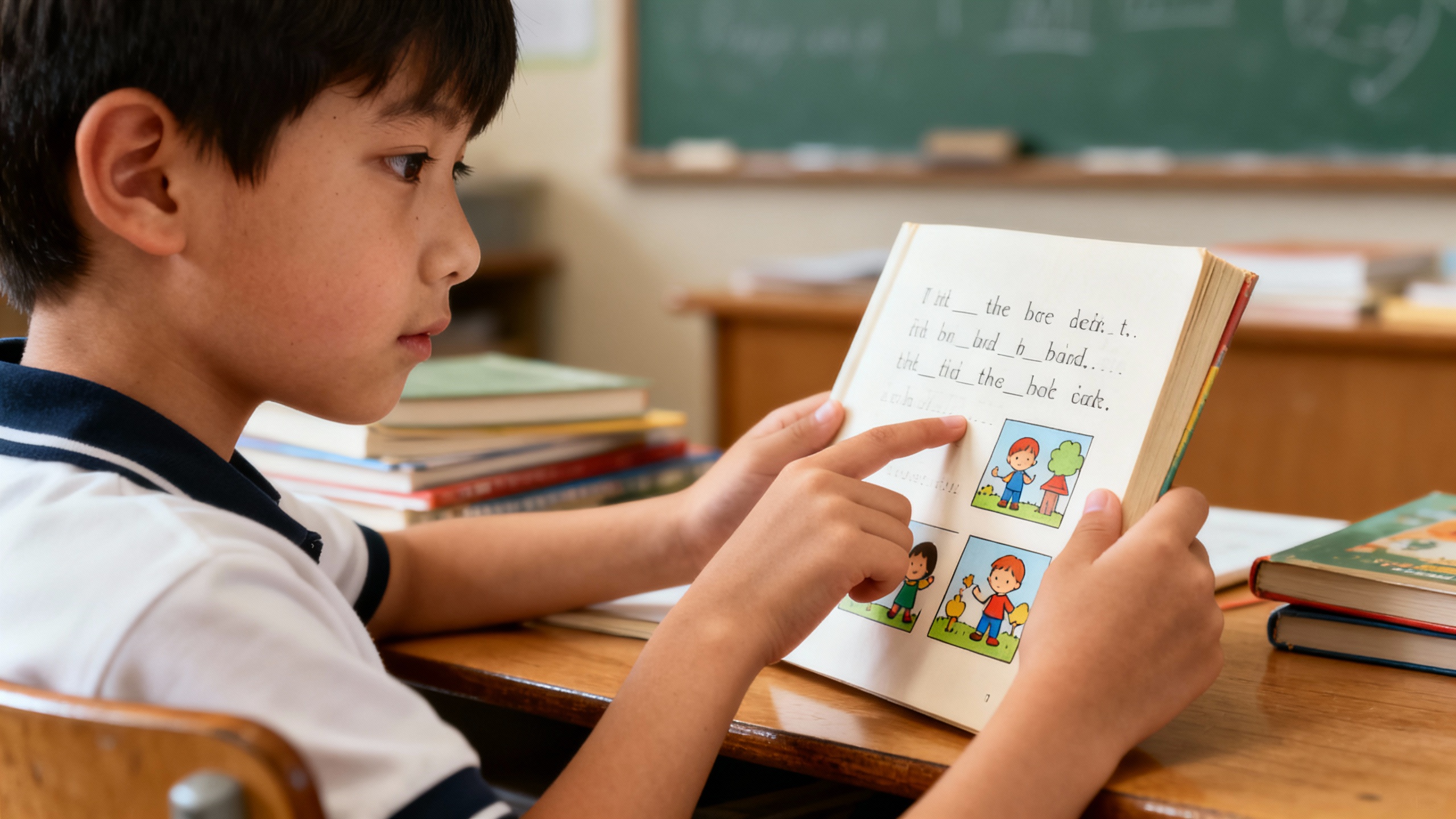
- Reading fluency stalls for more than one school term. Slow reading taxes every subject, because the cognitive load of decoding leaves no capacity for comprehension. Watch for guessing words from the first letter or picture clues rather than using phonetic decoding.
- Skills learned on Monday are forgotten by Friday. A memory-consolidation failure caused by missing prior knowledge — the new concept has nothing stable to attach to. Inconsistent academic progress across consecutive terms is a stronger signal than any single bad week.
Emotional and behavioural warning signs
Behaviour is the smoke; academics are the fire. Most parents notice the behaviour first.
- "I hate maths" or "I'm dumb at reading." When a child labels themselves as bad at a subject, they're usually masking a foundational gap. They've concluded that they are the problem, when the real problem is that no one has noticed the missing concept. Confidence drops before grades drop.
- Avoidance behaviour around homework or specific subjects. Tantrums, shutdowns, "I forgot to bring it home," sudden interest in any other activity. Refusing schoolwork is rarely defiance — it's almost always a child trying to escape feeling stupid.
- Focus issues that disappear at home on a tablet. Many "focus issues" in class are academic avoidance, not attention disorders. A child who can lock into a video game for an hour but can't sit still for ten minutes of reading isn't unable to focus — they're protecting themselves from cognitive overload. Genuine attention concerns warrant a paediatrician; academic avoidance warrants a tutor.
- The Sunday-night dread. If your child becomes withdrawn or anxious on Sunday evenings, that's a school-related stress signal. Primary-age children should not feel dread about Monday mornings.
When teacher feedback is the loudest signal
Teachers see your child alongside thirty others of the same age. They notice the gap before you do. But Australian classroom teachers are trained to use diplomatic language, so the most important signals come dressed up as gentle suggestions:
- "Would benefit from extra practice" on a report card almost always means the child is materially behind and the teacher has run out of in-class options.
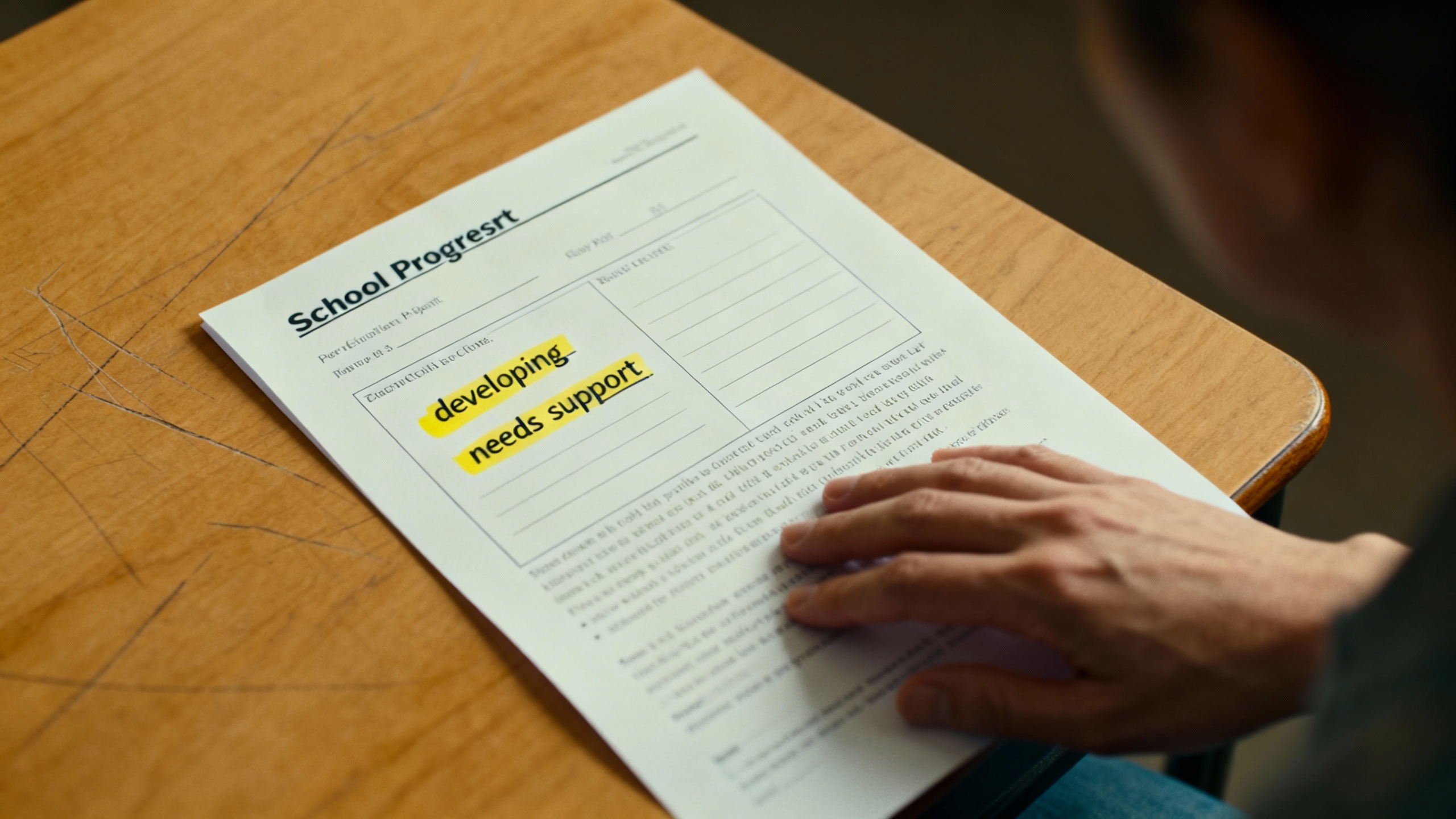
- Repeated "developing" or "needs support" ratings across two consecutive terms is a serious signal. One term can be a rough patch; two terms is a pattern.
- An unprompted recommendation for tutoring from a teacher is rare and almost always urgent. Teachers don't suggest tutoring lightly — by the time they do, they've usually exhausted the in-class differentiation they can offer.
Why do primary school students fall behind?
Primary school is the foundation for every subject your child will encounter. The Australian Curriculum is designed sequentially: missing one core concept in Year 2 will affect the child's grasp of related concepts in Year 3 and beyond. Maths is the clearest example — without secure place value, the entire numeracy curriculum becomes unstable. Reading works the same way: without secure phonics, comprehension stalls.
This isn't about an inherent inability to learn. It's about learning pace differences and the need for personalised support to close specific gaps. Persistent, worsening gaps in early years are a real red flag — they don't usually resolve on their own, and they get harder to close the longer they're left.
The Australian Education Research Organisation's evidence syntheses consistently show that targeted small-group or 1:1 instruction — focused on the precise skill a child has missed — is one of the highest-impact interventions available for primary-age learners. That's exactly what good tutoring looks like.
How much does a primary school tutor cost in Australia?
Primary school tutoring in Australia typically ranges from A$60 to A$110 per hour, depending on the tutor's qualifications and whether you go through a tutoring service or hire independently:
| Tutor type | Hourly rate | What's typically included |
|---|---|---|
| University-student tutor (independent) | A$40 – A$70 | Lesson delivery only. You vet credentials, schedule, and judge progress. |
| Qualified-teacher tutor (independent) | A$70 – A$100 | Curriculum-aligned teaching. You still manage scheduling and progress tracking. |
| Tutoring service (e.g. Tutero) | A$65 – A$90 | Tutor matching by an education specialist, structured diagnostic, weekly progress reporting, replacement if the fit isn't right, no contracts. |
| Premium agency / specialist (e.g. dyslexia-specialist) | A$90 – A$110+ | Specialist intervention, formal assessments, multi-session programmes. |
For a typical weekly cadence — one 1-hour lesson per week across a 12-week school term — that works out to roughly A$720 – A$1,080 per term, or A$2,880 – A$4,320 over a school year if you continue across all four terms. Higher rates reflect a qualified Australian teacher (not a university student), a structured diagnostic, lesson-by-lesson progress reporting, and account-management support if the tutor-student fit isn't right.
Is one hour of tutoring a week enough for primary school?
Yes, for most primary school children. One hour per week of focused 1:1 lessons is usually enough to close a typical gap within 8–12 weeks, provided the tutor is targeting the right skill and the child does brief independent practice between lessons.
When to consider two lessons a week:
- Deeper gaps — more than two terms behind
- Exam preparation under time pressure
- A child whose falling-behind pattern spans multiple subjects
The first four lessons matter most — that's when most parents see a confidence shift, and it's the strongest predictor of whether the tutoring will land. One Tutero pattern we see consistently: parents who try to "make up time" with three lessons a week often see the child burn out. Slow and steady — one focused lesson, brief practice, the next lesson — beats compression every time.
Can a primary school tutor help with dyslexia or learning differences?
Yes, often very effectively — but the tutor has to be the right kind. Around 1 in 10 Australian children show characteristics of dyslexia, and many also have co-occurring conditions like dyscalculia, ADHD, or processing differences. A generalist tutor without specific training can do more harm than good with these students.
What to look for:
- A tutor with explicit experience supporting children with the specific learning difference your child has
- A structured-literacy or evidence-informed approach (rather than a generic "I'll just go through the homework" model)
- Patience for the slower pace dyslexic learners need
At Tutero we match families with tutors who have direct experience supporting children with learning differences, and our education specialists discuss the child's specific needs before the first lesson.
Important: a tutor is not a substitute for a formal assessment if you suspect a learning difference. If your child shows persistent signs, an educational psychologist's assessment will tell you what you're working with — and a good tutor builds on that diagnosis, not around it.
How do you choose the right primary school tutor?
Choosing a tutor is choosing a relationship. Get it right and your child re-engages with school within a term; get it wrong and you reinforce the message that learning is hard.
Qualifications and Australian Curriculum alignment
At minimum: completed or in-progress teaching qualifications, demonstrated experience with Australian Curriculum primary content, and 1:1 tutoring experience. Group classroom experience does not transfer cleanly — teaching one child at their level requires a different skill set from running a class of 25.
Ask explicitly: how do you diagnose where my child is struggling? A good tutor has a clear answer involving structured assessment, not "I'll just see how the first lesson goes."
One-to-one vs group; in-person vs online
For closing a specific gap, 1:1 is materially more effective than group tutoring. Group settings work for enrichment or exam prep where every student is at roughly the same level — they don't work for a child with a unique gap, because the tutor has to teach to the median.
For primary-age children, online 1:1 tutoring is as effective as in-person when the platform is purpose-built for live tutor-student interaction — a shared whiteboard, screen sharing, the tutor seeing the child's work in real time. Avoid platforms designed for adult webinars repurposed for kids; they don't give the tutor the visibility they need.
How to judge the trial lesson
The trial lesson is your real signal — not the marketing, not the credentials, not the price. Watch for:
- Did the tutor ask diagnostic questions before teaching?
- Did your child engage, or shut down?
- Did the tutor explain things in a way your child understood, or did they re-explain the same way two or three times?
If your child says "I don't want to do that again," trust it. If they say "Can I do that again?", you've found the tutor.
What happens in a primary school tutoring lesson?
A good primary school tutoring lesson follows a predictable shape:
| Phase | Time | What the tutor does |
|---|---|---|
| Diagnostic check-in | 5 – 10 min | Checks where the child is on the specific skill being targeted; quick questions or a short task. |
| Targeted teaching | ~30 min | Direct instruction on the missing concept, worked examples, then guided practice. |
| Independent practice | 10 – 15 min | Child applies what they've just learned without prompting — the only way to know whether the concept landed. |
Between lessons: brief independent practice (10–15 minutes a day, no more for primary-age) on the specific skill, plus a clear note for the parent on what was covered and what to watch for at home.
How does Tutero approach primary school tutoring?
We don't believe in generic tutoring. Early intervention only works when it's precise.
Every Tutero engagement starts with a curriculum-aligned diagnostic to identify the specific foundational gaps that are often invisible in classroom homework or report cards. We pinpoint exactly which missing numeracy or literacy skills are causing the problem. From there, our education specialists match the child with a qualified Australian tutor whose experience fits the gap and the child's learning style.
We then set a tailored learning plan and track progress weekly so the gaps don't re-open. One-to-one tutoring with the right tutor allows for immediate correction of misconceptions — which is the fastest way to make real progress in primary years.
The pattern we see most often: parents tell us their child finally enjoys learning again within four lessons, and report cards start to shift over the following two terms. The confidence comes back first; the marks follow.

Ready to find a primary school tutor for your child?
If you've recognised your child in any of the signs above, the best time to act is now — gaps are materially easier to close in primary school than in secondary. Get matched with a Tutero primary school tutor and we'll have a qualified Australian teacher running a diagnostic lesson within the week.
Behaviour is the smoke; academics are the fire. Most parents notice the behaviour first.
Behaviour is the smoke; academics are the fire. Most parents notice the behaviour first.
Quick answer: Most primary school children don't need a tutor — but a clear set of signs tells you when one would help. If your child is taking over 45 minutes on homework that should take 20, avoiding maths or reading at home, or coming home saying they're "dumb," those are early warnings. A qualified primary school tutor diagnoses exactly which foundational skill is missing and rebuilds it before the gap widens.
How do I know if my primary school child needs a tutor?
The clearest signs cluster into three groups: academic patterns, emotional and behavioural changes, and what teachers tell you (and what they politely don't). Most parents notice the emotional signs first, then connect them to the academic ones later — by which point the gap has been widening for a term or two. Looking at all three groups together gives you the most honest read.
Academic warning signs
In our experience supporting thousands of Australian primary school families at Tutero, the most reliable academic warning signs are concrete and measurable:
- Homework consistently takes more than 45 minutes in Years 2–4 when it should take 20. The child isn't being slow — they're reprocessing concepts they should already have, instead of applying them. This is a classic foundational-instability signal.
- Counting on fingers for basic maths facts in Year 3 and beyond. Times tables and single-digit addition should be retrieved from memory by mid-primary. If your child is still finger-counting, they're mentally exhausting themselves on basics when they should be focused on problem-solving — a clear sign they're struggling with maths at a foundational level.
- Reading fluency stalls for more than one school term. Slow reading taxes every subject, because the cognitive load of decoding leaves no capacity for comprehension. Watch for guessing words from the first letter or picture clues rather than using phonetic decoding.
- Skills learned on Monday are forgotten by Friday. A memory-consolidation failure caused by missing prior knowledge — the new concept has nothing stable to attach to. Inconsistent academic progress across consecutive terms is a stronger signal than any single bad week.
Emotional and behavioural warning signs
Behaviour is the smoke; academics are the fire. Most parents notice the behaviour first.
- "I hate maths" or "I'm dumb at reading." When a child labels themselves as bad at a subject, they're usually masking a foundational gap. They've concluded that they are the problem, when the real problem is that no one has noticed the missing concept. Confidence drops before grades drop.
- Avoidance behaviour around homework or specific subjects. Tantrums, shutdowns, "I forgot to bring it home," sudden interest in any other activity. Refusing schoolwork is rarely defiance — it's almost always a child trying to escape feeling stupid.
- Focus issues that disappear at home on a tablet. Many "focus issues" in class are academic avoidance, not attention disorders. A child who can lock into a video game for an hour but can't sit still for ten minutes of reading isn't unable to focus — they're protecting themselves from cognitive overload. Genuine attention concerns warrant a paediatrician; academic avoidance warrants a tutor.
- The Sunday-night dread. If your child becomes withdrawn or anxious on Sunday evenings, that's a school-related stress signal. Primary-age children should not feel dread about Monday mornings.
When teacher feedback is the loudest signal
Teachers see your child alongside thirty others of the same age. They notice the gap before you do. But Australian classroom teachers are trained to use diplomatic language, so the most important signals come dressed up as gentle suggestions:
- "Would benefit from extra practice" on a report card almost always means the child is materially behind and the teacher has run out of in-class options.
- Repeated "developing" or "needs support" ratings across two consecutive terms is a serious signal. One term can be a rough patch; two terms is a pattern.
- An unprompted recommendation for tutoring from a teacher is rare and almost always urgent. Teachers don't suggest tutoring lightly — by the time they do, they've usually exhausted the in-class differentiation they can offer.
Why do primary school students fall behind?
Primary school is the foundation for every subject your child will encounter. The Australian Curriculum is designed sequentially: missing one core concept in Year 2 will affect the child's grasp of related concepts in Year 3 and beyond. Maths is the clearest example — without secure place value, the entire numeracy curriculum becomes unstable. Reading works the same way: without secure phonics, comprehension stalls.
This isn't about an inherent inability to learn. It's about learning pace differences and the need for personalised support to close specific gaps. Persistent, worsening gaps in early years are a real red flag — they don't usually resolve on their own, and they get harder to close the longer they're left.
The Australian Education Research Organisation's evidence syntheses consistently show that targeted small-group or 1:1 instruction — focused on the precise skill a child has missed — is one of the highest-impact interventions available for primary-age learners. That's exactly what good tutoring looks like.
How much does a primary school tutor cost in Australia?
Primary school tutoring in Australia typically ranges from A$60 to A$110 per hour, depending on the tutor's qualifications and whether you go through a tutoring service or hire independently:
| Tutor type | Hourly rate | What's typically included |
|---|---|---|
| University-student tutor (independent) | A$40 – A$70 | Lesson delivery only. You vet credentials, schedule, and judge progress. |
| Qualified-teacher tutor (independent) | A$70 – A$100 | Curriculum-aligned teaching. You still manage scheduling and progress tracking. |
| Tutoring service (e.g. Tutero) | A$65 – A$90 | Tutor matching by an education specialist, structured diagnostic, weekly progress reporting, replacement if the fit isn't right, no contracts. |
| Premium agency / specialist (e.g. dyslexia-specialist) | A$90 – A$110+ | Specialist intervention, formal assessments, multi-session programmes. |
For a typical weekly cadence — one 1-hour lesson per week across a 12-week school term — that works out to roughly A$720 – A$1,080 per term, or A$2,880 – A$4,320 over a school year if you continue across all four terms. Higher rates reflect a qualified Australian teacher (not a university student), a structured diagnostic, lesson-by-lesson progress reporting, and account-management support if the tutor-student fit isn't right.
Is one hour of tutoring a week enough for primary school?
Yes, for most primary school children. One hour per week of focused 1:1 lessons is usually enough to close a typical gap within 8–12 weeks, provided the tutor is targeting the right skill and the child does brief independent practice between lessons.
When to consider two lessons a week:
- Deeper gaps — more than two terms behind
- Exam preparation under time pressure
- A child whose falling-behind pattern spans multiple subjects
The first four lessons matter most — that's when most parents see a confidence shift, and it's the strongest predictor of whether the tutoring will land. One Tutero pattern we see consistently: parents who try to "make up time" with three lessons a week often see the child burn out. Slow and steady — one focused lesson, brief practice, the next lesson — beats compression every time.
Can a primary school tutor help with dyslexia or learning differences?
Yes, often very effectively — but the tutor has to be the right kind. Around 1 in 10 Australian children show characteristics of dyslexia, and many also have co-occurring conditions like dyscalculia, ADHD, or processing differences. A generalist tutor without specific training can do more harm than good with these students.
What to look for:
- A tutor with explicit experience supporting children with the specific learning difference your child has
- A structured-literacy or evidence-informed approach (rather than a generic "I'll just go through the homework" model)
- Patience for the slower pace dyslexic learners need
At Tutero we match families with tutors who have direct experience supporting children with learning differences, and our education specialists discuss the child's specific needs before the first lesson.
Important: a tutor is not a substitute for a formal assessment if you suspect a learning difference. If your child shows persistent signs, an educational psychologist's assessment will tell you what you're working with — and a good tutor builds on that diagnosis, not around it.
How do you choose the right primary school tutor?
Choosing a tutor is choosing a relationship. Get it right and your child re-engages with school within a term; get it wrong and you reinforce the message that learning is hard.
Qualifications and Australian Curriculum alignment
At minimum: completed or in-progress teaching qualifications, demonstrated experience with Australian Curriculum primary content, and 1:1 tutoring experience. Group classroom experience does not transfer cleanly — teaching one child at their level requires a different skill set from running a class of 25.
Ask explicitly: how do you diagnose where my child is struggling? A good tutor has a clear answer involving structured assessment, not "I'll just see how the first lesson goes."
One-to-one vs group; in-person vs online
For closing a specific gap, 1:1 is materially more effective than group tutoring. Group settings work for enrichment or exam prep where every student is at roughly the same level — they don't work for a child with a unique gap, because the tutor has to teach to the median.
For primary-age children, online 1:1 tutoring is as effective as in-person when the platform is purpose-built for live tutor-student interaction — a shared whiteboard, screen sharing, the tutor seeing the child's work in real time. Avoid platforms designed for adult webinars repurposed for kids; they don't give the tutor the visibility they need.
How to judge the trial lesson
The trial lesson is your real signal — not the marketing, not the credentials, not the price. Watch for:
- Did the tutor ask diagnostic questions before teaching?
- Did your child engage, or shut down?
- Did the tutor explain things in a way your child understood, or did they re-explain the same way two or three times?
If your child says "I don't want to do that again," trust it. If they say "Can I do that again?", you've found the tutor.
What happens in a primary school tutoring lesson?
A good primary school tutoring lesson follows a predictable shape:
| Phase | Time | What the tutor does |
|---|---|---|
| Diagnostic check-in | 5 – 10 min | Checks where the child is on the specific skill being targeted; quick questions or a short task. |
| Targeted teaching | ~30 min | Direct instruction on the missing concept, worked examples, then guided practice. |
| Independent practice | 10 – 15 min | Child applies what they've just learned without prompting — the only way to know whether the concept landed. |
Between lessons: brief independent practice (10–15 minutes a day, no more for primary-age) on the specific skill, plus a clear note for the parent on what was covered and what to watch for at home.
How does Tutero approach primary school tutoring?
We don't believe in generic tutoring. Early intervention only works when it's precise.
Every Tutero engagement starts with a curriculum-aligned diagnostic to identify the specific foundational gaps that are often invisible in classroom homework or report cards. We pinpoint exactly which missing numeracy or literacy skills are causing the problem. From there, our education specialists match the child with a qualified Australian tutor whose experience fits the gap and the child's learning style.
We then set a tailored learning plan and track progress weekly so the gaps don't re-open. One-to-one tutoring with the right tutor allows for immediate correction of misconceptions — which is the fastest way to make real progress in primary years.
The pattern we see most often: parents tell us their child finally enjoys learning again within four lessons, and report cards start to shift over the following two terms. The confidence comes back first; the marks follow.
Ready to find a primary school tutor for your child?
If you've recognised your child in any of the signs above, the best time to act is now — gaps are materially easier to close in primary school than in secondary. Get matched with a Tutero primary school tutor and we'll have a qualified Australian teacher running a diagnostic lesson within the week.
Behaviour is the smoke; academics are the fire. Most parents notice the behaviour first.
Behaviour is the smoke; academics are the fire. Most parents notice the behaviour first.

Behaviour is the smoke; academics are the fire. Most parents notice the behaviour first.
If your child says 'I don't want to do that again,' trust it. If they say 'Can I do that again?', you've found the tutor.
Quick answer: Most primary school children don't need a tutor — but a clear set of signs tells you when one would help. If your child is taking over 45 minutes on homework that should take 20, avoiding maths or reading at home, or coming home saying they're "dumb," those are early warnings. A qualified primary school tutor diagnoses exactly which foundational skill is missing and rebuilds it before the gap widens.
How do I know if my primary school child needs a tutor?
The clearest signs cluster into three groups: academic patterns, emotional and behavioural changes, and what teachers tell you (and what they politely don't). Most parents notice the emotional signs first, then connect them to the academic ones later — by which point the gap has been widening for a term or two. Looking at all three groups together gives you the most honest read.
Academic warning signs
In our experience supporting thousands of Australian primary school families at Tutero, the most reliable academic warning signs are concrete and measurable:
- Homework consistently takes more than 45 minutes in Years 2–4 when it should take 20. The child isn't being slow — they're reprocessing concepts they should already have, instead of applying them. This is a classic foundational-instability signal.
- Counting on fingers for basic maths facts in Year 3 and beyond. Times tables and single-digit addition should be retrieved from memory by mid-primary. If your child is still finger-counting, they're mentally exhausting themselves on basics when they should be focused on problem-solving — a clear sign they're struggling with maths at a foundational level.
- Reading fluency stalls for more than one school term. Slow reading taxes every subject, because the cognitive load of decoding leaves no capacity for comprehension. Watch for guessing words from the first letter or picture clues rather than using phonetic decoding.
- Skills learned on Monday are forgotten by Friday. A memory-consolidation failure caused by missing prior knowledge — the new concept has nothing stable to attach to. Inconsistent academic progress across consecutive terms is a stronger signal than any single bad week.
Emotional and behavioural warning signs
Behaviour is the smoke; academics are the fire. Most parents notice the behaviour first.
- "I hate maths" or "I'm dumb at reading." When a child labels themselves as bad at a subject, they're usually masking a foundational gap. They've concluded that they are the problem, when the real problem is that no one has noticed the missing concept. Confidence drops before grades drop.
- Avoidance behaviour around homework or specific subjects. Tantrums, shutdowns, "I forgot to bring it home," sudden interest in any other activity. Refusing schoolwork is rarely defiance — it's almost always a child trying to escape feeling stupid.
- Focus issues that disappear at home on a tablet. Many "focus issues" in class are academic avoidance, not attention disorders. A child who can lock into a video game for an hour but can't sit still for ten minutes of reading isn't unable to focus — they're protecting themselves from cognitive overload. Genuine attention concerns warrant a paediatrician; academic avoidance warrants a tutor.
- The Sunday-night dread. If your child becomes withdrawn or anxious on Sunday evenings, that's a school-related stress signal. Primary-age children should not feel dread about Monday mornings.
When teacher feedback is the loudest signal
Teachers see your child alongside thirty others of the same age. They notice the gap before you do. But Australian classroom teachers are trained to use diplomatic language, so the most important signals come dressed up as gentle suggestions:
- "Would benefit from extra practice" on a report card almost always means the child is materially behind and the teacher has run out of in-class options.
- Repeated "developing" or "needs support" ratings across two consecutive terms is a serious signal. One term can be a rough patch; two terms is a pattern.
- An unprompted recommendation for tutoring from a teacher is rare and almost always urgent. Teachers don't suggest tutoring lightly — by the time they do, they've usually exhausted the in-class differentiation they can offer.
Why do primary school students fall behind?
Primary school is the foundation for every subject your child will encounter. The Australian Curriculum is designed sequentially: missing one core concept in Year 2 will affect the child's grasp of related concepts in Year 3 and beyond. Maths is the clearest example — without secure place value, the entire numeracy curriculum becomes unstable. Reading works the same way: without secure phonics, comprehension stalls.
This isn't about an inherent inability to learn. It's about learning pace differences and the need for personalised support to close specific gaps. Persistent, worsening gaps in early years are a real red flag — they don't usually resolve on their own, and they get harder to close the longer they're left.
The Australian Education Research Organisation's evidence syntheses consistently show that targeted small-group or 1:1 instruction — focused on the precise skill a child has missed — is one of the highest-impact interventions available for primary-age learners. That's exactly what good tutoring looks like.
How much does a primary school tutor cost in Australia?
Primary school tutoring in Australia typically ranges from A$60 to A$110 per hour, depending on the tutor's qualifications and whether you go through a tutoring service or hire independently:
| Tutor type | Hourly rate | What's typically included |
|---|---|---|
| University-student tutor (independent) | A$40 – A$70 | Lesson delivery only. You vet credentials, schedule, and judge progress. |
| Qualified-teacher tutor (independent) | A$70 – A$100 | Curriculum-aligned teaching. You still manage scheduling and progress tracking. |
| Tutoring service (e.g. Tutero) | A$65 – A$90 | Tutor matching by an education specialist, structured diagnostic, weekly progress reporting, replacement if the fit isn't right, no contracts. |
| Premium agency / specialist (e.g. dyslexia-specialist) | A$90 – A$110+ | Specialist intervention, formal assessments, multi-session programmes. |
For a typical weekly cadence — one 1-hour lesson per week across a 12-week school term — that works out to roughly A$720 – A$1,080 per term, or A$2,880 – A$4,320 over a school year if you continue across all four terms. Higher rates reflect a qualified Australian teacher (not a university student), a structured diagnostic, lesson-by-lesson progress reporting, and account-management support if the tutor-student fit isn't right.
Is one hour of tutoring a week enough for primary school?
Yes, for most primary school children. One hour per week of focused 1:1 lessons is usually enough to close a typical gap within 8–12 weeks, provided the tutor is targeting the right skill and the child does brief independent practice between lessons.
When to consider two lessons a week:
- Deeper gaps — more than two terms behind
- Exam preparation under time pressure
- A child whose falling-behind pattern spans multiple subjects
The first four lessons matter most — that's when most parents see a confidence shift, and it's the strongest predictor of whether the tutoring will land. One Tutero pattern we see consistently: parents who try to "make up time" with three lessons a week often see the child burn out. Slow and steady — one focused lesson, brief practice, the next lesson — beats compression every time.
Can a primary school tutor help with dyslexia or learning differences?
Yes, often very effectively — but the tutor has to be the right kind. Around 1 in 10 Australian children show characteristics of dyslexia, and many also have co-occurring conditions like dyscalculia, ADHD, or processing differences. A generalist tutor without specific training can do more harm than good with these students.
What to look for:
- A tutor with explicit experience supporting children with the specific learning difference your child has
- A structured-literacy or evidence-informed approach (rather than a generic "I'll just go through the homework" model)
- Patience for the slower pace dyslexic learners need
At Tutero we match families with tutors who have direct experience supporting children with learning differences, and our education specialists discuss the child's specific needs before the first lesson.
Important: a tutor is not a substitute for a formal assessment if you suspect a learning difference. If your child shows persistent signs, an educational psychologist's assessment will tell you what you're working with — and a good tutor builds on that diagnosis, not around it.
How do you choose the right primary school tutor?
Choosing a tutor is choosing a relationship. Get it right and your child re-engages with school within a term; get it wrong and you reinforce the message that learning is hard.
Qualifications and Australian Curriculum alignment
At minimum: completed or in-progress teaching qualifications, demonstrated experience with Australian Curriculum primary content, and 1:1 tutoring experience. Group classroom experience does not transfer cleanly — teaching one child at their level requires a different skill set from running a class of 25.
Ask explicitly: how do you diagnose where my child is struggling? A good tutor has a clear answer involving structured assessment, not "I'll just see how the first lesson goes."
One-to-one vs group; in-person vs online
For closing a specific gap, 1:1 is materially more effective than group tutoring. Group settings work for enrichment or exam prep where every student is at roughly the same level — they don't work for a child with a unique gap, because the tutor has to teach to the median.
For primary-age children, online 1:1 tutoring is as effective as in-person when the platform is purpose-built for live tutor-student interaction — a shared whiteboard, screen sharing, the tutor seeing the child's work in real time. Avoid platforms designed for adult webinars repurposed for kids; they don't give the tutor the visibility they need.
How to judge the trial lesson
The trial lesson is your real signal — not the marketing, not the credentials, not the price. Watch for:
- Did the tutor ask diagnostic questions before teaching?
- Did your child engage, or shut down?
- Did the tutor explain things in a way your child understood, or did they re-explain the same way two or three times?
If your child says "I don't want to do that again," trust it. If they say "Can I do that again?", you've found the tutor.
What happens in a primary school tutoring lesson?
A good primary school tutoring lesson follows a predictable shape:
| Phase | Time | What the tutor does |
|---|---|---|
| Diagnostic check-in | 5 – 10 min | Checks where the child is on the specific skill being targeted; quick questions or a short task. |
| Targeted teaching | ~30 min | Direct instruction on the missing concept, worked examples, then guided practice. |
| Independent practice | 10 – 15 min | Child applies what they've just learned without prompting — the only way to know whether the concept landed. |
Between lessons: brief independent practice (10–15 minutes a day, no more for primary-age) on the specific skill, plus a clear note for the parent on what was covered and what to watch for at home.
How does Tutero approach primary school tutoring?
We don't believe in generic tutoring. Early intervention only works when it's precise.
Every Tutero engagement starts with a curriculum-aligned diagnostic to identify the specific foundational gaps that are often invisible in classroom homework or report cards. We pinpoint exactly which missing numeracy or literacy skills are causing the problem. From there, our education specialists match the child with a qualified Australian tutor whose experience fits the gap and the child's learning style.
We then set a tailored learning plan and track progress weekly so the gaps don't re-open. One-to-one tutoring with the right tutor allows for immediate correction of misconceptions — which is the fastest way to make real progress in primary years.
The pattern we see most often: parents tell us their child finally enjoys learning again within four lessons, and report cards start to shift over the following two terms. The confidence comes back first; the marks follow.
Ready to find a primary school tutor for your child?
If you've recognised your child in any of the signs above, the best time to act is now — gaps are materially easier to close in primary school than in secondary. Get matched with a Tutero primary school tutor and we'll have a qualified Australian teacher running a diagnostic lesson within the week.
Behaviour is the smoke; academics are the fire. Most parents notice the behaviour first.
If your child says 'I don't want to do that again,' trust it. If they say 'Can I do that again?', you've found the tutor.
.svg)
.svg)
Most children who benefit from tutoring start between Year 2 and Year 5, when foundational maths and literacy gaps become visible. Year 1 is usually too early — small struggles often resolve as classroom routines settle. By Year 6, gaps that have hardened over multiple years take longer to close, so earlier intervention is materially easier.
Most parents see a confidence shift inside the first four lessons. Measurable academic improvement on report cards typically takes eight to twelve weeks of weekly 1:1 lessons, depending on how wide the gap is. Maths recall (e.g. times tables) moves fastest; reading fluency compounds over months, not weeks.
At minimum, completed or in-progress teaching qualifications, demonstrated experience with Australian Curriculum primary content, and 1:1 teaching experience (group experience doesn't transfer cleanly). At Tutero, every tutor is chosen from the top 2% of applicants and matched to your child's subject and year level.
Independent tutors are often cheaper but require parents to vet credentials, manage scheduling, and judge progress alone. A tutoring service handles tutor matching, lesson tracking, tutor replacement if the fit isn't right, and progress reporting — at a higher price but with materially less parent overhead.
Yes — for primary-age children, online 1:1 tutoring is as effective as in-person when the platform is purpose-built for live tutor-student interaction. The tutor sees the child's work in real time and responds to confusion immediately. Tutero lessons use shared whiteboards and tutor-led pacing.
NAPLAN results in Years 3 and 5 are useful diagnostic data, not a verdict. Bands below the national minimum standard signal a child needs targeted support. But strong NAPLAN can mask a confidence problem, and weak NAPLAN can reflect test anxiety. Use NAPLAN alongside classroom feedback, not in isolation.
Hoping to improve confidence & grades?

.png)


