.svg)

As a parent, you want your child to do well at school and feel good about learning — and you can probably tell when something isn't clicking. Maybe your 3rd grader is dreading reading. Maybe your 9th grader keeps saying "I'm just bad at math." Maybe your high schooler is stalling on Algebra II or AP English with college applications looming.
Personalized tutoring is one-on-one teaching that's adapted to one child — what they already know, where they're stuck, and how they learn best. A qualified tutor diagnoses the specific gap, builds a plan from that exact point, and adjusts week by week as your child progresses. Done well, families see clearer understanding, better grades, more confidence, and study habits that outlast the tutoring itself. Below is what to expect, how it works across grade levels, and how to make sure the time and money are well spent.
If you're weighing it up, it helps to start with the option most American families now choose: online one-on-one tutoring, where the tutor and your child meet in a video session designed for individual teaching.
What is personalized tutoring?
Personalized tutoring is one-on-one teaching from a qualified tutor who builds every lesson around one child — their current understanding, the specific gap they need to close, and how they learn best. It sits between two things parents are already familiar with: the classroom, where one teacher works with 25–30 students, and homework help, where a parent or sibling tries to fill in the blanks. It's neither.
A personalized tutor works with one child — usually for an hour a week — and structures every session around that child's current understanding. Before the first lesson the tutor diagnoses the gap (a quick written check, a short conversation about a recent assessment, a look at a worksheet that didn't go well). Then they teach forward from that point. If something isn't landing, they slow down. If your child is ahead in one area, they push further. The lesson plan changes because your child is the lesson plan.
This is the difference researchers describe in the Education Endowment Foundation's one-to-one tutoring review, which finds that one-to-one tutoring leads to an average of around five additional months of learning per year for the students who receive it. The teaching is more responsive, the feedback is faster, and there is nowhere for a misunderstanding to hide.
How does personalized tutoring actually work?
A good personalized tutor closes the gap between where your child is and where they need to be by diagnosing first, then teaching forward from that exact point — and adjusting every week. Most students don't fail a topic outright; they fall a step or two behind, and the class moves on. Once that happens, every new lesson sits on shaky ground. Personalized tutoring is built to close that specific gap.
In a typical first month, a good tutor will:
Diagnose — a focused check on what your child does and doesn't yet understand. Not a generic test; the topics they're actually doing in class right now.
Plan from that point — the next lesson rebuilds from the earliest gap, not from the curriculum's current page. If a 7th grader is missing fractions, the 7th grade pre-algebra unit is revisited only when fractions are solid.
Adjust weekly — every session ends with a quick read of how the child went and what to change for next week.
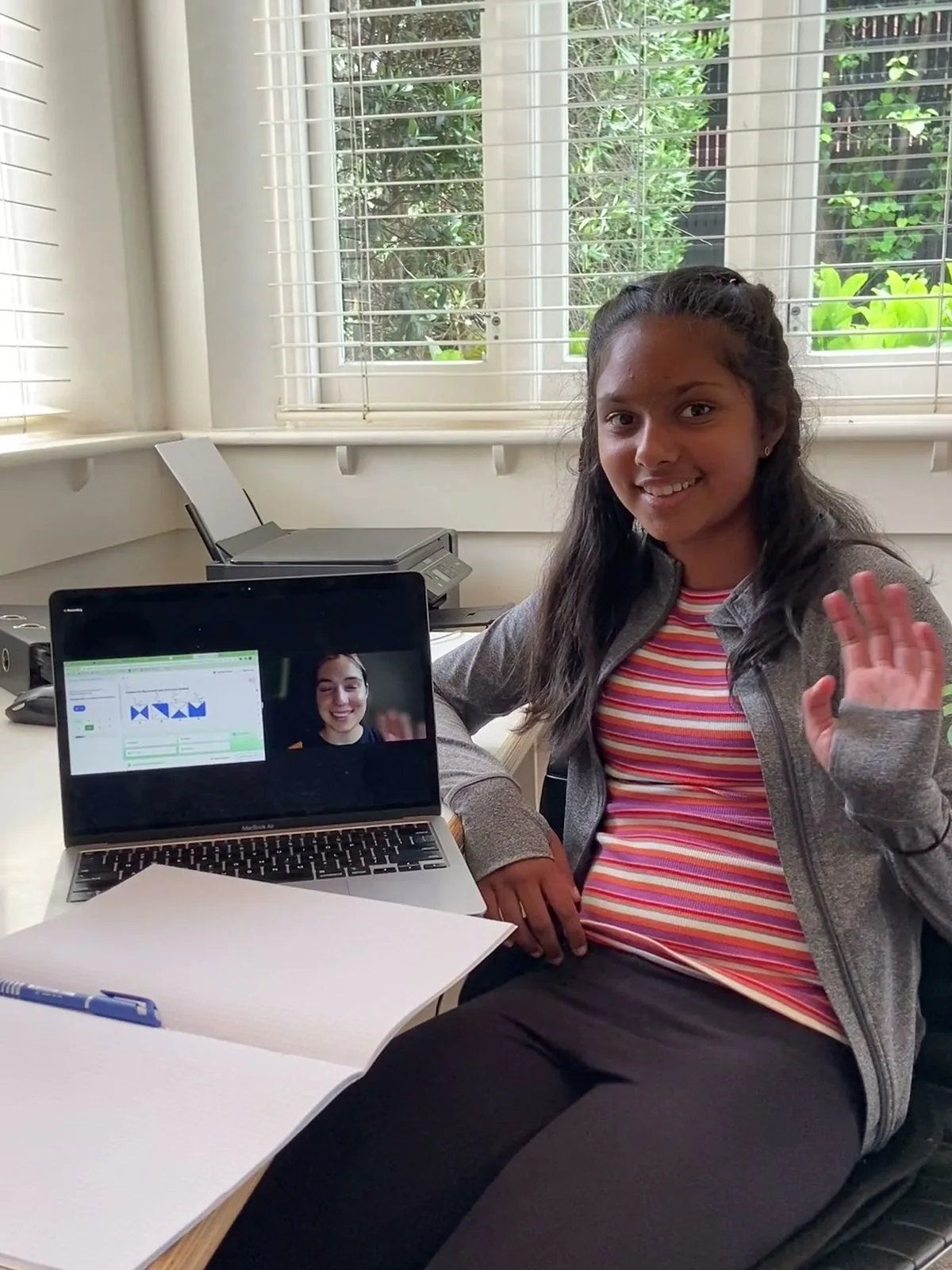
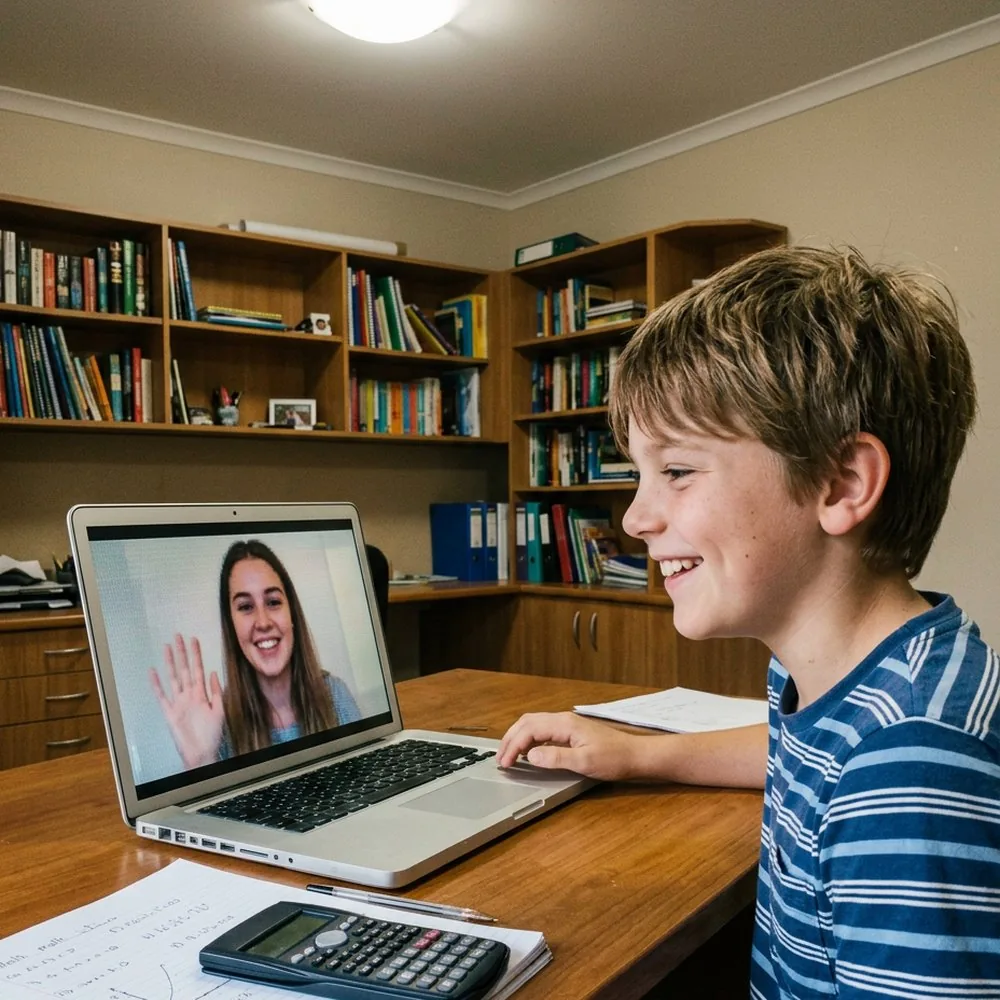
The format that supports this best for most families is online — a tutor and child meeting in a video session with a shared whiteboard, materials prepared ahead of time, and progress notes the parent can read after each lesson. The tutors who do this work at Tutero are screened for subject knowledge, teaching ability, and the patience the format demands.
Cost-wise, most American families pay between US$40 and US$100 per hour for one-on-one tutoring, with online typically less expensive than in-person. The lesson changes by grade level; the rate doesn't need to. A managed service that screens tutors and rematches if the fit isn't right is usually worth a few extra dollars an hour.
What does personalized tutoring look like for elementary, middle, and high school students?
What "personalized" looks like in practice changes depending on how old your child is. The principle (one tutor, one child, lessons that adapt) is the same. The shape of the session is different.
Elementary (grades K–5). Sessions are usually 30–45 minutes — long enough to make progress, short enough to suit a younger attention span. Many families have the parent in the room for the first few lessons, both to settle the child and to learn how the tutor works. The early focus is reading fluency, comprehension, number sense, and multiplication facts — the building blocks that make middle school easier later.
Middle school (grades 6–8). An hour a week is the standard pattern. The tutor works alongside what the school is teaching, fills the gaps that classroom pace creates, and starts to teach study skills explicitly — how to take useful notes, how to break a math problem into steps, how to plan an essay. This is the grade level where confidence is most often rebuilt.
High school (grades 9–12 / SAT / ACT / AP). Tutoring becomes targeted exam preparation: practice tests, marker-style feedback, and the specific score-grabbing techniques each test rewards. A good high school tutor knows the test and the rubric, not just the content. The same hourly rate at Tutero applies through high school — there's no premium for SAT or AP coaching.
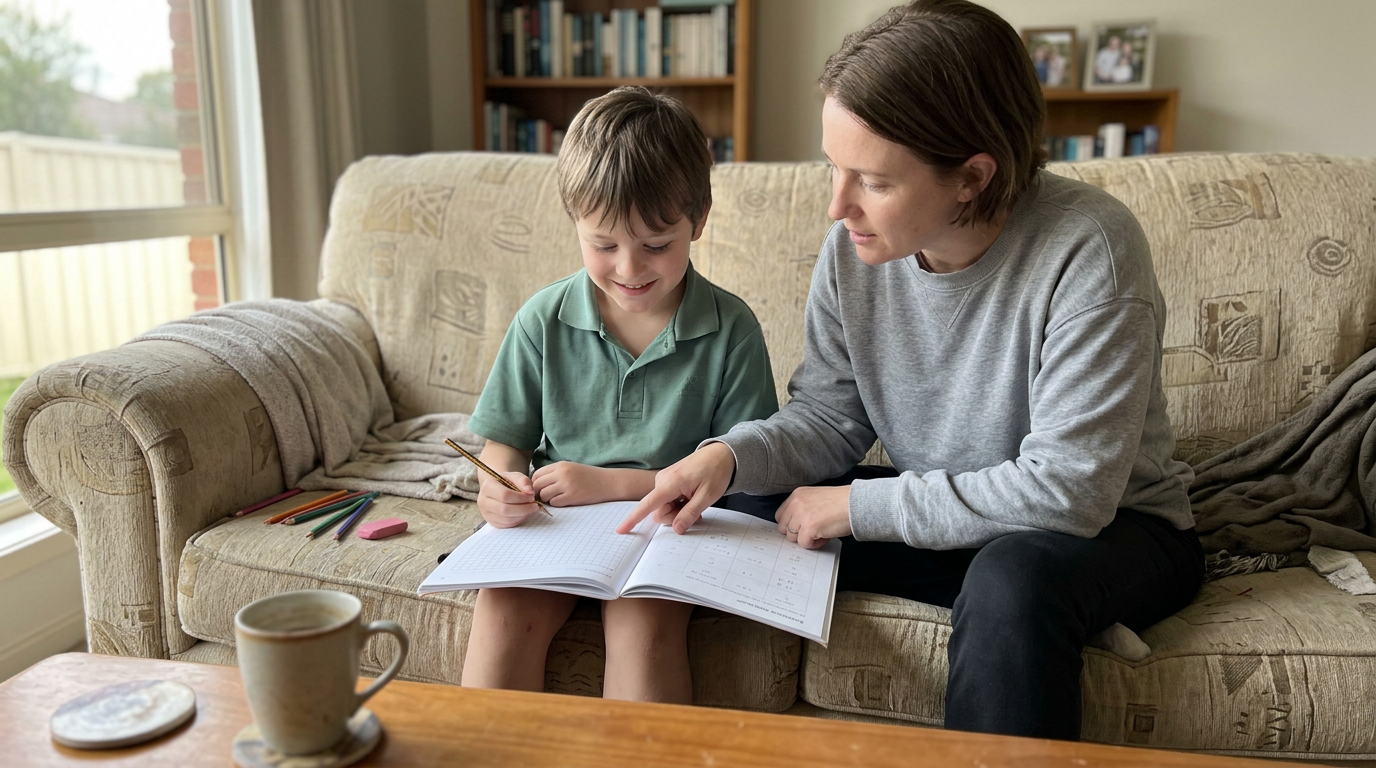
How does personalized tutoring help build my child's confidence?
Personalized tutoring builds confidence because the whole hour belongs to your child — they are seen, heard, and answered in a way no class of 28 can replicate. In a class of 28, even a great teacher can only give each student a few minutes of direct attention each lesson. Quiet kids learn to disappear. Confident kids dominate the air time. Many of the children who would benefit most from a question being answered are the children least likely to raise their hand.
Personalized tutoring inverts that. The whole hour is your child's. They can ask the question they wouldn't ask in front of their friends. They can be wrong without anyone seeing. They can work at their own pace without slowing anyone down or being slowed down by anyone else. Over weeks, this changes how your child sees themselves as a learner — "I'm bad at math" softens into "I'm working on math" softens, eventually, into "I get this."
The mechanism is simple but underrated: confidence grows from being seen. A tutor who notices what your child got right today, and names it, does more for confidence than any pep talk a parent can give.
What study skills will my child pick up from personalized tutoring?
The most overlooked benefit of one-on-one tutoring isn't subject content — it's the study skills your child picks up almost by accident: weekly planning, active study, using feedback well, and handling busy weeks. Knowing the material is necessary. Knowing how to study is what turns that knowledge into a result.
A personalized tutor models, week after week, the kind of habits that schools rarely have time to teach explicitly:
How to plan a week — looking at upcoming assessments and breaking them into daily 25-minute blocks, not a single panicked Sunday night.
How to study actively — practice questions, self-quizzing, explaining a concept aloud — instead of re-reading notes and feeling productive.
How to use feedback — turning a marked test into a list of two or three things to fix, rather than a grade to feel bad about.
How to handle a hard week — what to do when sleep, sport, and a chemistry test all collide.
By 11th or 12th grade, students who have had a tutor through middle school often don't need one for the same reasons — they've internalized how to learn. They might keep tutoring for SAT or AP-specific coaching, but the foundational scaffolding is already there.
How do I know if personalized tutoring is working for my child?
You'll know personalized tutoring is working within six to eight weeks: your child's language shifts from "I don't get it" to "I'm working on this part," homework gets faster, and test results start moving up by 5–10 points at a time. Personalized tutoring isn't free, and it isn't a quick fix. The right way to evaluate it is by what changes — not after one lesson, but over six to eight weeks.
Signs it's working:
Your child stops saying "I don't get it" and starts saying "I'm working on this part" — the language shifts from blanket overwhelm to specific, named tasks.
Homework that used to take three hours takes one. The bottleneck wasn't time; it was understanding.
A test result moves up — not by 30 points, but by 5–10 — and the next one moves up another 5.
Your child volunteers to do a hard problem in front of you. Confidence is downstream of competence.
Signs to question the fit:
Six weeks in, your child still dreads the session.
The tutor can't tell you what your child is and isn't getting after a month.
Sessions are mostly homework supervision, not teaching.
If those last three apply, the answer isn't necessarily "stop tutoring" — it's usually "different tutor."
Is personalized tutoring really worth it?
Yes — when the tutor diagnoses the gap, plans from that point, and adjusts every week, personalized tutoring is the closest thing to private one-on-one teaching most American families will buy, and the change usually shows up within six to eight weeks. It works because it does what a classroom can't: it teaches one child at their exact level, week after week, and adjusts as they grow. Done well, it gives your child the academic ground under their feet, the confidence to use it, and the study skills that carry on long after the lessons end.
If you'd like to talk through whether it's right for your child, we're here — a tutor matched to your child rather than the other way round.
A good tutor doesn't just re-teach the lesson. They figure out exactly where your child got stuck, then build a plan from that point forward.
A good tutor doesn't just re-teach the lesson. They figure out exactly where your child got stuck, then build a plan from that point forward.
As a parent, you want your child to do well at school and feel good about learning — and you can probably tell when something isn't clicking. Maybe your 3rd grader is dreading reading. Maybe your 9th grader keeps saying "I'm just bad at math." Maybe your high schooler is stalling on Algebra II or AP English with college applications looming.
Personalized tutoring is one-on-one teaching that's adapted to one child — what they already know, where they're stuck, and how they learn best. A qualified tutor diagnoses the specific gap, builds a plan from that exact point, and adjusts week by week as your child progresses. Done well, families see clearer understanding, better grades, more confidence, and study habits that outlast the tutoring itself. Below is what to expect, how it works across grade levels, and how to make sure the time and money are well spent.
If you're weighing it up, it helps to start with the option most American families now choose: online one-on-one tutoring, where the tutor and your child meet in a video session designed for individual teaching.
What is personalized tutoring?
Personalized tutoring is one-on-one teaching from a qualified tutor who builds every lesson around one child — their current understanding, the specific gap they need to close, and how they learn best. It sits between two things parents are already familiar with: the classroom, where one teacher works with 25–30 students, and homework help, where a parent or sibling tries to fill in the blanks. It's neither.
A personalized tutor works with one child — usually for an hour a week — and structures every session around that child's current understanding. Before the first lesson the tutor diagnoses the gap (a quick written check, a short conversation about a recent assessment, a look at a worksheet that didn't go well). Then they teach forward from that point. If something isn't landing, they slow down. If your child is ahead in one area, they push further. The lesson plan changes because your child is the lesson plan.
This is the difference researchers describe in the Education Endowment Foundation's one-to-one tutoring review, which finds that one-to-one tutoring leads to an average of around five additional months of learning per year for the students who receive it. The teaching is more responsive, the feedback is faster, and there is nowhere for a misunderstanding to hide.
How does personalized tutoring actually work?
A good personalized tutor closes the gap between where your child is and where they need to be by diagnosing first, then teaching forward from that exact point — and adjusting every week. Most students don't fail a topic outright; they fall a step or two behind, and the class moves on. Once that happens, every new lesson sits on shaky ground. Personalized tutoring is built to close that specific gap.
In a typical first month, a good tutor will:
Diagnose — a focused check on what your child does and doesn't yet understand. Not a generic test; the topics they're actually doing in class right now.
Plan from that point — the next lesson rebuilds from the earliest gap, not from the curriculum's current page. If a 7th grader is missing fractions, the 7th grade pre-algebra unit is revisited only when fractions are solid.
Adjust weekly — every session ends with a quick read of how the child went and what to change for next week.
The format that supports this best for most families is online — a tutor and child meeting in a video session with a shared whiteboard, materials prepared ahead of time, and progress notes the parent can read after each lesson. The tutors who do this work at Tutero are screened for subject knowledge, teaching ability, and the patience the format demands.
Cost-wise, most American families pay between US$40 and US$100 per hour for one-on-one tutoring, with online typically less expensive than in-person. The lesson changes by grade level; the rate doesn't need to. A managed service that screens tutors and rematches if the fit isn't right is usually worth a few extra dollars an hour.
What does personalized tutoring look like for elementary, middle, and high school students?
What "personalized" looks like in practice changes depending on how old your child is. The principle (one tutor, one child, lessons that adapt) is the same. The shape of the session is different.
Elementary (grades K–5). Sessions are usually 30–45 minutes — long enough to make progress, short enough to suit a younger attention span. Many families have the parent in the room for the first few lessons, both to settle the child and to learn how the tutor works. The early focus is reading fluency, comprehension, number sense, and multiplication facts — the building blocks that make middle school easier later.
Middle school (grades 6–8). An hour a week is the standard pattern. The tutor works alongside what the school is teaching, fills the gaps that classroom pace creates, and starts to teach study skills explicitly — how to take useful notes, how to break a math problem into steps, how to plan an essay. This is the grade level where confidence is most often rebuilt.
High school (grades 9–12 / SAT / ACT / AP). Tutoring becomes targeted exam preparation: practice tests, marker-style feedback, and the specific score-grabbing techniques each test rewards. A good high school tutor knows the test and the rubric, not just the content. The same hourly rate at Tutero applies through high school — there's no premium for SAT or AP coaching.
How does personalized tutoring help build my child's confidence?
Personalized tutoring builds confidence because the whole hour belongs to your child — they are seen, heard, and answered in a way no class of 28 can replicate. In a class of 28, even a great teacher can only give each student a few minutes of direct attention each lesson. Quiet kids learn to disappear. Confident kids dominate the air time. Many of the children who would benefit most from a question being answered are the children least likely to raise their hand.
Personalized tutoring inverts that. The whole hour is your child's. They can ask the question they wouldn't ask in front of their friends. They can be wrong without anyone seeing. They can work at their own pace without slowing anyone down or being slowed down by anyone else. Over weeks, this changes how your child sees themselves as a learner — "I'm bad at math" softens into "I'm working on math" softens, eventually, into "I get this."
The mechanism is simple but underrated: confidence grows from being seen. A tutor who notices what your child got right today, and names it, does more for confidence than any pep talk a parent can give.
What study skills will my child pick up from personalized tutoring?
The most overlooked benefit of one-on-one tutoring isn't subject content — it's the study skills your child picks up almost by accident: weekly planning, active study, using feedback well, and handling busy weeks. Knowing the material is necessary. Knowing how to study is what turns that knowledge into a result.
A personalized tutor models, week after week, the kind of habits that schools rarely have time to teach explicitly:
How to plan a week — looking at upcoming assessments and breaking them into daily 25-minute blocks, not a single panicked Sunday night.
How to study actively — practice questions, self-quizzing, explaining a concept aloud — instead of re-reading notes and feeling productive.
How to use feedback — turning a marked test into a list of two or three things to fix, rather than a grade to feel bad about.
How to handle a hard week — what to do when sleep, sport, and a chemistry test all collide.
By 11th or 12th grade, students who have had a tutor through middle school often don't need one for the same reasons — they've internalized how to learn. They might keep tutoring for SAT or AP-specific coaching, but the foundational scaffolding is already there.
How do I know if personalized tutoring is working for my child?
You'll know personalized tutoring is working within six to eight weeks: your child's language shifts from "I don't get it" to "I'm working on this part," homework gets faster, and test results start moving up by 5–10 points at a time. Personalized tutoring isn't free, and it isn't a quick fix. The right way to evaluate it is by what changes — not after one lesson, but over six to eight weeks.
Signs it's working:
Your child stops saying "I don't get it" and starts saying "I'm working on this part" — the language shifts from blanket overwhelm to specific, named tasks.
Homework that used to take three hours takes one. The bottleneck wasn't time; it was understanding.
A test result moves up — not by 30 points, but by 5–10 — and the next one moves up another 5.
Your child volunteers to do a hard problem in front of you. Confidence is downstream of competence.
Signs to question the fit:
Six weeks in, your child still dreads the session.
The tutor can't tell you what your child is and isn't getting after a month.
Sessions are mostly homework supervision, not teaching.
If those last three apply, the answer isn't necessarily "stop tutoring" — it's usually "different tutor."
Is personalized tutoring really worth it?
Yes — when the tutor diagnoses the gap, plans from that point, and adjusts every week, personalized tutoring is the closest thing to private one-on-one teaching most American families will buy, and the change usually shows up within six to eight weeks. It works because it does what a classroom can't: it teaches one child at their exact level, week after week, and adjusts as they grow. Done well, it gives your child the academic ground under their feet, the confidence to use it, and the study skills that carry on long after the lessons end.
If you'd like to talk through whether it's right for your child, we're here — a tutor matched to your child rather than the other way round.
A good tutor doesn't just re-teach the lesson. They figure out exactly where your child got stuck, then build a plan from that point forward.
A good tutor doesn't just re-teach the lesson. They figure out exactly where your child got stuck, then build a plan from that point forward.

A good tutor doesn't just re-teach the lesson. They figure out exactly where your child got stuck, then build a plan from that point forward.
Confidence grows from being seen. One-on-one attention gives your child permission to ask the question they wouldn't raise in class.
As a parent, you want your child to do well at school and feel good about learning — and you can probably tell when something isn't clicking. Maybe your 3rd grader is dreading reading. Maybe your 9th grader keeps saying "I'm just bad at math." Maybe your high schooler is stalling on Algebra II or AP English with college applications looming.
Personalized tutoring is one-on-one teaching that's adapted to one child — what they already know, where they're stuck, and how they learn best. A qualified tutor diagnoses the specific gap, builds a plan from that exact point, and adjusts week by week as your child progresses. Done well, families see clearer understanding, better grades, more confidence, and study habits that outlast the tutoring itself. Below is what to expect, how it works across grade levels, and how to make sure the time and money are well spent.
If you're weighing it up, it helps to start with the option most American families now choose: online one-on-one tutoring, where the tutor and your child meet in a video session designed for individual teaching.
What is personalized tutoring?
Personalized tutoring is one-on-one teaching from a qualified tutor who builds every lesson around one child — their current understanding, the specific gap they need to close, and how they learn best. It sits between two things parents are already familiar with: the classroom, where one teacher works with 25–30 students, and homework help, where a parent or sibling tries to fill in the blanks. It's neither.
A personalized tutor works with one child — usually for an hour a week — and structures every session around that child's current understanding. Before the first lesson the tutor diagnoses the gap (a quick written check, a short conversation about a recent assessment, a look at a worksheet that didn't go well). Then they teach forward from that point. If something isn't landing, they slow down. If your child is ahead in one area, they push further. The lesson plan changes because your child is the lesson plan.
This is the difference researchers describe in the Education Endowment Foundation's one-to-one tutoring review, which finds that one-to-one tutoring leads to an average of around five additional months of learning per year for the students who receive it. The teaching is more responsive, the feedback is faster, and there is nowhere for a misunderstanding to hide.
How does personalized tutoring actually work?
A good personalized tutor closes the gap between where your child is and where they need to be by diagnosing first, then teaching forward from that exact point — and adjusting every week. Most students don't fail a topic outright; they fall a step or two behind, and the class moves on. Once that happens, every new lesson sits on shaky ground. Personalized tutoring is built to close that specific gap.
In a typical first month, a good tutor will:
Diagnose — a focused check on what your child does and doesn't yet understand. Not a generic test; the topics they're actually doing in class right now.
Plan from that point — the next lesson rebuilds from the earliest gap, not from the curriculum's current page. If a 7th grader is missing fractions, the 7th grade pre-algebra unit is revisited only when fractions are solid.
Adjust weekly — every session ends with a quick read of how the child went and what to change for next week.
The format that supports this best for most families is online — a tutor and child meeting in a video session with a shared whiteboard, materials prepared ahead of time, and progress notes the parent can read after each lesson. The tutors who do this work at Tutero are screened for subject knowledge, teaching ability, and the patience the format demands.
Cost-wise, most American families pay between US$40 and US$100 per hour for one-on-one tutoring, with online typically less expensive than in-person. The lesson changes by grade level; the rate doesn't need to. A managed service that screens tutors and rematches if the fit isn't right is usually worth a few extra dollars an hour.
What does personalized tutoring look like for elementary, middle, and high school students?
What "personalized" looks like in practice changes depending on how old your child is. The principle (one tutor, one child, lessons that adapt) is the same. The shape of the session is different.
Elementary (grades K–5). Sessions are usually 30–45 minutes — long enough to make progress, short enough to suit a younger attention span. Many families have the parent in the room for the first few lessons, both to settle the child and to learn how the tutor works. The early focus is reading fluency, comprehension, number sense, and multiplication facts — the building blocks that make middle school easier later.
Middle school (grades 6–8). An hour a week is the standard pattern. The tutor works alongside what the school is teaching, fills the gaps that classroom pace creates, and starts to teach study skills explicitly — how to take useful notes, how to break a math problem into steps, how to plan an essay. This is the grade level where confidence is most often rebuilt.
High school (grades 9–12 / SAT / ACT / AP). Tutoring becomes targeted exam preparation: practice tests, marker-style feedback, and the specific score-grabbing techniques each test rewards. A good high school tutor knows the test and the rubric, not just the content. The same hourly rate at Tutero applies through high school — there's no premium for SAT or AP coaching.
How does personalized tutoring help build my child's confidence?
Personalized tutoring builds confidence because the whole hour belongs to your child — they are seen, heard, and answered in a way no class of 28 can replicate. In a class of 28, even a great teacher can only give each student a few minutes of direct attention each lesson. Quiet kids learn to disappear. Confident kids dominate the air time. Many of the children who would benefit most from a question being answered are the children least likely to raise their hand.
Personalized tutoring inverts that. The whole hour is your child's. They can ask the question they wouldn't ask in front of their friends. They can be wrong without anyone seeing. They can work at their own pace without slowing anyone down or being slowed down by anyone else. Over weeks, this changes how your child sees themselves as a learner — "I'm bad at math" softens into "I'm working on math" softens, eventually, into "I get this."
The mechanism is simple but underrated: confidence grows from being seen. A tutor who notices what your child got right today, and names it, does more for confidence than any pep talk a parent can give.
What study skills will my child pick up from personalized tutoring?
The most overlooked benefit of one-on-one tutoring isn't subject content — it's the study skills your child picks up almost by accident: weekly planning, active study, using feedback well, and handling busy weeks. Knowing the material is necessary. Knowing how to study is what turns that knowledge into a result.
A personalized tutor models, week after week, the kind of habits that schools rarely have time to teach explicitly:
How to plan a week — looking at upcoming assessments and breaking them into daily 25-minute blocks, not a single panicked Sunday night.
How to study actively — practice questions, self-quizzing, explaining a concept aloud — instead of re-reading notes and feeling productive.
How to use feedback — turning a marked test into a list of two or three things to fix, rather than a grade to feel bad about.
How to handle a hard week — what to do when sleep, sport, and a chemistry test all collide.
By 11th or 12th grade, students who have had a tutor through middle school often don't need one for the same reasons — they've internalized how to learn. They might keep tutoring for SAT or AP-specific coaching, but the foundational scaffolding is already there.
How do I know if personalized tutoring is working for my child?
You'll know personalized tutoring is working within six to eight weeks: your child's language shifts from "I don't get it" to "I'm working on this part," homework gets faster, and test results start moving up by 5–10 points at a time. Personalized tutoring isn't free, and it isn't a quick fix. The right way to evaluate it is by what changes — not after one lesson, but over six to eight weeks.
Signs it's working:
Your child stops saying "I don't get it" and starts saying "I'm working on this part" — the language shifts from blanket overwhelm to specific, named tasks.
Homework that used to take three hours takes one. The bottleneck wasn't time; it was understanding.
A test result moves up — not by 30 points, but by 5–10 — and the next one moves up another 5.
Your child volunteers to do a hard problem in front of you. Confidence is downstream of competence.
Signs to question the fit:
Six weeks in, your child still dreads the session.
The tutor can't tell you what your child is and isn't getting after a month.
Sessions are mostly homework supervision, not teaching.
If those last three apply, the answer isn't necessarily "stop tutoring" — it's usually "different tutor."
Is personalized tutoring really worth it?
Yes — when the tutor diagnoses the gap, plans from that point, and adjusts every week, personalized tutoring is the closest thing to private one-on-one teaching most American families will buy, and the change usually shows up within six to eight weeks. It works because it does what a classroom can't: it teaches one child at their exact level, week after week, and adjusts as they grow. Done well, it gives your child the academic ground under their feet, the confidence to use it, and the study skills that carry on long after the lessons end.
If you'd like to talk through whether it's right for your child, we're here — a tutor matched to your child rather than the other way round.
A good tutor doesn't just re-teach the lesson. They figure out exactly where your child got stuck, then build a plan from that point forward.
Confidence grows from being seen. One-on-one attention gives your child permission to ask the question they wouldn't raise in class.
.svg)
.svg)
Personalized tutoring is one-on-one teaching from a qualified tutor who builds the lesson around one child, what they already know, where they are stuck, and how they learn best. The tutor diagnoses the specific gap before the first lesson, plans forward from that exact point, and adjusts the plan every week. Unlike group tutoring or after-school classes, every minute of the session is shaped by your child's needs.
Most American families pay between $40 and $100 per hour for one-on-one tutoring, depending on subject, grade level, and whether the format is online or in-person. Online is typically less expensive than in-person tutoring. Cheaper marketplace options exist, but they often don't include screening, background checks, or a way to rematch if the fit isn't right.
For most students, yes. One focused hour per week is the standard pattern across grades 3 to 12 and is enough to close gaps, build study skills, and lift results when the tutoring is genuinely personalized. Younger elementary students often do better with shorter 30 to 45 minute sessions. In the lead-up to high school exams or AP tests, families sometimes add a second weekly session for the most demanding subjects.
It's worth it when the tutor diagnoses the gap properly, plans from that point, and adjusts every week, and when you can see the change in your child within six to eight weeks. The change isn't always a dramatic grade jump; often it shows up first as less dread before homework, more confidence in class, and the language shift from "I'm bad at this" to "I'm working on this." A managed service that lets you rematch easily reduces the risk of paying for a poor fit.
In a group session or after-school club, one tutor splits attention across several children. The pace is set for the group; quieter students often disappear; the lesson can't fully adapt to one child. Personalized tutoring is one tutor and one child for the whole session, the diagnosis, the plan, the pace, and the questions answered are all individual. The trade-off is cost: group tutoring is cheaper per hour, but the per-hour learning gain is typically smaller.
It works from kindergarten through 12th grade. For grades K to 2 the focus is reading, comprehension, number sense, and basic facts, often in 30-minute sessions with a parent nearby for the first few lessons. For grades 3 to 8 it's filling classroom gaps and building study habits. For grades 9 to 12 it's targeted exam preparation aligned to SAT, ACT, AP, or state-specific assessments. The format adapts; the principle, one tutor, one child, lessons that change as the child changes, stays the same.
Hoping to improve confidence & grades?

.png)