.svg)

Updated 2026-05-06 — written for American parents whose child has lost confidence in math, by the team at Tutero.
If your child has started saying "I'm bad at math", "I'm just not a math person", or going quiet when homework comes out, you're reading the right article. Lost math confidence is rarely about ability — it's usually a small gap that wasn't caught early, then compounded each week until the child decided the subject just wasn't for them. Good tutoring rebuilds that confidence faster than most parents expect, often in 6 to 8 weeks.
This guide covers what math-confidence loss actually looks like, why it happens, and what a good tutor does week-by-week to turn it around — written specifically for parents of elementary, middle, and high school students.
Quick answer
Tutoring rebuilds math confidence by giving a child the one thing the classroom can't: time to fully understand each step, asked and answered without an audience. A good tutor finds the exact concept the child got stuck on (often two or three grade levels back), rebuilds it from the ground up, and lets the child get a string of correct answers themselves. After 6 to 8 weeks of weekly one-on-one sessions, most parents see the language shift — "I can't" becomes "let me try" — and the homework battles ease. Confidence isn't built by praise; it's built by a child experiencing themselves succeeding.
Why has my child lost confidence in math?
Math confidence usually breaks down at a specific moment — a topic the child didn't fully grasp before the class moved on. In K-12 classrooms with 25 to 30 students, even a great teacher can only check in with each child for a few minutes per lesson. If a child misses how fractions actually work in 4th grade, every 5th-grade fractions topic feels harder than it should, and by middle school the child has decided math just isn't for them.
The pattern is almost always the same: a single missed foundation, weeks of compounding confusion, growing avoidance, and finally the language shift — "I'm bad at math". The Education Endowment Foundation's evidence on one-to-one tuition shows targeted support can add five months of progress in a year, and the mechanism is exactly this: closing the foundational gap that the child can't close on their own.
Common triggers we see at Tutero: a topic missed during illness, a grade-level transition (4th to 5th, 6th to 7th, 10th to 11th) where the math suddenly steps up, a discouraging comment from a peer or sibling, or a low test score the child reads as proof they'll never get it. None of these are character flaws. All of them are fixable.
What does math-confidence loss actually look like?
If you're wondering whether your child has lost confidence in math or is just having a rough week, the signs are usually behavioral before they're academic. Confidence loss shows up in the language a child uses about themselves and in the avoidance patterns at home — not in the grades (the grades lag).
The clearest signals parents notice:
- The "I'm bad at math" sentence. Once a child starts using this as a fixed identity statement, the avoidance has already begun.
- Homework battles every night. Stalling, tears, "I don't know how to do any of it" before they've even read the question.
- Going quiet when math comes up. An elementary student who used to share what they did at school, suddenly skipping over math.
- Asking to skip class or stay home on test days. Especially common in middle school.
- Apologizing for not understanding. "Sorry, I'm so dumb" — the child blaming themselves rather than the explanation.
- Refusing to show working. Either guessing the answer or copying without engaging with the steps.
If you're seeing two or more of these for more than two weeks, the confidence has slipped — and waiting rarely fixes it. Our deeper guide on the 5 signs your child needs a tutor covers what to do next.

Does tutoring actually help with math anxiety?
Yes — when the math anxiety is rooted in genuine gaps in understanding (which it almost always is), tutoring is one of the most effective interventions available. Math anxiety isn't a separate condition from confidence loss; it's the same problem at a higher intensity. The child has learned to associate math with feeling stupid, and the body responds to math homework the way it would to any other threat.
Tutoring breaks the association in two ways at once. First, the one-on-one setting means there's no audience — no risk of looking silly in front of 28 classmates, which is the actual trigger for most math-anxious students. Second, the tutor controls the difficulty so the child experiences a string of small wins; each correct answer is a tiny piece of evidence that disconfirms "I'm bad at math".
The shift is gradual but observable: a child who used to freeze when shown a problem starts reaching for the pencil first, then later starts explaining their working out loud. That's the anxiety lifting. Most parents notice the change at week four or five.
How does one-on-one attention build confidence faster than the classroom?
One-on-one attention rebuilds confidence faster because it removes the three things that quietly chip away at a struggling student in a classroom: the audience, the pace, and the unanswered questions. In a class of 28, a child who didn't fully understand last week's lesson can't ask without slowing everyone down — so they don't ask, and the gap widens. A tutor working with one child can stop, back up two weeks, redo a foundation, and move forward only when the child has actually got it.
Three specific things shift in a one-on-one session that can't happen in a classroom of 28:
Questions get asked. A child who would never put their hand up in class will ask "wait, why does that work?" with a tutor. The tutor answers it the way the child needs it explained, not the way the curriculum sequenced it.
Mistakes happen privately. The student can get something wrong, see why, and try again — without the social cost of being wrong in front of peers. Most math confidence is killed by public mistakes; one-on-one is where it gets rebuilt.
The pace fits the student. If fractions take three sessions, fractions take three sessions. The tutor isn't chasing a curriculum deadline. By the time the student moves on, the foundation is solid — which is what gives them the confidence to tackle the next topic.
This is the mechanism behind the Bloom 2-sigma finding from the 1980s — students with one-on-one attention performed two standard deviations above their classroom-taught peers. The math hasn't changed; the access has.
What does a good math tutor do differently from a classroom teacher?
A good tutor isn't a classroom teacher delivered one-on-one — they do three specific things that the classroom format can't support, and these are what rebuild confidence. The teacher's job is to deliver curriculum to a class; the tutor's job is to find what one specific child got stuck on and rebuild it.
They diagnose the actual gap, not the symptom. An 8th grader struggling with algebra usually doesn't have an algebra problem — they have a fractions or integer-operations problem two or three years old. A good tutor spends the first session or two finding the real gap, often well below the current grade level, and starts there. The student is initially surprised to be doing "easy" work, then relieved to be getting answers right.
They let the student do the explaining. The classic teacher move is to explain the concept and ask the student to apply it. The tutor inverts this — they ask the student to walk them through what they're doing, why, and what comes next. When a student can teach the step, they own it. This is sometimes called the Feynman technique; with a tutor, it happens every session.
They build the next session around what the child still finds shaky. A teacher with 28 students can't differentiate this finely. A tutor with one student can — and the next week's session is shaped entirely by what wasn't solid this week. Every session compounds the foundation.
If you're assessing a tutor, our guide on choosing the right tutor for your child covers what to look for in the first session.
How long does it take for tutoring to rebuild math confidence?
Most families see clear confidence shifts in 6 to 8 weeks of weekly one-on-one sessions, with the first signs typically appearing at week three or four. The exact timeline depends on how long the gap has been compounding — a 4th grader who lost confidence last semester will rebound faster than an 11th grader who's been quietly avoiding math since 7th grade.
A rough timeline of what parents tend to observe:
Weeks 1 to 2 — diagnosis and ground-floor rebuilding. The tutor finds the real gap. Sessions feel "easier than expected" because they're below current grade level. Confidence indicators don't move yet, but the foundation is being laid.
Weeks 3 to 4 — the first wins. The student starts getting questions right that they used to get wrong. The "I can't" language softens. They might surprise you by attempting a homework question without help.
Weeks 5 to 8 — observable confidence shift. The child volunteers an answer, asks a curious question instead of saying "I don't get it", or shows you something they worked out. Homework battles ease. Most parents notice this stretch.
Weeks 8 to 12 — confidence becomes self-sustaining. The child no longer says "I'm bad at math". They might still find topics hard, but the identity statement has shifted. This is the goal.
If you're not seeing any movement by week six, the tutor match probably isn't right — see how to know if your child is getting value from their tutor for what to assess.

Can tutoring help a child who says "I'm bad at math"?
Yes — and "I'm bad at math" is actually one of the clearest signals that tutoring will help. The sentence isn't a description of ability; it's a description of the child's experience of math so far. Once the experience changes — once the child sits with a tutor and gets answers right that they couldn't before — the sentence stops being true and the child stops saying it.
The shift takes deliberate sequencing. A good tutor won't start by tackling the topic the child is currently failing in class — that just reinforces the existing experience. Instead, they go back to the last topic the child remembers feeling solid on, build forward from there, and let the child rack up correct answers across several sessions before circling back to the current curriculum content.
The change parents report is usually quiet and sudden: one Tuesday the child says "actually I think I get it now" instead of the usual "I can't do any of this". That's the new identity arriving. From that point on, the work is reinforcing it across topics.
How do I tell if my child's math confidence is actually improving?
The clearest indicators are behavioral and verbal — they show up at home before they show up in grades, and they're what to track week-by-week to know if tutoring is working.
What to listen and look for after four to six weeks of tutoring:
- The language shifts. "I can't" becomes "let me try". "I'm bad at math" stops getting said. They might say "this one's tricky" — that's a confidence statement, not a defeat statement.
- They reach for the pencil first. Instead of waiting to be told what to do, they start the question themselves and ask for help only when they actually get stuck.
- They explain their working aloud. A confident student narrates what they're doing; an unconfident one waits silently for someone to confirm it's right.
- Homework happens without a battle. Not necessarily quickly, but without the stalling and tears.
- They volunteer a math topic in conversation. An elementary student saying "we did area today" or a high schooler mentioning a question they figured out — both are confidence indicators.
- They try a harder question. When given a choice between an easier and a harder problem, a confident student often reaches for the harder one to see if they can.
Grades lag these indicators by 6 to 12 weeks. If the language and behaviors have shifted but the grades haven't yet, the tutoring is working — keep going.
How can I support my child's math confidence at home?
The single most useful thing a parent can do is stop saying "I was bad at math too". Around half of American parents say a version of this trying to be reassuring, but children read it as permission to give up. Replace it with "math takes longer for some people to click — yours is going to click too".
Six low-effort changes parents tell us made the biggest difference at home:
Praise the working, not the answer. "I can see you tried three different approaches there" lands very differently from "well done, you got it right". The first builds resilience; the second makes a wrong answer feel catastrophic.
Stop checking the homework yourself. If you're in tutoring, the tutor reviews it — your job is to make sure it gets attempted, not graded. Removing parental judgment reduces the audience anxiety.
Make math visible in everyday life — once. Cooking measurements, supermarket unit prices, splitting the bill, calculating gas. Once a week is enough; daily is naggy and counterproductive.
Let your child explain a topic to you. Even if you understand it, asking your child to teach you the new thing they learned is the highest-leverage 5 minutes a parent can spend on confidence.
Don't fix mistakes immediately. If you spot an error, ask "can you walk me through how you got that?" — they'll usually find it themselves.
Celebrate effort over scores. A test improvement from 40% to 55% is a bigger confidence event than a 90% on an easy quiz. Treat it that way.
Is online tutoring as effective for confidence as in-person tutoring?
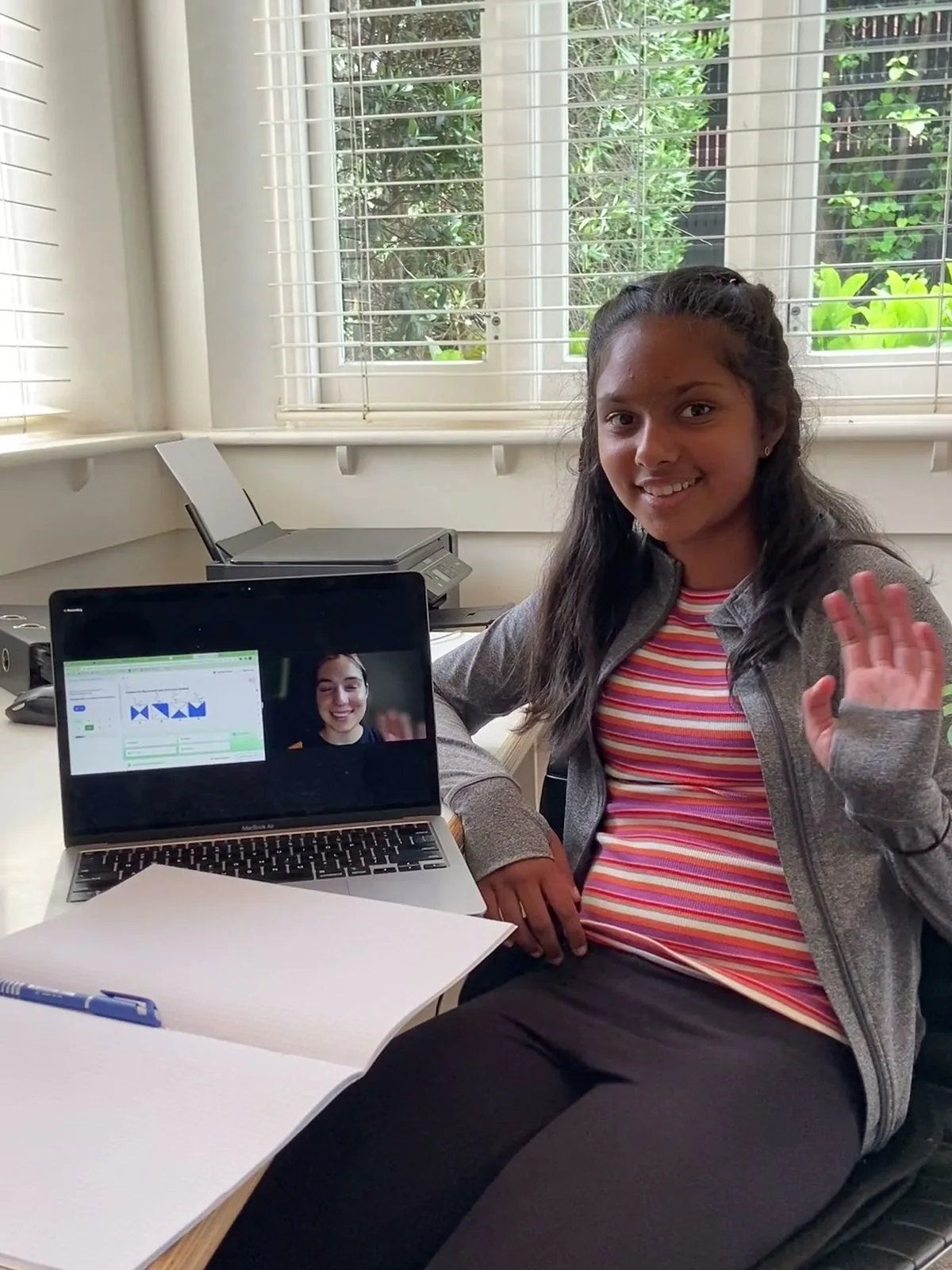
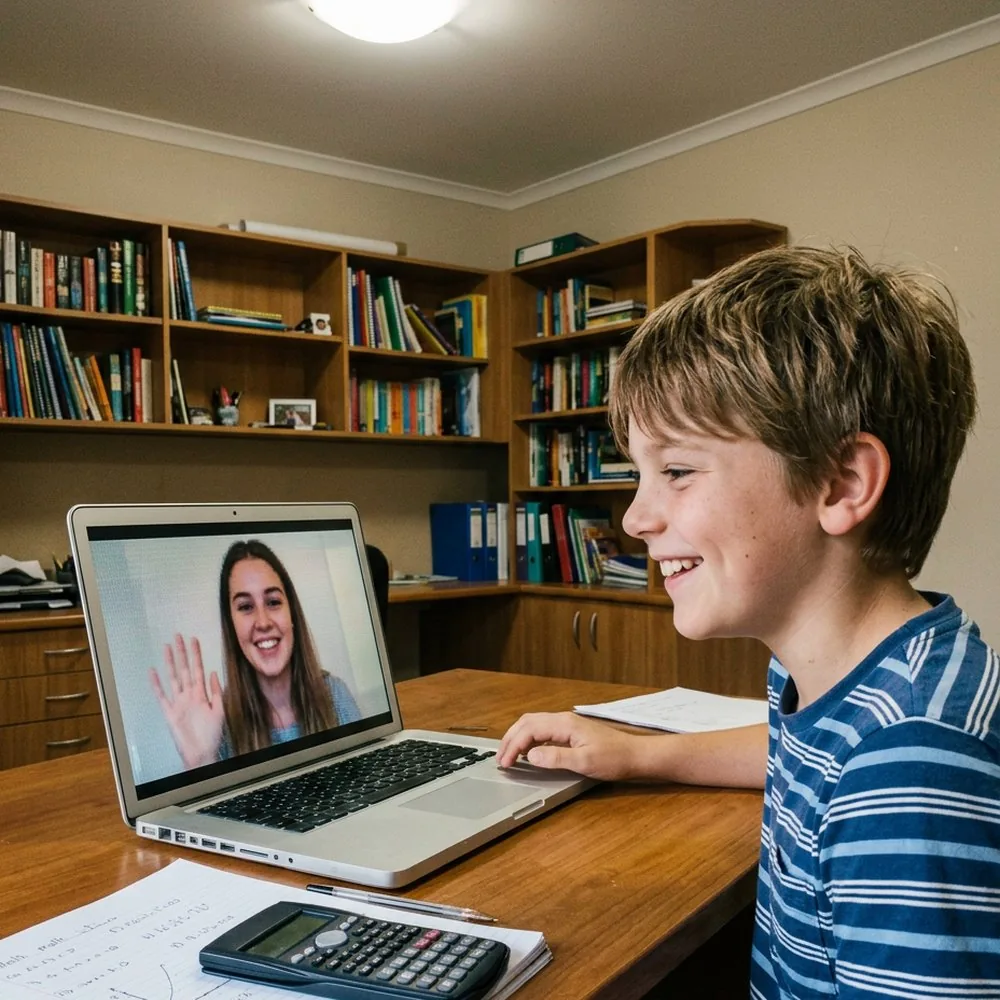
For math confidence specifically, online tutoring is often more effective than in-person — because the screen acts as a small but real shield against the audience anxiety that was the original problem. Many students who freeze in a classroom or go quiet with a stranger in their kitchen will speak up over a video call. The setting matters less than the one-on-one structure. For a side-by-side of the main options, see our comparison of online math programs for kids.
What does matter, online or in-person:
- The tutor matches the child in personality and patience (see our guide on choosing the right tutor)
- Sessions happen weekly without long gaps
- The child has somewhere quiet, with the materials they need, where they won't be overheard
- The parent stays out of the room during the session
For families weighing the format, our deeper comparison covers the trade-offs: online tutoring vs in-person tutors.
How much does math tutoring cost and is it worth it for confidence?
Quality one-on-one math tutoring in the US typically costs US$40 to US$80 per hour. Tutero charges US$45 per hour at the same rate from elementary through high school — no premium for older grade levels. Kumon, by comparison, is typically charged monthly per subject; see what Kumon costs per month. For the specific outcome of rebuilding math confidence, the value calculation is unusual: the cost of not intervening is often higher than the cost of tutoring, because lost confidence in math in elementary or middle school tends to compound across every subsequent year.
A child who decides in 5th grade that they're bad at math will often opt out of advanced math in 11th grade, which closes off entire college and career options before they've had a chance to consider them. A 6 to 12-week tutoring intervention at US$45/hr — roughly US$270 to US$540 — that returns the child's belief in their own ability is one of the clearest cost-to-impact ratios in education spending.
That said, the worth-it test isn't about the headline rate; it's about the rebuilding actually happening. Watch for the language and behavioral shifts described above by week six. If they're not appearing, the issue is fit, not money — try a different tutor before concluding tutoring doesn't work.
So can tutoring really rebuild my child's confidence in math?
Yes — and faster than most parents expect, provided three things line up: a tutor who diagnoses the real gap rather than treating the symptom, weekly one-on-one sessions without long breaks, and a parent who stops apologizing for their own math history at the kitchen table. Confidence doesn't come from praise; it comes from a child experiencing themselves doing math correctly. Tutoring is the cheapest, fastest way to manufacture that experience.
The change is observable in the language ("let me try" replacing "I can't"), the behavior (reaching for the pencil first), and eventually the grades. Most families notice the shift between weeks four and eight. If you're not seeing it, change the tutor — don't conclude the strategy is wrong.
Ready to help your child rebuild confidence in math? Speak to Tutero about a tutor matched to your child's grade level and learning style — most families have a tutor in place within a week.
Confidence isn't built by praise — it's built by a child experiencing themselves succeeding.
Confidence isn't built by praise — it's built by a child experiencing themselves succeeding.
Updated 2026-05-06 — written for American parents whose child has lost confidence in math, by the team at Tutero.
If your child has started saying "I'm bad at math", "I'm just not a math person", or going quiet when homework comes out, you're reading the right article. Lost math confidence is rarely about ability — it's usually a small gap that wasn't caught early, then compounded each week until the child decided the subject just wasn't for them. Good tutoring rebuilds that confidence faster than most parents expect, often in 6 to 8 weeks.
This guide covers what math-confidence loss actually looks like, why it happens, and what a good tutor does week-by-week to turn it around — written specifically for parents of elementary, middle, and high school students.
Quick answer
Tutoring rebuilds math confidence by giving a child the one thing the classroom can't: time to fully understand each step, asked and answered without an audience. A good tutor finds the exact concept the child got stuck on (often two or three grade levels back), rebuilds it from the ground up, and lets the child get a string of correct answers themselves. After 6 to 8 weeks of weekly one-on-one sessions, most parents see the language shift — "I can't" becomes "let me try" — and the homework battles ease. Confidence isn't built by praise; it's built by a child experiencing themselves succeeding.
Why has my child lost confidence in math?
Math confidence usually breaks down at a specific moment — a topic the child didn't fully grasp before the class moved on. In K-12 classrooms with 25 to 30 students, even a great teacher can only check in with each child for a few minutes per lesson. If a child misses how fractions actually work in 4th grade, every 5th-grade fractions topic feels harder than it should, and by middle school the child has decided math just isn't for them.
The pattern is almost always the same: a single missed foundation, weeks of compounding confusion, growing avoidance, and finally the language shift — "I'm bad at math". The Education Endowment Foundation's evidence on one-to-one tuition shows targeted support can add five months of progress in a year, and the mechanism is exactly this: closing the foundational gap that the child can't close on their own.
Common triggers we see at Tutero: a topic missed during illness, a grade-level transition (4th to 5th, 6th to 7th, 10th to 11th) where the math suddenly steps up, a discouraging comment from a peer or sibling, or a low test score the child reads as proof they'll never get it. None of these are character flaws. All of them are fixable.
What does math-confidence loss actually look like?
If you're wondering whether your child has lost confidence in math or is just having a rough week, the signs are usually behavioral before they're academic. Confidence loss shows up in the language a child uses about themselves and in the avoidance patterns at home — not in the grades (the grades lag).
The clearest signals parents notice:
- The "I'm bad at math" sentence. Once a child starts using this as a fixed identity statement, the avoidance has already begun.
- Homework battles every night. Stalling, tears, "I don't know how to do any of it" before they've even read the question.
- Going quiet when math comes up. An elementary student who used to share what they did at school, suddenly skipping over math.
- Asking to skip class or stay home on test days. Especially common in middle school.
- Apologizing for not understanding. "Sorry, I'm so dumb" — the child blaming themselves rather than the explanation.
- Refusing to show working. Either guessing the answer or copying without engaging with the steps.
If you're seeing two or more of these for more than two weeks, the confidence has slipped — and waiting rarely fixes it. Our deeper guide on the 5 signs your child needs a tutor covers what to do next.
Does tutoring actually help with math anxiety?
Yes — when the math anxiety is rooted in genuine gaps in understanding (which it almost always is), tutoring is one of the most effective interventions available. Math anxiety isn't a separate condition from confidence loss; it's the same problem at a higher intensity. The child has learned to associate math with feeling stupid, and the body responds to math homework the way it would to any other threat.
Tutoring breaks the association in two ways at once. First, the one-on-one setting means there's no audience — no risk of looking silly in front of 28 classmates, which is the actual trigger for most math-anxious students. Second, the tutor controls the difficulty so the child experiences a string of small wins; each correct answer is a tiny piece of evidence that disconfirms "I'm bad at math".
The shift is gradual but observable: a child who used to freeze when shown a problem starts reaching for the pencil first, then later starts explaining their working out loud. That's the anxiety lifting. Most parents notice the change at week four or five.
How does one-on-one attention build confidence faster than the classroom?
One-on-one attention rebuilds confidence faster because it removes the three things that quietly chip away at a struggling student in a classroom: the audience, the pace, and the unanswered questions. In a class of 28, a child who didn't fully understand last week's lesson can't ask without slowing everyone down — so they don't ask, and the gap widens. A tutor working with one child can stop, back up two weeks, redo a foundation, and move forward only when the child has actually got it.
Three specific things shift in a one-on-one session that can't happen in a classroom of 28:
Questions get asked. A child who would never put their hand up in class will ask "wait, why does that work?" with a tutor. The tutor answers it the way the child needs it explained, not the way the curriculum sequenced it.
Mistakes happen privately. The student can get something wrong, see why, and try again — without the social cost of being wrong in front of peers. Most math confidence is killed by public mistakes; one-on-one is where it gets rebuilt.
The pace fits the student. If fractions take three sessions, fractions take three sessions. The tutor isn't chasing a curriculum deadline. By the time the student moves on, the foundation is solid — which is what gives them the confidence to tackle the next topic.
This is the mechanism behind the Bloom 2-sigma finding from the 1980s — students with one-on-one attention performed two standard deviations above their classroom-taught peers. The math hasn't changed; the access has.
What does a good math tutor do differently from a classroom teacher?
A good tutor isn't a classroom teacher delivered one-on-one — they do three specific things that the classroom format can't support, and these are what rebuild confidence. The teacher's job is to deliver curriculum to a class; the tutor's job is to find what one specific child got stuck on and rebuild it.
They diagnose the actual gap, not the symptom. An 8th grader struggling with algebra usually doesn't have an algebra problem — they have a fractions or integer-operations problem two or three years old. A good tutor spends the first session or two finding the real gap, often well below the current grade level, and starts there. The student is initially surprised to be doing "easy" work, then relieved to be getting answers right.
They let the student do the explaining. The classic teacher move is to explain the concept and ask the student to apply it. The tutor inverts this — they ask the student to walk them through what they're doing, why, and what comes next. When a student can teach the step, they own it. This is sometimes called the Feynman technique; with a tutor, it happens every session.
They build the next session around what the child still finds shaky. A teacher with 28 students can't differentiate this finely. A tutor with one student can — and the next week's session is shaped entirely by what wasn't solid this week. Every session compounds the foundation.
If you're assessing a tutor, our guide on choosing the right tutor for your child covers what to look for in the first session.
How long does it take for tutoring to rebuild math confidence?
Most families see clear confidence shifts in 6 to 8 weeks of weekly one-on-one sessions, with the first signs typically appearing at week three or four. The exact timeline depends on how long the gap has been compounding — a 4th grader who lost confidence last semester will rebound faster than an 11th grader who's been quietly avoiding math since 7th grade.
A rough timeline of what parents tend to observe:
Weeks 1 to 2 — diagnosis and ground-floor rebuilding. The tutor finds the real gap. Sessions feel "easier than expected" because they're below current grade level. Confidence indicators don't move yet, but the foundation is being laid.
Weeks 3 to 4 — the first wins. The student starts getting questions right that they used to get wrong. The "I can't" language softens. They might surprise you by attempting a homework question without help.
Weeks 5 to 8 — observable confidence shift. The child volunteers an answer, asks a curious question instead of saying "I don't get it", or shows you something they worked out. Homework battles ease. Most parents notice this stretch.
Weeks 8 to 12 — confidence becomes self-sustaining. The child no longer says "I'm bad at math". They might still find topics hard, but the identity statement has shifted. This is the goal.
If you're not seeing any movement by week six, the tutor match probably isn't right — see how to know if your child is getting value from their tutor for what to assess.
Can tutoring help a child who says "I'm bad at math"?
Yes — and "I'm bad at math" is actually one of the clearest signals that tutoring will help. The sentence isn't a description of ability; it's a description of the child's experience of math so far. Once the experience changes — once the child sits with a tutor and gets answers right that they couldn't before — the sentence stops being true and the child stops saying it.
The shift takes deliberate sequencing. A good tutor won't start by tackling the topic the child is currently failing in class — that just reinforces the existing experience. Instead, they go back to the last topic the child remembers feeling solid on, build forward from there, and let the child rack up correct answers across several sessions before circling back to the current curriculum content.
The change parents report is usually quiet and sudden: one Tuesday the child says "actually I think I get it now" instead of the usual "I can't do any of this". That's the new identity arriving. From that point on, the work is reinforcing it across topics.
How do I tell if my child's math confidence is actually improving?
The clearest indicators are behavioral and verbal — they show up at home before they show up in grades, and they're what to track week-by-week to know if tutoring is working.
What to listen and look for after four to six weeks of tutoring:
- The language shifts. "I can't" becomes "let me try". "I'm bad at math" stops getting said. They might say "this one's tricky" — that's a confidence statement, not a defeat statement.
- They reach for the pencil first. Instead of waiting to be told what to do, they start the question themselves and ask for help only when they actually get stuck.
- They explain their working aloud. A confident student narrates what they're doing; an unconfident one waits silently for someone to confirm it's right.
- Homework happens without a battle. Not necessarily quickly, but without the stalling and tears.
- They volunteer a math topic in conversation. An elementary student saying "we did area today" or a high schooler mentioning a question they figured out — both are confidence indicators.
- They try a harder question. When given a choice between an easier and a harder problem, a confident student often reaches for the harder one to see if they can.
Grades lag these indicators by 6 to 12 weeks. If the language and behaviors have shifted but the grades haven't yet, the tutoring is working — keep going.
How can I support my child's math confidence at home?
The single most useful thing a parent can do is stop saying "I was bad at math too". Around half of American parents say a version of this trying to be reassuring, but children read it as permission to give up. Replace it with "math takes longer for some people to click — yours is going to click too".
Six low-effort changes parents tell us made the biggest difference at home:
Praise the working, not the answer. "I can see you tried three different approaches there" lands very differently from "well done, you got it right". The first builds resilience; the second makes a wrong answer feel catastrophic.
Stop checking the homework yourself. If you're in tutoring, the tutor reviews it — your job is to make sure it gets attempted, not graded. Removing parental judgment reduces the audience anxiety.
Make math visible in everyday life — once. Cooking measurements, supermarket unit prices, splitting the bill, calculating gas. Once a week is enough; daily is naggy and counterproductive.
Let your child explain a topic to you. Even if you understand it, asking your child to teach you the new thing they learned is the highest-leverage 5 minutes a parent can spend on confidence.
Don't fix mistakes immediately. If you spot an error, ask "can you walk me through how you got that?" — they'll usually find it themselves.
Celebrate effort over scores. A test improvement from 40% to 55% is a bigger confidence event than a 90% on an easy quiz. Treat it that way.
Is online tutoring as effective for confidence as in-person tutoring?
For math confidence specifically, online tutoring is often more effective than in-person — because the screen acts as a small but real shield against the audience anxiety that was the original problem. Many students who freeze in a classroom or go quiet with a stranger in their kitchen will speak up over a video call. The setting matters less than the one-on-one structure. For a side-by-side of the main options, see our comparison of online math programs for kids.
What does matter, online or in-person:
- The tutor matches the child in personality and patience (see our guide on choosing the right tutor)
- Sessions happen weekly without long gaps
- The child has somewhere quiet, with the materials they need, where they won't be overheard
- The parent stays out of the room during the session
For families weighing the format, our deeper comparison covers the trade-offs: online tutoring vs in-person tutors.
How much does math tutoring cost and is it worth it for confidence?
Quality one-on-one math tutoring in the US typically costs US$40 to US$80 per hour. Tutero charges US$45 per hour at the same rate from elementary through high school — no premium for older grade levels. Kumon, by comparison, is typically charged monthly per subject; see what Kumon costs per month. For the specific outcome of rebuilding math confidence, the value calculation is unusual: the cost of not intervening is often higher than the cost of tutoring, because lost confidence in math in elementary or middle school tends to compound across every subsequent year.
A child who decides in 5th grade that they're bad at math will often opt out of advanced math in 11th grade, which closes off entire college and career options before they've had a chance to consider them. A 6 to 12-week tutoring intervention at US$45/hr — roughly US$270 to US$540 — that returns the child's belief in their own ability is one of the clearest cost-to-impact ratios in education spending.
That said, the worth-it test isn't about the headline rate; it's about the rebuilding actually happening. Watch for the language and behavioral shifts described above by week six. If they're not appearing, the issue is fit, not money — try a different tutor before concluding tutoring doesn't work.
So can tutoring really rebuild my child's confidence in math?
Yes — and faster than most parents expect, provided three things line up: a tutor who diagnoses the real gap rather than treating the symptom, weekly one-on-one sessions without long breaks, and a parent who stops apologizing for their own math history at the kitchen table. Confidence doesn't come from praise; it comes from a child experiencing themselves doing math correctly. Tutoring is the cheapest, fastest way to manufacture that experience.
The change is observable in the language ("let me try" replacing "I can't"), the behavior (reaching for the pencil first), and eventually the grades. Most families notice the shift between weeks four and eight. If you're not seeing it, change the tutor — don't conclude the strategy is wrong.
Ready to help your child rebuild confidence in math? Speak to Tutero about a tutor matched to your child's grade level and learning style — most families have a tutor in place within a week.
Confidence isn't built by praise — it's built by a child experiencing themselves succeeding.
Confidence isn't built by praise — it's built by a child experiencing themselves succeeding.

Confidence isn't built by praise — it's built by a child experiencing themselves succeeding.
After 6 to 8 weeks, the language shifts: "I can't" becomes "let me try". That's the moment confidence comes back.
Updated 2026-05-06 — written for American parents whose child has lost confidence in math, by the team at Tutero.
If your child has started saying "I'm bad at math", "I'm just not a math person", or going quiet when homework comes out, you're reading the right article. Lost math confidence is rarely about ability — it's usually a small gap that wasn't caught early, then compounded each week until the child decided the subject just wasn't for them. Good tutoring rebuilds that confidence faster than most parents expect, often in 6 to 8 weeks.
This guide covers what math-confidence loss actually looks like, why it happens, and what a good tutor does week-by-week to turn it around — written specifically for parents of elementary, middle, and high school students.
Quick answer
Tutoring rebuilds math confidence by giving a child the one thing the classroom can't: time to fully understand each step, asked and answered without an audience. A good tutor finds the exact concept the child got stuck on (often two or three grade levels back), rebuilds it from the ground up, and lets the child get a string of correct answers themselves. After 6 to 8 weeks of weekly one-on-one sessions, most parents see the language shift — "I can't" becomes "let me try" — and the homework battles ease. Confidence isn't built by praise; it's built by a child experiencing themselves succeeding.
Why has my child lost confidence in math?
Math confidence usually breaks down at a specific moment — a topic the child didn't fully grasp before the class moved on. In K-12 classrooms with 25 to 30 students, even a great teacher can only check in with each child for a few minutes per lesson. If a child misses how fractions actually work in 4th grade, every 5th-grade fractions topic feels harder than it should, and by middle school the child has decided math just isn't for them.
The pattern is almost always the same: a single missed foundation, weeks of compounding confusion, growing avoidance, and finally the language shift — "I'm bad at math". The Education Endowment Foundation's evidence on one-to-one tuition shows targeted support can add five months of progress in a year, and the mechanism is exactly this: closing the foundational gap that the child can't close on their own.
Common triggers we see at Tutero: a topic missed during illness, a grade-level transition (4th to 5th, 6th to 7th, 10th to 11th) where the math suddenly steps up, a discouraging comment from a peer or sibling, or a low test score the child reads as proof they'll never get it. None of these are character flaws. All of them are fixable.
What does math-confidence loss actually look like?
If you're wondering whether your child has lost confidence in math or is just having a rough week, the signs are usually behavioral before they're academic. Confidence loss shows up in the language a child uses about themselves and in the avoidance patterns at home — not in the grades (the grades lag).
The clearest signals parents notice:
- The "I'm bad at math" sentence. Once a child starts using this as a fixed identity statement, the avoidance has already begun.
- Homework battles every night. Stalling, tears, "I don't know how to do any of it" before they've even read the question.
- Going quiet when math comes up. An elementary student who used to share what they did at school, suddenly skipping over math.
- Asking to skip class or stay home on test days. Especially common in middle school.
- Apologizing for not understanding. "Sorry, I'm so dumb" — the child blaming themselves rather than the explanation.
- Refusing to show working. Either guessing the answer or copying without engaging with the steps.
If you're seeing two or more of these for more than two weeks, the confidence has slipped — and waiting rarely fixes it. Our deeper guide on the 5 signs your child needs a tutor covers what to do next.
Does tutoring actually help with math anxiety?
Yes — when the math anxiety is rooted in genuine gaps in understanding (which it almost always is), tutoring is one of the most effective interventions available. Math anxiety isn't a separate condition from confidence loss; it's the same problem at a higher intensity. The child has learned to associate math with feeling stupid, and the body responds to math homework the way it would to any other threat.
Tutoring breaks the association in two ways at once. First, the one-on-one setting means there's no audience — no risk of looking silly in front of 28 classmates, which is the actual trigger for most math-anxious students. Second, the tutor controls the difficulty so the child experiences a string of small wins; each correct answer is a tiny piece of evidence that disconfirms "I'm bad at math".
The shift is gradual but observable: a child who used to freeze when shown a problem starts reaching for the pencil first, then later starts explaining their working out loud. That's the anxiety lifting. Most parents notice the change at week four or five.
How does one-on-one attention build confidence faster than the classroom?
One-on-one attention rebuilds confidence faster because it removes the three things that quietly chip away at a struggling student in a classroom: the audience, the pace, and the unanswered questions. In a class of 28, a child who didn't fully understand last week's lesson can't ask without slowing everyone down — so they don't ask, and the gap widens. A tutor working with one child can stop, back up two weeks, redo a foundation, and move forward only when the child has actually got it.
Three specific things shift in a one-on-one session that can't happen in a classroom of 28:
Questions get asked. A child who would never put their hand up in class will ask "wait, why does that work?" with a tutor. The tutor answers it the way the child needs it explained, not the way the curriculum sequenced it.
Mistakes happen privately. The student can get something wrong, see why, and try again — without the social cost of being wrong in front of peers. Most math confidence is killed by public mistakes; one-on-one is where it gets rebuilt.
The pace fits the student. If fractions take three sessions, fractions take three sessions. The tutor isn't chasing a curriculum deadline. By the time the student moves on, the foundation is solid — which is what gives them the confidence to tackle the next topic.
This is the mechanism behind the Bloom 2-sigma finding from the 1980s — students with one-on-one attention performed two standard deviations above their classroom-taught peers. The math hasn't changed; the access has.
What does a good math tutor do differently from a classroom teacher?
A good tutor isn't a classroom teacher delivered one-on-one — they do three specific things that the classroom format can't support, and these are what rebuild confidence. The teacher's job is to deliver curriculum to a class; the tutor's job is to find what one specific child got stuck on and rebuild it.
They diagnose the actual gap, not the symptom. An 8th grader struggling with algebra usually doesn't have an algebra problem — they have a fractions or integer-operations problem two or three years old. A good tutor spends the first session or two finding the real gap, often well below the current grade level, and starts there. The student is initially surprised to be doing "easy" work, then relieved to be getting answers right.
They let the student do the explaining. The classic teacher move is to explain the concept and ask the student to apply it. The tutor inverts this — they ask the student to walk them through what they're doing, why, and what comes next. When a student can teach the step, they own it. This is sometimes called the Feynman technique; with a tutor, it happens every session.
They build the next session around what the child still finds shaky. A teacher with 28 students can't differentiate this finely. A tutor with one student can — and the next week's session is shaped entirely by what wasn't solid this week. Every session compounds the foundation.
If you're assessing a tutor, our guide on choosing the right tutor for your child covers what to look for in the first session.
How long does it take for tutoring to rebuild math confidence?
Most families see clear confidence shifts in 6 to 8 weeks of weekly one-on-one sessions, with the first signs typically appearing at week three or four. The exact timeline depends on how long the gap has been compounding — a 4th grader who lost confidence last semester will rebound faster than an 11th grader who's been quietly avoiding math since 7th grade.
A rough timeline of what parents tend to observe:
Weeks 1 to 2 — diagnosis and ground-floor rebuilding. The tutor finds the real gap. Sessions feel "easier than expected" because they're below current grade level. Confidence indicators don't move yet, but the foundation is being laid.
Weeks 3 to 4 — the first wins. The student starts getting questions right that they used to get wrong. The "I can't" language softens. They might surprise you by attempting a homework question without help.
Weeks 5 to 8 — observable confidence shift. The child volunteers an answer, asks a curious question instead of saying "I don't get it", or shows you something they worked out. Homework battles ease. Most parents notice this stretch.
Weeks 8 to 12 — confidence becomes self-sustaining. The child no longer says "I'm bad at math". They might still find topics hard, but the identity statement has shifted. This is the goal.
If you're not seeing any movement by week six, the tutor match probably isn't right — see how to know if your child is getting value from their tutor for what to assess.
Can tutoring help a child who says "I'm bad at math"?
Yes — and "I'm bad at math" is actually one of the clearest signals that tutoring will help. The sentence isn't a description of ability; it's a description of the child's experience of math so far. Once the experience changes — once the child sits with a tutor and gets answers right that they couldn't before — the sentence stops being true and the child stops saying it.
The shift takes deliberate sequencing. A good tutor won't start by tackling the topic the child is currently failing in class — that just reinforces the existing experience. Instead, they go back to the last topic the child remembers feeling solid on, build forward from there, and let the child rack up correct answers across several sessions before circling back to the current curriculum content.
The change parents report is usually quiet and sudden: one Tuesday the child says "actually I think I get it now" instead of the usual "I can't do any of this". That's the new identity arriving. From that point on, the work is reinforcing it across topics.
How do I tell if my child's math confidence is actually improving?
The clearest indicators are behavioral and verbal — they show up at home before they show up in grades, and they're what to track week-by-week to know if tutoring is working.
What to listen and look for after four to six weeks of tutoring:
- The language shifts. "I can't" becomes "let me try". "I'm bad at math" stops getting said. They might say "this one's tricky" — that's a confidence statement, not a defeat statement.
- They reach for the pencil first. Instead of waiting to be told what to do, they start the question themselves and ask for help only when they actually get stuck.
- They explain their working aloud. A confident student narrates what they're doing; an unconfident one waits silently for someone to confirm it's right.
- Homework happens without a battle. Not necessarily quickly, but without the stalling and tears.
- They volunteer a math topic in conversation. An elementary student saying "we did area today" or a high schooler mentioning a question they figured out — both are confidence indicators.
- They try a harder question. When given a choice between an easier and a harder problem, a confident student often reaches for the harder one to see if they can.
Grades lag these indicators by 6 to 12 weeks. If the language and behaviors have shifted but the grades haven't yet, the tutoring is working — keep going.
How can I support my child's math confidence at home?
The single most useful thing a parent can do is stop saying "I was bad at math too". Around half of American parents say a version of this trying to be reassuring, but children read it as permission to give up. Replace it with "math takes longer for some people to click — yours is going to click too".
Six low-effort changes parents tell us made the biggest difference at home:
Praise the working, not the answer. "I can see you tried three different approaches there" lands very differently from "well done, you got it right". The first builds resilience; the second makes a wrong answer feel catastrophic.
Stop checking the homework yourself. If you're in tutoring, the tutor reviews it — your job is to make sure it gets attempted, not graded. Removing parental judgment reduces the audience anxiety.
Make math visible in everyday life — once. Cooking measurements, supermarket unit prices, splitting the bill, calculating gas. Once a week is enough; daily is naggy and counterproductive.
Let your child explain a topic to you. Even if you understand it, asking your child to teach you the new thing they learned is the highest-leverage 5 minutes a parent can spend on confidence.
Don't fix mistakes immediately. If you spot an error, ask "can you walk me through how you got that?" — they'll usually find it themselves.
Celebrate effort over scores. A test improvement from 40% to 55% is a bigger confidence event than a 90% on an easy quiz. Treat it that way.
Is online tutoring as effective for confidence as in-person tutoring?
For math confidence specifically, online tutoring is often more effective than in-person — because the screen acts as a small but real shield against the audience anxiety that was the original problem. Many students who freeze in a classroom or go quiet with a stranger in their kitchen will speak up over a video call. The setting matters less than the one-on-one structure. For a side-by-side of the main options, see our comparison of online math programs for kids.
What does matter, online or in-person:
- The tutor matches the child in personality and patience (see our guide on choosing the right tutor)
- Sessions happen weekly without long gaps
- The child has somewhere quiet, with the materials they need, where they won't be overheard
- The parent stays out of the room during the session
For families weighing the format, our deeper comparison covers the trade-offs: online tutoring vs in-person tutors.
How much does math tutoring cost and is it worth it for confidence?
Quality one-on-one math tutoring in the US typically costs US$40 to US$80 per hour. Tutero charges US$45 per hour at the same rate from elementary through high school — no premium for older grade levels. Kumon, by comparison, is typically charged monthly per subject; see what Kumon costs per month. For the specific outcome of rebuilding math confidence, the value calculation is unusual: the cost of not intervening is often higher than the cost of tutoring, because lost confidence in math in elementary or middle school tends to compound across every subsequent year.
A child who decides in 5th grade that they're bad at math will often opt out of advanced math in 11th grade, which closes off entire college and career options before they've had a chance to consider them. A 6 to 12-week tutoring intervention at US$45/hr — roughly US$270 to US$540 — that returns the child's belief in their own ability is one of the clearest cost-to-impact ratios in education spending.
That said, the worth-it test isn't about the headline rate; it's about the rebuilding actually happening. Watch for the language and behavioral shifts described above by week six. If they're not appearing, the issue is fit, not money — try a different tutor before concluding tutoring doesn't work.
So can tutoring really rebuild my child's confidence in math?
Yes — and faster than most parents expect, provided three things line up: a tutor who diagnoses the real gap rather than treating the symptom, weekly one-on-one sessions without long breaks, and a parent who stops apologizing for their own math history at the kitchen table. Confidence doesn't come from praise; it comes from a child experiencing themselves doing math correctly. Tutoring is the cheapest, fastest way to manufacture that experience.
The change is observable in the language ("let me try" replacing "I can't"), the behavior (reaching for the pencil first), and eventually the grades. Most families notice the shift between weeks four and eight. If you're not seeing it, change the tutor — don't conclude the strategy is wrong.
Ready to help your child rebuild confidence in math? Speak to Tutero about a tutor matched to your child's grade level and learning style — most families have a tutor in place within a week.
Confidence isn't built by praise — it's built by a child experiencing themselves succeeding.
After 6 to 8 weeks, the language shifts: "I can't" becomes "let me try". That's the moment confidence comes back.
.svg)
.svg)
Most parents notice clear behavioral shifts at week 3 to 4 of weekly one-on-one tutoring (the child reaches for the pencil first, the "I can't" language softens) and an observable confidence change by week 6 to 8. Grades lag by another 6 to 12 weeks. If you see no movement at all by week 6, the tutor match likely isn't right — change the tutor before concluding the strategy doesn't work.
Yes. "I'm bad at math" is a fixed identity statement that almost always points to a foundational gap two or three grade levels back, plus weeks of avoidance that have compounded. A good tutor diagnoses the real gap, rebuilds it from the ground up, and lets the child experience getting answers right — which is what makes the sentence stop being true.
For the typical case, where math anxiety is rooted in genuine gaps in understanding, tutoring is one of the most effective interventions because it removes the audience (the trigger for most math-anxious students) and replaces it with a string of small wins. If the anxiety extends to non-academic settings, panic attacks, or persistent physical symptoms, that's a sign to also speak to your pediatrician or a child psychologist alongside tutoring.
Frame it as "someone to help you get really solid on the bits that have been frustrating" — not "you need help because you're behind". The first framing protects the child's confidence; the second can confirm the "I'm bad at math" story. Most kids settle into tutoring within two sessions once they realize it's not punitive.
Yes — for elementary students online tutoring works well provided the parent helps with the first few logins and the sessions are 30 to 45 minutes (not an hour) to match attention spans. Many elementary kids actually open up faster online than they would with a stranger in their kitchen because the screen creates a small psychological buffer.
A teacher delivers curriculum to a class of 28; a tutor finds what one specific child got stuck on and rebuilds it. Both are skilled, but only the tutor can spend three sessions on fractions if fractions need three sessions. The classroom format can't differentiate that finely — that's the structural reason tutoring rebuilds confidence faster than schoolwork alone.
Hoping to improve confidence & grades?

.png)