
.svg)

You've found a tutor, lessons have started, and now you're wondering — is this actually working? "She seems happier" is a feeling, not a measurement. This guide gives you five concrete signs the tutoring is genuinely working, real timeframes for what progress should look like, and a clear stopping rule for when it isn't.
Quick answer: how do I know if my child's tutor is actually working?
Quick answer: the tutoring is working when (1) the same kinds of mistakes start disappearing from your child's schoolwork, (2) your child can explain the topic back to you without the textbook, (3) the tutor sends a structured weekly summary you can act on, (4) the lesson plan changes when assessment data changes, and (5) homework requires fewer "can you help me?" calls at home. If you see four of five within 6-8 weeks, the tutoring is earning its A$65/hr.
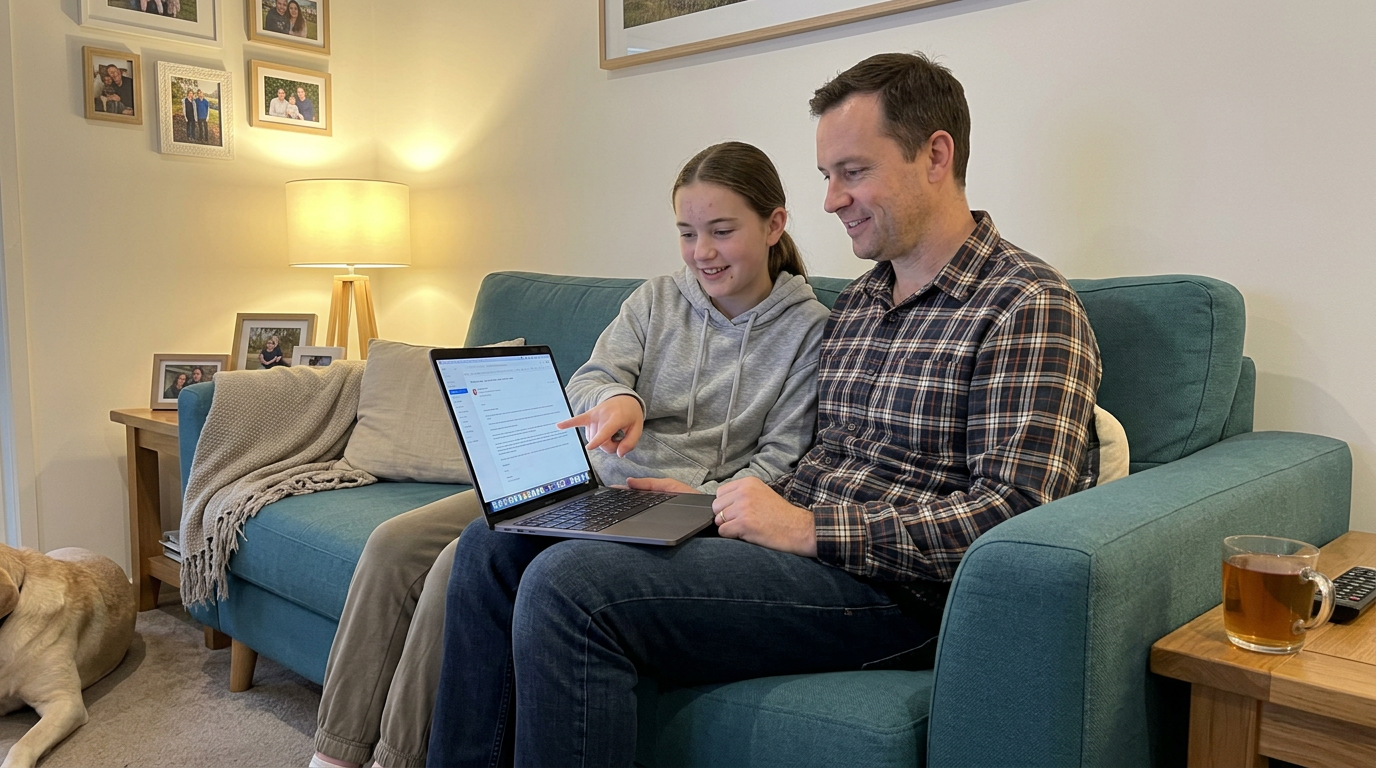
Are the same kinds of mistakes starting to disappear?
The strongest single sign is recurring-error reduction. Pick three patterns you've been seeing across schoolwork — say, sign errors in algebra, comma splices in essays, or unit-conversion slip-ups in physics — and watch them across weeks. By week 4 of consistent tutoring, at least one should be measurably less frequent. By week 8, two of three should be largely gone. Generic "feeling better about maths" without recurring-error reduction is a placebo signal — pleasant but not load-bearing. Real teaching shows up as the same kid making different (better, harder, more advanced) mistakes — not the same ones repeated.
Can your child explain the topic back to you without the textbook?
The clearest test is the weekend test. On Saturday, ask your child to explain what they learned this week — without their notes, without the laptop, in their own words for 2-3 minutes. If they can, the teaching has landed. If they say "I forgot" or read straight from the page, the tutor has been doing too much "telling" and not enough Socratic questioning. The right tutor builds the explanation back-and-forth into every session, so by Saturday the explanation is in your child's voice, not the tutor's. Tutero tutors structure sessions around this back-and-forth explicitly.
Does your tutor send a structured weekly summary?
A weekly summary email is the cheapest, highest-signal indicator of professional tutoring. The format that works: 3-5 lines covering what was taught, what the child got, what the child still wrestles with, and what next week will cover. If your tutor sends this every week without prompting, you're working with someone who treats tutoring as a profession, not as a casual gig. If you have to ask twice or wait two weeks, that's a signal of where the bar is — and the bar will affect the teaching too. Cheap to require, expensive to do without.
Does the lesson plan change when the assessment data changes?
Watch what happens after a school assessment. Did the tutor adjust next week's session to address the specific topics your child got wrong? Or are they grinding through their original plan regardless? The right tutor reorients within a session of receiving the marked test. The wrong tutor sticks to the program because the program is what they're comfortable teaching. Real teaching is responsive — it goes to where the gap is, not where the lesson plan said it would. If you don't see this responsiveness in the first 4 weeks, raise it directly with the tutor — sometimes a single conversation is enough to recalibrate.
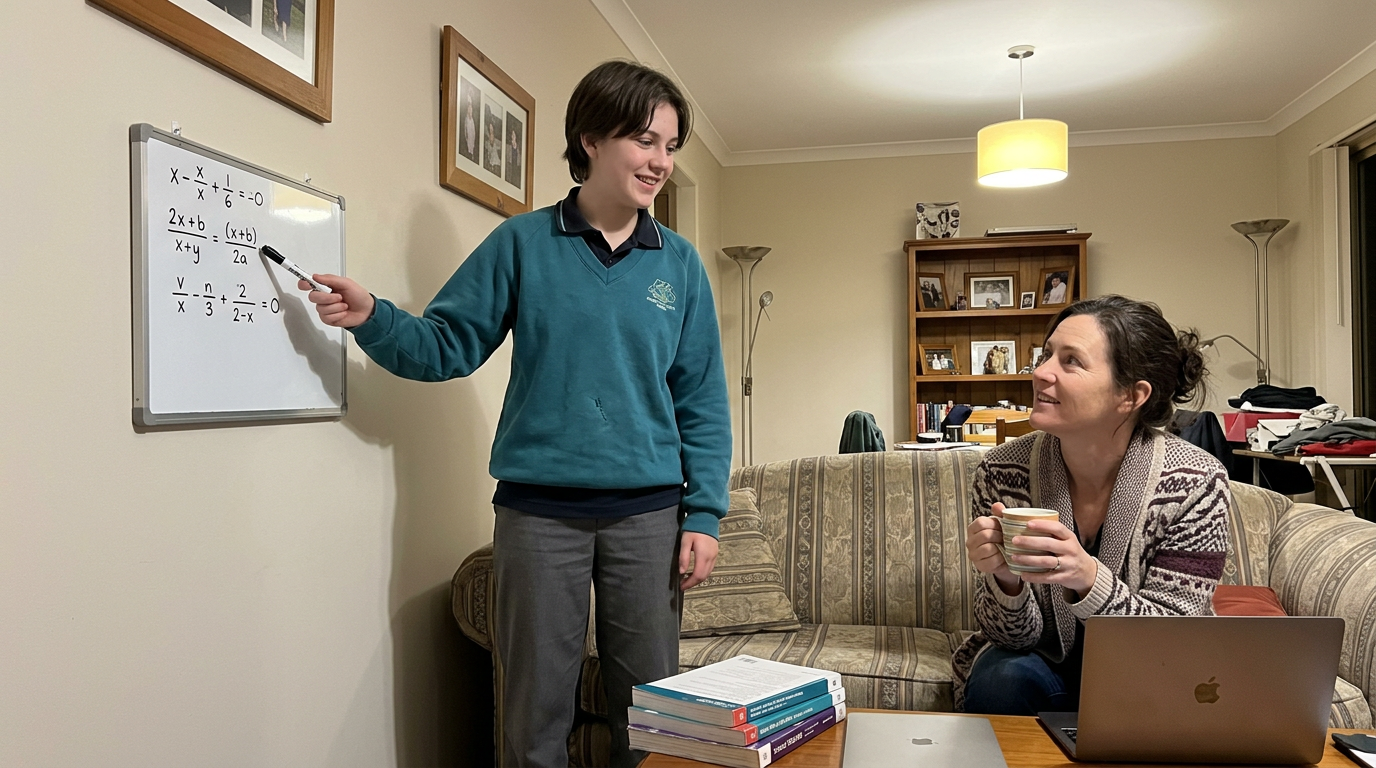
Does your child ask fewer "can you help me?" questions at home?
The slowest-moving but most reliable sign is independent homework completion. By week 6-8 of effective tutoring, your child should be calling on you for fewer rescue questions — not because they're struggling silently but because they have the strategies to get unstuck on their own. Track it: how many homework rescues per week in week 1 versus week 8? Real progress shows up as quiet evenings where the homework gets done and you didn't hear about it. If the rescues are still constant at week 8, the tutoring isn't building independence — it's creating dependence on the tutor instead.
How long should real progress actually take?
Different signs land on different timelines. Weeks 1-3: child is engaged in sessions, weekly summaries are arriving. Weeks 4-6: recurring errors start dropping, your child can explain the topic back. Weeks 6-8: independent homework completion improves, school assessments start showing the lift. Term 1 to term 2: measurable grade movement on report cards. If you don't see weeks 1-3 signs in the first three weeks, something is off. If you see weeks 1-3 but no weeks 4-6 by session 6, raise it with the tutor. Real progress compounds; absence of the early signs is itself the early-warning signal.
Is private tutoring actually worth the money?
At A$65/hr in Australia (Tutero's starting rate, same across all year levels — no senior premium), one hour per week for a term costs about A$650. The maths is straightforward: if your child moves up half a grade band on report cards, the next assessment opens (or doesn't close) options at a measurable rate per term. Online tutoring at the right cadence typically pays itself back in confidence and assessment outcomes inside one term — provided the five signs above are visible. If they're not visible, the tutoring isn't working regardless of price.
When should you stop tutoring with the current tutor?
The stopping rule is simple. By week 8, if fewer than three of the five signs are visible — weekly summaries arriving, recurring errors dropping, child explaining back, plan responding to data, fewer rescue questions — switch. Not week 12, not "give it a term", not "they're still settling in". Week 8 is enough time for real teaching to show its shape. If it hasn't, the cost of staying is higher than the friction of switching. Tell the current tutor honestly, ask Tutero for a re-match, and start the clock again. The right tutor will hit four-of-five within their first 6 weeks.
So how do I know if my child is genuinely getting value from their tutor?
Five signs over 6-8 weeks. Weekly summaries arriving. Recurring errors dropping. Child explaining back without notes. Plan responding to data. Rescue questions thinning. If four of five are visible, the tutoring is working. If fewer, switch. The maths of tutoring isn't about hours logged — it's about whether the cycle of teaching, assessing, and adjusting is happening. Match with a Tutero tutor if you're ready for someone who runs the cycle properly — A$65 first session, no contracts.
Not seeing the five signs with your current tutor? Match with a Tutero tutor — A$65 first session, structured weekly summary by default, parent partnership built into the matching process.
Real teaching shows up as the same kid making different mistakes — not the same ones repeated.
Real teaching shows up as the same kid making different mistakes — not the same ones repeated.
You've found a tutor, lessons have started, and now you're wondering — is this actually working? "She seems happier" is a feeling, not a measurement. This guide gives you five concrete signs the tutoring is genuinely working, real timeframes for what progress should look like, and a clear stopping rule for when it isn't.
Quick answer: how do I know if my child's tutor is actually working?
Quick answer: the tutoring is working when (1) the same kinds of mistakes start disappearing from your child's schoolwork, (2) your child can explain the topic back to you without the textbook, (3) the tutor sends a structured weekly summary you can act on, (4) the lesson plan changes when assessment data changes, and (5) homework requires fewer "can you help me?" calls at home. If you see four of five within 6-8 weeks, the tutoring is earning its A$65/hr.
Are the same kinds of mistakes starting to disappear?
The strongest single sign is recurring-error reduction. Pick three patterns you've been seeing across schoolwork — say, sign errors in algebra, comma splices in essays, or unit-conversion slip-ups in physics — and watch them across weeks. By week 4 of consistent tutoring, at least one should be measurably less frequent. By week 8, two of three should be largely gone. Generic "feeling better about maths" without recurring-error reduction is a placebo signal — pleasant but not load-bearing. Real teaching shows up as the same kid making different (better, harder, more advanced) mistakes — not the same ones repeated.
Can your child explain the topic back to you without the textbook?
The clearest test is the weekend test. On Saturday, ask your child to explain what they learned this week — without their notes, without the laptop, in their own words for 2-3 minutes. If they can, the teaching has landed. If they say "I forgot" or read straight from the page, the tutor has been doing too much "telling" and not enough Socratic questioning. The right tutor builds the explanation back-and-forth into every session, so by Saturday the explanation is in your child's voice, not the tutor's. Tutero tutors structure sessions around this back-and-forth explicitly.
Does your tutor send a structured weekly summary?
A weekly summary email is the cheapest, highest-signal indicator of professional tutoring. The format that works: 3-5 lines covering what was taught, what the child got, what the child still wrestles with, and what next week will cover. If your tutor sends this every week without prompting, you're working with someone who treats tutoring as a profession, not as a casual gig. If you have to ask twice or wait two weeks, that's a signal of where the bar is — and the bar will affect the teaching too. Cheap to require, expensive to do without.
Does the lesson plan change when the assessment data changes?
Watch what happens after a school assessment. Did the tutor adjust next week's session to address the specific topics your child got wrong? Or are they grinding through their original plan regardless? The right tutor reorients within a session of receiving the marked test. The wrong tutor sticks to the program because the program is what they're comfortable teaching. Real teaching is responsive — it goes to where the gap is, not where the lesson plan said it would. If you don't see this responsiveness in the first 4 weeks, raise it directly with the tutor — sometimes a single conversation is enough to recalibrate.
Does your child ask fewer "can you help me?" questions at home?
The slowest-moving but most reliable sign is independent homework completion. By week 6-8 of effective tutoring, your child should be calling on you for fewer rescue questions — not because they're struggling silently but because they have the strategies to get unstuck on their own. Track it: how many homework rescues per week in week 1 versus week 8? Real progress shows up as quiet evenings where the homework gets done and you didn't hear about it. If the rescues are still constant at week 8, the tutoring isn't building independence — it's creating dependence on the tutor instead.
How long should real progress actually take?
Different signs land on different timelines. Weeks 1-3: child is engaged in sessions, weekly summaries are arriving. Weeks 4-6: recurring errors start dropping, your child can explain the topic back. Weeks 6-8: independent homework completion improves, school assessments start showing the lift. Term 1 to term 2: measurable grade movement on report cards. If you don't see weeks 1-3 signs in the first three weeks, something is off. If you see weeks 1-3 but no weeks 4-6 by session 6, raise it with the tutor. Real progress compounds; absence of the early signs is itself the early-warning signal.
Is private tutoring actually worth the money?
At A$65/hr in Australia (Tutero's starting rate, same across all year levels — no senior premium), one hour per week for a term costs about A$650. The maths is straightforward: if your child moves up half a grade band on report cards, the next assessment opens (or doesn't close) options at a measurable rate per term. Online tutoring at the right cadence typically pays itself back in confidence and assessment outcomes inside one term — provided the five signs above are visible. If they're not visible, the tutoring isn't working regardless of price.
When should you stop tutoring with the current tutor?
The stopping rule is simple. By week 8, if fewer than three of the five signs are visible — weekly summaries arriving, recurring errors dropping, child explaining back, plan responding to data, fewer rescue questions — switch. Not week 12, not "give it a term", not "they're still settling in". Week 8 is enough time for real teaching to show its shape. If it hasn't, the cost of staying is higher than the friction of switching. Tell the current tutor honestly, ask Tutero for a re-match, and start the clock again. The right tutor will hit four-of-five within their first 6 weeks.
So how do I know if my child is genuinely getting value from their tutor?
Five signs over 6-8 weeks. Weekly summaries arriving. Recurring errors dropping. Child explaining back without notes. Plan responding to data. Rescue questions thinning. If four of five are visible, the tutoring is working. If fewer, switch. The maths of tutoring isn't about hours logged — it's about whether the cycle of teaching, assessing, and adjusting is happening. Match with a Tutero tutor if you're ready for someone who runs the cycle properly — A$65 first session, no contracts.
Not seeing the five signs with your current tutor? Match with a Tutero tutor — A$65 first session, structured weekly summary by default, parent partnership built into the matching process.
FAQ
.svg)
.svg)
Online maths tutoring at Tutero is catering to students of all year levels. We offer programs tailored to the unique learning curves of each age group.
We also have expert NAPLAN and ATAR subject tutors, ensuring students are well-equipped for these pivotal assessments.
We recommend at least two to three session per week for consistent progress. However, this can vary based on your child's needs and goals.
Our platform uses advanced security protocols to ensure the safety and privacy of all our online sessions.
Parents are welcome to observe sessions. We believe in a collaborative approach to education.
We provide regular progress reports and assessments to track your child’s academic development.
Yes, we prioritise the student-tutor relationship and can arrange a change if the need arises.
Yes, we offer a range of resources and materials, including interactive exercises and practice worksheets.
Real teaching shows up as the same kid making different mistakes — not the same ones repeated.
Real teaching shows up as the same kid making different mistakes — not the same ones repeated.

Real teaching shows up as the same kid making different mistakes — not the same ones repeated.
By week 8, if fewer than three of the five signs are visible, switch.
You've found a tutor, lessons have started, and now you're wondering — is this actually working? "She seems happier" is a feeling, not a measurement. This guide gives you five concrete signs the tutoring is genuinely working, real timeframes for what progress should look like, and a clear stopping rule for when it isn't.
Quick answer: how do I know if my child's tutor is actually working?
Quick answer: the tutoring is working when (1) the same kinds of mistakes start disappearing from your child's schoolwork, (2) your child can explain the topic back to you without the textbook, (3) the tutor sends a structured weekly summary you can act on, (4) the lesson plan changes when assessment data changes, and (5) homework requires fewer "can you help me?" calls at home. If you see four of five within 6-8 weeks, the tutoring is earning its A$65/hr.
Are the same kinds of mistakes starting to disappear?
The strongest single sign is recurring-error reduction. Pick three patterns you've been seeing across schoolwork — say, sign errors in algebra, comma splices in essays, or unit-conversion slip-ups in physics — and watch them across weeks. By week 4 of consistent tutoring, at least one should be measurably less frequent. By week 8, two of three should be largely gone. Generic "feeling better about maths" without recurring-error reduction is a placebo signal — pleasant but not load-bearing. Real teaching shows up as the same kid making different (better, harder, more advanced) mistakes — not the same ones repeated.
Can your child explain the topic back to you without the textbook?
The clearest test is the weekend test. On Saturday, ask your child to explain what they learned this week — without their notes, without the laptop, in their own words for 2-3 minutes. If they can, the teaching has landed. If they say "I forgot" or read straight from the page, the tutor has been doing too much "telling" and not enough Socratic questioning. The right tutor builds the explanation back-and-forth into every session, so by Saturday the explanation is in your child's voice, not the tutor's. Tutero tutors structure sessions around this back-and-forth explicitly.
Does your tutor send a structured weekly summary?
A weekly summary email is the cheapest, highest-signal indicator of professional tutoring. The format that works: 3-5 lines covering what was taught, what the child got, what the child still wrestles with, and what next week will cover. If your tutor sends this every week without prompting, you're working with someone who treats tutoring as a profession, not as a casual gig. If you have to ask twice or wait two weeks, that's a signal of where the bar is — and the bar will affect the teaching too. Cheap to require, expensive to do without.
Does the lesson plan change when the assessment data changes?
Watch what happens after a school assessment. Did the tutor adjust next week's session to address the specific topics your child got wrong? Or are they grinding through their original plan regardless? The right tutor reorients within a session of receiving the marked test. The wrong tutor sticks to the program because the program is what they're comfortable teaching. Real teaching is responsive — it goes to where the gap is, not where the lesson plan said it would. If you don't see this responsiveness in the first 4 weeks, raise it directly with the tutor — sometimes a single conversation is enough to recalibrate.
Does your child ask fewer "can you help me?" questions at home?
The slowest-moving but most reliable sign is independent homework completion. By week 6-8 of effective tutoring, your child should be calling on you for fewer rescue questions — not because they're struggling silently but because they have the strategies to get unstuck on their own. Track it: how many homework rescues per week in week 1 versus week 8? Real progress shows up as quiet evenings where the homework gets done and you didn't hear about it. If the rescues are still constant at week 8, the tutoring isn't building independence — it's creating dependence on the tutor instead.
How long should real progress actually take?
Different signs land on different timelines. Weeks 1-3: child is engaged in sessions, weekly summaries are arriving. Weeks 4-6: recurring errors start dropping, your child can explain the topic back. Weeks 6-8: independent homework completion improves, school assessments start showing the lift. Term 1 to term 2: measurable grade movement on report cards. If you don't see weeks 1-3 signs in the first three weeks, something is off. If you see weeks 1-3 but no weeks 4-6 by session 6, raise it with the tutor. Real progress compounds; absence of the early signs is itself the early-warning signal.
Is private tutoring actually worth the money?
At A$65/hr in Australia (Tutero's starting rate, same across all year levels — no senior premium), one hour per week for a term costs about A$650. The maths is straightforward: if your child moves up half a grade band on report cards, the next assessment opens (or doesn't close) options at a measurable rate per term. Online tutoring at the right cadence typically pays itself back in confidence and assessment outcomes inside one term — provided the five signs above are visible. If they're not visible, the tutoring isn't working regardless of price.
When should you stop tutoring with the current tutor?
The stopping rule is simple. By week 8, if fewer than three of the five signs are visible — weekly summaries arriving, recurring errors dropping, child explaining back, plan responding to data, fewer rescue questions — switch. Not week 12, not "give it a term", not "they're still settling in". Week 8 is enough time for real teaching to show its shape. If it hasn't, the cost of staying is higher than the friction of switching. Tell the current tutor honestly, ask Tutero for a re-match, and start the clock again. The right tutor will hit four-of-five within their first 6 weeks.
So how do I know if my child is genuinely getting value from their tutor?
Five signs over 6-8 weeks. Weekly summaries arriving. Recurring errors dropping. Child explaining back without notes. Plan responding to data. Rescue questions thinning. If four of five are visible, the tutoring is working. If fewer, switch. The maths of tutoring isn't about hours logged — it's about whether the cycle of teaching, assessing, and adjusting is happening. Match with a Tutero tutor if you're ready for someone who runs the cycle properly — A$65 first session, no contracts.
Not seeing the five signs with your current tutor? Match with a Tutero tutor — A$65 first session, structured weekly summary by default, parent partnership built into the matching process.
Real teaching shows up as the same kid making different mistakes — not the same ones repeated.
By week 8, if fewer than three of the five signs are visible, switch.
Track three things over four to six weeks: recurring mistakes in the targeted skill should reduce, your child should be able to explain the topic back to you in their own words, and the tutor should send a structured weekly summary. If two of those three are missing after eight weeks, change something. The same signals work for primary, lower-secondary, and senior students — only the timeline shifts.
Diagnostic clarity within the first month. Fewer recurring mistakes within one to two terms. Visible school grade impact within two to four terms. Senior students working on a single ATAR or VCE subject can sometimes see internal-assessment improvement in one term because the feedback loop is tighter; primary students consolidating literacy or numeracy foundations typically need two terms.
School grades lag learning. A skill mastered today often does not appear on a report card until the next assessment cycle weeks or months later. Tutors who track skill-level mastery (rather than waiting for the next test) give parents a faster, more accurate read on whether progress is genuinely happening.
Yes, when the tutor brings a clear plan and weekly reporting; no when they don't. Primary tutoring closes foundational gaps that compound through later years — a Year 4 fluency gap costs four times as much to fix at Year 8. Tutero charges A$65 an hour for primary, lower-secondary, and senior students alike — same rate, with the lesson changing by year level, not the price tag.
When the same recurring errors persist after eight weeks, when reporting is vague or absent and you have already asked twice, or when the tutor's plan keeps shifting without a data-driven reason. Stopping because the fit is wrong, and switching to something better, is healthier than continuing because you have already paid.
Yes, when it is structured. The factors that drive results — diagnostics, a sequenced plan, weekly written reporting, a tutor who actually adjusts when the data changes — work identically online and in person. Where online tutoring fails, it is the same reasons in-person tutoring fails: no plan, no reporting, no adjustment. Modality does not determine outcomes; structure does.
Hoping to improve confidence & grades?

.png)


