
.svg)

You can usually feel within the first three lessons whether your child has a great tutor or just a friendly one. The signs are concrete: the way the tutor explains things, the questions they ask, the rapport with your child, and the structured updates that arrive in your inbox each week. This guide gives you eight specific things to watch for — across qualifications, technique, communication, rapport, and progress — so you can tell if your tutor is genuinely lifting your child or just keeping them busy for an hour a week.
Quick answer: A good tutor combines real subject mastery, patience and active listening, age-appropriate teaching technique, transparent weekly communication with parents, and a warm rapport that makes your child want to keep going. They have a Working with Children Check, they ask more questions than they tell, they personalise every lesson to your child's exact gap, and they track progress with work samples and short check-ins — not vibes. If your tutor does most of that, keep them. If they don't, switch.
What makes a good tutor?
A good tutor combines four ingredients you can actually observe: subject mastery (they can solve any problem your child throws at them and explain it three different ways), teaching technique (they break a hard concept into small steps, ask the student to explain it back, and use real-world examples), warmth and patience (your child feels safe being wrong in front of them), and transparent communication (you know exactly what was covered, what your child struggled with, and what to practise at home). The order matters in that sequence — a tutor who is brilliant at the subject but cold and confusing won't help; a tutor who is warm but doesn't actually understand Year 9 Chemistry won't help either. Great tutors clear all four bars.
This is also how Google's AI Overview describes a great tutor when parents type "what makes a good tutor" — combining subject mastery with patience, empathy, and tailored communication. The intuition matches the research: the Education Endowment Foundation's review of one-to-one tuition puts the average gain at +4 months of additional progress per year, and the strongest results come from structured, personalised sessions with progress tracking — not a kind person sitting next to your child while they do homework.
What qualifications should a good tutor have?
For Australia, three qualifications matter and they're all things you can verify before the first lesson. First, a current Working with Children Check — this is non-negotiable for anyone working one-on-one with under-18s. Ask for the WWCC number; reputable tutors and platforms hand it over without flinching. Second, subject mastery to a level beyond what your child is studying — for primary, that means a strong undergraduate-level grasp; for Year 7–10, ideally a university degree in a related field; for senior secondary, a tutor who has either taught the subject before or scored strongly in the same exam (a 95+ ATAR English tutor for an HSC English student is a fair benchmark). Third, teaching alignment — either an education degree, AITSL-aligned teaching qualification, or substantial documented tutoring experience with measurable outcomes.
What you don't need: a PhD. The marker of a good tutor is whether they can teach, not whether they could publish. Many of the best primary and lower-secondary tutors are penultimate-year university students with a 95+ ATAR who remember exactly how to explain Year 6 fractions because they did it themselves four years ago. Tutero's tutors are screened on all three of these dimensions plus a teaching demonstration before they take a single student.
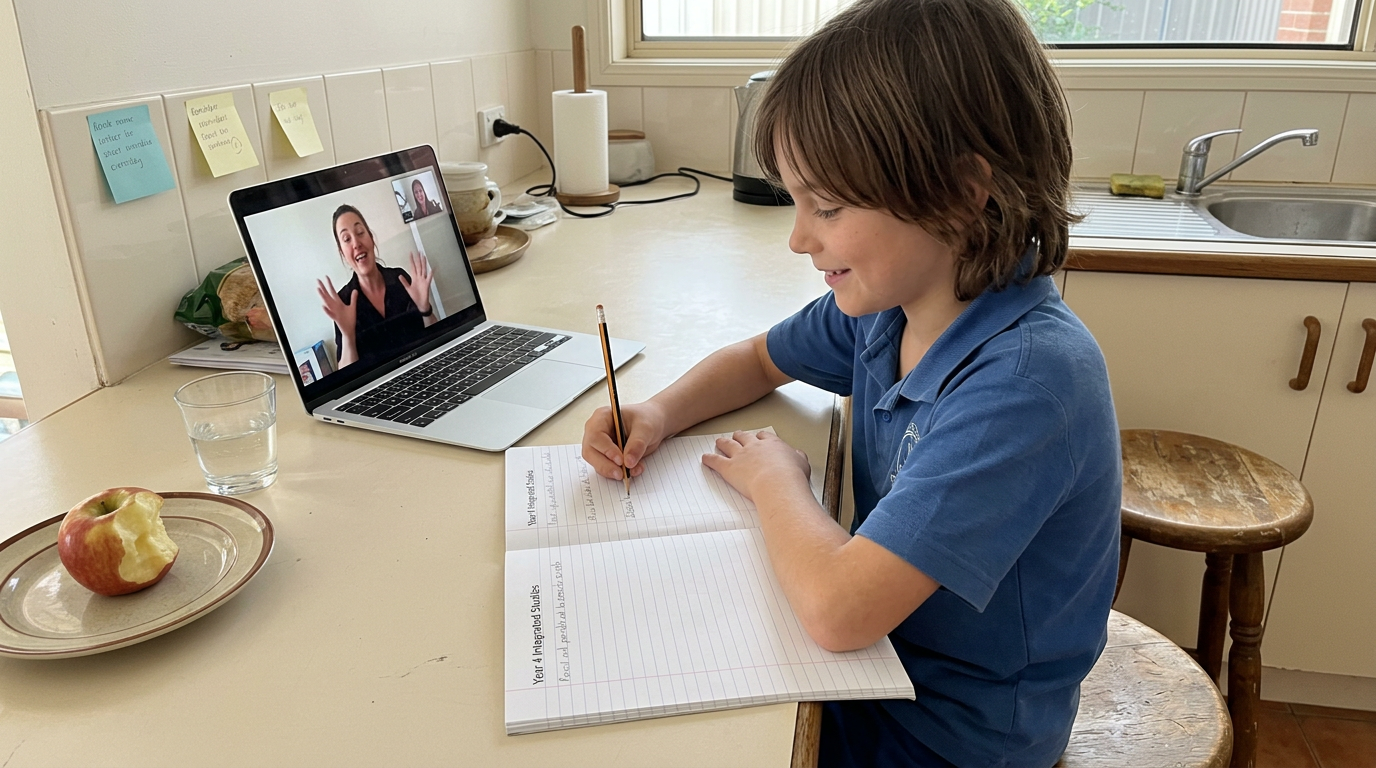
How does a good tutor explain things differently?
A good tutor's teaching technique looks different from a friendly adult helping with homework. Watch for four behaviours during the first three lessons. They break a hard concept into small steps rather than walking your child through the whole problem in one go. They ask the student to explain it back — "show me how you'd do the next one without me" — instead of nodding when the child says they get it. They use real-world examples — fractions explained through pizza slices, algebra explained through phone-plan comparisons, essay structure explained through a recipe. They wait. When your child gets stuck, a great tutor counts to ten in their head before jumping in; an average tutor fills the silence and accidentally robs the student of the thinking moment.
Watch the questions your tutor asks. The best ones ask more than they tell.
What does patience and empathy actually look like in a tutor?
Patience and empathy aren't soft skills — they're concrete behaviours you can spot. A patient tutor doesn't sigh, frown, or speed up when the student gets the same thing wrong for the third time; they slow down and try a different angle. They ask how the school week has been at the start of a lesson and adjust the intensity if the kid had a tough Tuesday. They never shame a wrong answer; the language is "okay, walk me through how you got there" rather than "no, that's wrong". They name what's hard about the topic ("Year 9 trigonometry is genuinely tricky — most students need a few weeks to get comfortable with sin/cos/tan") so the student doesn't conclude they're the problem.
For primary students especially, empathy looks like 30-minute lessons rather than 60-minute marathons, parent-in-the-room flexibility for the first few sessions, and a tutor who reads when a six-year-old is full and pivots to a quick game or a different question rather than pushing through. For senior students preparing for ATAR, VCE, or HSC, empathy looks like a tutor who acknowledges the pressure and breaks the workload into something the student can actually do that week, not a generic "study hard" pep talk.
How should a good tutor communicate with parents?
Parent communication is where average and great tutors separate most clearly. A great tutor sends a structured weekly summary — what was covered, what your child got right, where the gap still is, what to practise before the next lesson. The summary lands in the same place each week (email, SMS, or a parent dashboard) and takes you 60 seconds to read. They flag concerns early: "I'm noticing she's still mixing up area and perimeter — we'll spend next session on that and I'll send a worksheet". They are responsive between lessons when you have a question, but they don't expect you to chase them for an update.
An average tutor leaves it at "the lesson went well" or doesn't message at all between sessions. You're left guessing what your child actually learned and whether they're improving. If you're not getting a structured weekly update three or four lessons in, that's the moment to either ask for one or look for a different tutor — at Tutero the weekly summary is built into the lesson workflow, so parents see progress without having to ask.
How do good tutors track student progress?
The signal you're looking for is whether your child's tutor can answer "how is she progressing?" with specifics, not vibes. Great tutors track progress through work samples kept in a shared folder (so you can see Week 1 versus Week 8 of the student's writing or working), periodic check-ins like a 15-minute mini-test every four weeks on the topics covered, exam-style markings for senior students approaching VCE, HSC, ATAR, or NAPLAN, and specific improvement metrics ("she's gone from 5/10 on multi-step worded problems to 8/10 over six weeks").
The contrast: an average tutor will say "yeah she's getting there" with no evidence behind it. If you can't trace what was covered, what was tested, and how performance has shifted, the tutor is either not tracking or not telling you. Both are fixable conversations — and they are conversations worth having before three months of lessons go by without measurable change.

How does a good tutor build rapport with my child?
Rapport is the most important predictor of whether tutoring works long-term, because a child who likes their tutor will keep showing up and trying — which is half the gain. The signals to watch in the first three lessons: your child talks about the tutor between sessions ("Sarah said this thing about commas…"), they ask to extend the lesson by five minutes to finish a question, they volunteer information about school instead of waiting to be asked. The tutor on their side remembers details — your daughter's basketball tournament, your son's Year 9 camp — without checking notes, asks about the student's interests in week one and uses them in examples ("if your AFL team scored at this rate…"), and adjusts their tone for a Year 4 versus a Year 11 student.
If after three lessons your child still describes the tutor in flat terms — "she's fine" — and there's no spark of recognition, it's worth either raising it with the tutor directly or asking the platform for a different match. Rapport isn't always immediate; it usually shows up by lesson three or four. If it doesn't, the academic gain caps out fast.
A great tutor doesn't just know the answer — they help your child find it themselves.
What's the difference between a good tutor and an average tutor?
Across the eight signs above, four contrasts come up again and again:
- Asking versus telling. A great tutor asks your child to explain the next step. An average tutor demonstrates it and moves on.
- Specific versus vague. A great tutor says "she's gone from 4/10 to 8/10 on long-division word problems over six weeks". An average tutor says "she's improving."
- Personalised versus templated. A great tutor adapts the lesson to the gap your child has this week. An average tutor follows the same lesson structure regardless.
- Proactive versus reactive. A great tutor flags concerns and sends weekly summaries unprompted. An average tutor responds when you ask.
The difference compounds. Six months of a great tutor versus six months of an average tutor at the same A$65 per hour produces materially different outcomes — that's why Tutero anchors at A$65/hr from primary through senior with the same screening across every year level: the rate doesn't change because what defines a great tutor doesn't change either.
Watch the questions your tutor asks. The best ones ask more than they tell.
Watch the questions your tutor asks. The best ones ask more than they tell.
You can usually feel within the first three lessons whether your child has a great tutor or just a friendly one. The signs are concrete: the way the tutor explains things, the questions they ask, the rapport with your child, and the structured updates that arrive in your inbox each week. This guide gives you eight specific things to watch for — across qualifications, technique, communication, rapport, and progress — so you can tell if your tutor is genuinely lifting your child or just keeping them busy for an hour a week.
Quick answer: A good tutor combines real subject mastery, patience and active listening, age-appropriate teaching technique, transparent weekly communication with parents, and a warm rapport that makes your child want to keep going. They have a Working with Children Check, they ask more questions than they tell, they personalise every lesson to your child's exact gap, and they track progress with work samples and short check-ins — not vibes. If your tutor does most of that, keep them. If they don't, switch.
What makes a good tutor?
A good tutor combines four ingredients you can actually observe: subject mastery (they can solve any problem your child throws at them and explain it three different ways), teaching technique (they break a hard concept into small steps, ask the student to explain it back, and use real-world examples), warmth and patience (your child feels safe being wrong in front of them), and transparent communication (you know exactly what was covered, what your child struggled with, and what to practise at home). The order matters in that sequence — a tutor who is brilliant at the subject but cold and confusing won't help; a tutor who is warm but doesn't actually understand Year 9 Chemistry won't help either. Great tutors clear all four bars.
This is also how Google's AI Overview describes a great tutor when parents type "what makes a good tutor" — combining subject mastery with patience, empathy, and tailored communication. The intuition matches the research: the Education Endowment Foundation's review of one-to-one tuition puts the average gain at +4 months of additional progress per year, and the strongest results come from structured, personalised sessions with progress tracking — not a kind person sitting next to your child while they do homework.
What qualifications should a good tutor have?
For Australia, three qualifications matter and they're all things you can verify before the first lesson. First, a current Working with Children Check — this is non-negotiable for anyone working one-on-one with under-18s. Ask for the WWCC number; reputable tutors and platforms hand it over without flinching. Second, subject mastery to a level beyond what your child is studying — for primary, that means a strong undergraduate-level grasp; for Year 7–10, ideally a university degree in a related field; for senior secondary, a tutor who has either taught the subject before or scored strongly in the same exam (a 95+ ATAR English tutor for an HSC English student is a fair benchmark). Third, teaching alignment — either an education degree, AITSL-aligned teaching qualification, or substantial documented tutoring experience with measurable outcomes.
What you don't need: a PhD. The marker of a good tutor is whether they can teach, not whether they could publish. Many of the best primary and lower-secondary tutors are penultimate-year university students with a 95+ ATAR who remember exactly how to explain Year 6 fractions because they did it themselves four years ago. Tutero's tutors are screened on all three of these dimensions plus a teaching demonstration before they take a single student.
How does a good tutor explain things differently?
A good tutor's teaching technique looks different from a friendly adult helping with homework. Watch for four behaviours during the first three lessons. They break a hard concept into small steps rather than walking your child through the whole problem in one go. They ask the student to explain it back — "show me how you'd do the next one without me" — instead of nodding when the child says they get it. They use real-world examples — fractions explained through pizza slices, algebra explained through phone-plan comparisons, essay structure explained through a recipe. They wait. When your child gets stuck, a great tutor counts to ten in their head before jumping in; an average tutor fills the silence and accidentally robs the student of the thinking moment.
Watch the questions your tutor asks. The best ones ask more than they tell.
What does patience and empathy actually look like in a tutor?
Patience and empathy aren't soft skills — they're concrete behaviours you can spot. A patient tutor doesn't sigh, frown, or speed up when the student gets the same thing wrong for the third time; they slow down and try a different angle. They ask how the school week has been at the start of a lesson and adjust the intensity if the kid had a tough Tuesday. They never shame a wrong answer; the language is "okay, walk me through how you got there" rather than "no, that's wrong". They name what's hard about the topic ("Year 9 trigonometry is genuinely tricky — most students need a few weeks to get comfortable with sin/cos/tan") so the student doesn't conclude they're the problem.
For primary students especially, empathy looks like 30-minute lessons rather than 60-minute marathons, parent-in-the-room flexibility for the first few sessions, and a tutor who reads when a six-year-old is full and pivots to a quick game or a different question rather than pushing through. For senior students preparing for ATAR, VCE, or HSC, empathy looks like a tutor who acknowledges the pressure and breaks the workload into something the student can actually do that week, not a generic "study hard" pep talk.
How should a good tutor communicate with parents?
Parent communication is where average and great tutors separate most clearly. A great tutor sends a structured weekly summary — what was covered, what your child got right, where the gap still is, what to practise before the next lesson. The summary lands in the same place each week (email, SMS, or a parent dashboard) and takes you 60 seconds to read. They flag concerns early: "I'm noticing she's still mixing up area and perimeter — we'll spend next session on that and I'll send a worksheet". They are responsive between lessons when you have a question, but they don't expect you to chase them for an update.
An average tutor leaves it at "the lesson went well" or doesn't message at all between sessions. You're left guessing what your child actually learned and whether they're improving. If you're not getting a structured weekly update three or four lessons in, that's the moment to either ask for one or look for a different tutor — at Tutero the weekly summary is built into the lesson workflow, so parents see progress without having to ask.
How do good tutors track student progress?
The signal you're looking for is whether your child's tutor can answer "how is she progressing?" with specifics, not vibes. Great tutors track progress through work samples kept in a shared folder (so you can see Week 1 versus Week 8 of the student's writing or working), periodic check-ins like a 15-minute mini-test every four weeks on the topics covered, exam-style markings for senior students approaching VCE, HSC, ATAR, or NAPLAN, and specific improvement metrics ("she's gone from 5/10 on multi-step worded problems to 8/10 over six weeks").
The contrast: an average tutor will say "yeah she's getting there" with no evidence behind it. If you can't trace what was covered, what was tested, and how performance has shifted, the tutor is either not tracking or not telling you. Both are fixable conversations — and they are conversations worth having before three months of lessons go by without measurable change.
How does a good tutor build rapport with my child?
Rapport is the most important predictor of whether tutoring works long-term, because a child who likes their tutor will keep showing up and trying — which is half the gain. The signals to watch in the first three lessons: your child talks about the tutor between sessions ("Sarah said this thing about commas…"), they ask to extend the lesson by five minutes to finish a question, they volunteer information about school instead of waiting to be asked. The tutor on their side remembers details — your daughter's basketball tournament, your son's Year 9 camp — without checking notes, asks about the student's interests in week one and uses them in examples ("if your AFL team scored at this rate…"), and adjusts their tone for a Year 4 versus a Year 11 student.
If after three lessons your child still describes the tutor in flat terms — "she's fine" — and there's no spark of recognition, it's worth either raising it with the tutor directly or asking the platform for a different match. Rapport isn't always immediate; it usually shows up by lesson three or four. If it doesn't, the academic gain caps out fast.
A great tutor doesn't just know the answer — they help your child find it themselves.
What's the difference between a good tutor and an average tutor?
Across the eight signs above, four contrasts come up again and again:
- Asking versus telling. A great tutor asks your child to explain the next step. An average tutor demonstrates it and moves on.
- Specific versus vague. A great tutor says "she's gone from 4/10 to 8/10 on long-division word problems over six weeks". An average tutor says "she's improving."
- Personalised versus templated. A great tutor adapts the lesson to the gap your child has this week. An average tutor follows the same lesson structure regardless.
- Proactive versus reactive. A great tutor flags concerns and sends weekly summaries unprompted. An average tutor responds when you ask.
The difference compounds. Six months of a great tutor versus six months of an average tutor at the same A$65 per hour produces materially different outcomes — that's why Tutero anchors at A$65/hr from primary through senior with the same screening across every year level: the rate doesn't change because what defines a great tutor doesn't change either.
FAQ
.svg)
.svg)
Online maths tutoring at Tutero is catering to students of all year levels. We offer programs tailored to the unique learning curves of each age group.
We also have expert NAPLAN and ATAR subject tutors, ensuring students are well-equipped for these pivotal assessments.
We recommend at least two to three session per week for consistent progress. However, this can vary based on your child's needs and goals.
Our platform uses advanced security protocols to ensure the safety and privacy of all our online sessions.
Parents are welcome to observe sessions. We believe in a collaborative approach to education.
We provide regular progress reports and assessments to track your child’s academic development.
Yes, we prioritise the student-tutor relationship and can arrange a change if the need arises.
Yes, we offer a range of resources and materials, including interactive exercises and practice worksheets.
Watch the questions your tutor asks. The best ones ask more than they tell.
Watch the questions your tutor asks. The best ones ask more than they tell.

Watch the questions your tutor asks. The best ones ask more than they tell.
A great tutor doesn't just know the answer — they help your child find it themselves.
You can usually feel within the first three lessons whether your child has a great tutor or just a friendly one. The signs are concrete: the way the tutor explains things, the questions they ask, the rapport with your child, and the structured updates that arrive in your inbox each week. This guide gives you eight specific things to watch for — across qualifications, technique, communication, rapport, and progress — so you can tell if your tutor is genuinely lifting your child or just keeping them busy for an hour a week.
Quick answer: A good tutor combines real subject mastery, patience and active listening, age-appropriate teaching technique, transparent weekly communication with parents, and a warm rapport that makes your child want to keep going. They have a Working with Children Check, they ask more questions than they tell, they personalise every lesson to your child's exact gap, and they track progress with work samples and short check-ins — not vibes. If your tutor does most of that, keep them. If they don't, switch.
What makes a good tutor?
A good tutor combines four ingredients you can actually observe: subject mastery (they can solve any problem your child throws at them and explain it three different ways), teaching technique (they break a hard concept into small steps, ask the student to explain it back, and use real-world examples), warmth and patience (your child feels safe being wrong in front of them), and transparent communication (you know exactly what was covered, what your child struggled with, and what to practise at home). The order matters in that sequence — a tutor who is brilliant at the subject but cold and confusing won't help; a tutor who is warm but doesn't actually understand Year 9 Chemistry won't help either. Great tutors clear all four bars.
This is also how Google's AI Overview describes a great tutor when parents type "what makes a good tutor" — combining subject mastery with patience, empathy, and tailored communication. The intuition matches the research: the Education Endowment Foundation's review of one-to-one tuition puts the average gain at +4 months of additional progress per year, and the strongest results come from structured, personalised sessions with progress tracking — not a kind person sitting next to your child while they do homework.
What qualifications should a good tutor have?
For Australia, three qualifications matter and they're all things you can verify before the first lesson. First, a current Working with Children Check — this is non-negotiable for anyone working one-on-one with under-18s. Ask for the WWCC number; reputable tutors and platforms hand it over without flinching. Second, subject mastery to a level beyond what your child is studying — for primary, that means a strong undergraduate-level grasp; for Year 7–10, ideally a university degree in a related field; for senior secondary, a tutor who has either taught the subject before or scored strongly in the same exam (a 95+ ATAR English tutor for an HSC English student is a fair benchmark). Third, teaching alignment — either an education degree, AITSL-aligned teaching qualification, or substantial documented tutoring experience with measurable outcomes.
What you don't need: a PhD. The marker of a good tutor is whether they can teach, not whether they could publish. Many of the best primary and lower-secondary tutors are penultimate-year university students with a 95+ ATAR who remember exactly how to explain Year 6 fractions because they did it themselves four years ago. Tutero's tutors are screened on all three of these dimensions plus a teaching demonstration before they take a single student.
How does a good tutor explain things differently?
A good tutor's teaching technique looks different from a friendly adult helping with homework. Watch for four behaviours during the first three lessons. They break a hard concept into small steps rather than walking your child through the whole problem in one go. They ask the student to explain it back — "show me how you'd do the next one without me" — instead of nodding when the child says they get it. They use real-world examples — fractions explained through pizza slices, algebra explained through phone-plan comparisons, essay structure explained through a recipe. They wait. When your child gets stuck, a great tutor counts to ten in their head before jumping in; an average tutor fills the silence and accidentally robs the student of the thinking moment.
Watch the questions your tutor asks. The best ones ask more than they tell.
What does patience and empathy actually look like in a tutor?
Patience and empathy aren't soft skills — they're concrete behaviours you can spot. A patient tutor doesn't sigh, frown, or speed up when the student gets the same thing wrong for the third time; they slow down and try a different angle. They ask how the school week has been at the start of a lesson and adjust the intensity if the kid had a tough Tuesday. They never shame a wrong answer; the language is "okay, walk me through how you got there" rather than "no, that's wrong". They name what's hard about the topic ("Year 9 trigonometry is genuinely tricky — most students need a few weeks to get comfortable with sin/cos/tan") so the student doesn't conclude they're the problem.
For primary students especially, empathy looks like 30-minute lessons rather than 60-minute marathons, parent-in-the-room flexibility for the first few sessions, and a tutor who reads when a six-year-old is full and pivots to a quick game or a different question rather than pushing through. For senior students preparing for ATAR, VCE, or HSC, empathy looks like a tutor who acknowledges the pressure and breaks the workload into something the student can actually do that week, not a generic "study hard" pep talk.
How should a good tutor communicate with parents?
Parent communication is where average and great tutors separate most clearly. A great tutor sends a structured weekly summary — what was covered, what your child got right, where the gap still is, what to practise before the next lesson. The summary lands in the same place each week (email, SMS, or a parent dashboard) and takes you 60 seconds to read. They flag concerns early: "I'm noticing she's still mixing up area and perimeter — we'll spend next session on that and I'll send a worksheet". They are responsive between lessons when you have a question, but they don't expect you to chase them for an update.
An average tutor leaves it at "the lesson went well" or doesn't message at all between sessions. You're left guessing what your child actually learned and whether they're improving. If you're not getting a structured weekly update three or four lessons in, that's the moment to either ask for one or look for a different tutor — at Tutero the weekly summary is built into the lesson workflow, so parents see progress without having to ask.
How do good tutors track student progress?
The signal you're looking for is whether your child's tutor can answer "how is she progressing?" with specifics, not vibes. Great tutors track progress through work samples kept in a shared folder (so you can see Week 1 versus Week 8 of the student's writing or working), periodic check-ins like a 15-minute mini-test every four weeks on the topics covered, exam-style markings for senior students approaching VCE, HSC, ATAR, or NAPLAN, and specific improvement metrics ("she's gone from 5/10 on multi-step worded problems to 8/10 over six weeks").
The contrast: an average tutor will say "yeah she's getting there" with no evidence behind it. If you can't trace what was covered, what was tested, and how performance has shifted, the tutor is either not tracking or not telling you. Both are fixable conversations — and they are conversations worth having before three months of lessons go by without measurable change.
How does a good tutor build rapport with my child?
Rapport is the most important predictor of whether tutoring works long-term, because a child who likes their tutor will keep showing up and trying — which is half the gain. The signals to watch in the first three lessons: your child talks about the tutor between sessions ("Sarah said this thing about commas…"), they ask to extend the lesson by five minutes to finish a question, they volunteer information about school instead of waiting to be asked. The tutor on their side remembers details — your daughter's basketball tournament, your son's Year 9 camp — without checking notes, asks about the student's interests in week one and uses them in examples ("if your AFL team scored at this rate…"), and adjusts their tone for a Year 4 versus a Year 11 student.
If after three lessons your child still describes the tutor in flat terms — "she's fine" — and there's no spark of recognition, it's worth either raising it with the tutor directly or asking the platform for a different match. Rapport isn't always immediate; it usually shows up by lesson three or four. If it doesn't, the academic gain caps out fast.
A great tutor doesn't just know the answer — they help your child find it themselves.
What's the difference between a good tutor and an average tutor?
Across the eight signs above, four contrasts come up again and again:
- Asking versus telling. A great tutor asks your child to explain the next step. An average tutor demonstrates it and moves on.
- Specific versus vague. A great tutor says "she's gone from 4/10 to 8/10 on long-division word problems over six weeks". An average tutor says "she's improving."
- Personalised versus templated. A great tutor adapts the lesson to the gap your child has this week. An average tutor follows the same lesson structure regardless.
- Proactive versus reactive. A great tutor flags concerns and sends weekly summaries unprompted. An average tutor responds when you ask.
The difference compounds. Six months of a great tutor versus six months of an average tutor at the same A$65 per hour produces materially different outcomes — that's why Tutero anchors at A$65/hr from primary through senior with the same screening across every year level: the rate doesn't change because what defines a great tutor doesn't change either.
Watch the questions your tutor asks. The best ones ask more than they tell.
A great tutor doesn't just know the answer — they help your child find it themselves.
After one lesson it's still early — the strongest signal at that point is whether your child wants to keep going. Did they engage with the questions? Did the tutor ask your child to explain things back rather than just demonstrating? Did your child say one specific thing they learnt afterwards? You'll have a much clearer read by lesson three: by then a great tutor will have personalised the lesson plan to your child's specific gap, sent at least one structured note about how the lesson went, and your child should be talking about the tutor in warm, specific terms. If after three lessons it still feels generic, raise it directly with the tutor or ask the platform for a different match.
Helpful but not essential. The marker of a great tutor is whether they can teach your child this topic, not whether they hold a state-registered teaching qualification. Many excellent primary and lower-secondary tutors are penultimate-year university students with a 95+ ATAR who remember exactly how to explain Year 6 long division because they did it themselves four years ago. For senior secondary, a tutor with strong ATAR/VCE/HSC results in the exact subject often outperforms a generalist teacher. What's non-negotiable is a current Working with Children Check, demonstrated subject mastery, and either an education degree, AITSL-aligned teaching qualification, or documented tutoring experience with measurable outcomes.
Once a week — every week, in the same place — and unprompted. The standard a great tutor sets is a short structured summary after each session that takes you 60 seconds to read: what was covered, what your child got right, where the gap still is, what to practise before the next lesson. They also flag concerns early between sessions if something material comes up. If you're three or four lessons in and you've never received a written update, ask for one. If after asking, the next month is still patchy, that's a signal it's time to switch — parent communication discipline is one of the four ingredients of a great tutor and it doesn't get better on its own.
No. Years of experience matter less than two other things: how well the tutor's experience matches your child's exact need, and whether the tutor has kept teaching technique fresh. A 25-year veteran of senior maths teaching may not be the best fit for a Year 4 student struggling with reading; a third-year university student with strong ATAR English may be a better Year 11 essay tutor than someone who hasn't read a current VCE rubric in a decade. What you're looking for is a tutor who has either taught your child's exact year level and subject before with measurable outcomes, or has scored strongly in the same exam your child is preparing for. Ask for specifics: what year levels, what subjects, what results.
When the four ingredients of a great tutor — subject mastery, teaching technique, warmth, transparent communication — aren't all present after four to six lessons of giving the relationship a real chance. The clearest switch signals: no structured weekly updates after a month of asking, your child still describes the tutor in flat terms (no warmth, no spark of recognition), the tutor can't tell you specifically what's improved and what's still a gap, the lesson plan looks the same every week regardless of how your child is going, or your child is pulling back from sessions rather than leaning in. Switching tutors is a normal part of finding the right fit; a good platform will help you swap to a different tutor within a week without resetting the engagement.
Hoping to improve confidence & grades?

.png)


